Your Cart is Empty


You've seen them at the gym. Those cylindrical torture devices that people roll around on while making faces that suggest they're either in agony or experiencing enlightenment. Maybe you've even been gifted one by a well-meaning friend who swears it changed their life. But here's the million-dollar question that's probably crossed your mind while eyeing that foam roller collecting dust in your closet: foam roller does it work, or is this just another fitness fad that'll fade faster than your New Year's resolution to drink more water?
Let's cut through the noise and dive into what science, real athletes, and actual research have to say about these mysterious foam tubes. Spoiler alert: the answer might surprise you, and it's way more interesting than you think.
Here's the deal. When you roll around on foam like you're trying to put out an invisible fire, you're actually performing something called self-myofascial release. Fancy words for "giving your muscle tissue a deep massage without paying someone $120 an hour to do it."
Your fascia is basically a web of connective tissue that wraps around your muscles like nature's Spanx. When you exercise hard, sit at a desk for eight hours (we see you, remote workers), or basically exist as a human in 2026, this fascia can get tight, knotted, and about as flexible as a day-old baguette.
Research published in the National Library of Medicine shows that foam rolling can actually help with muscle recovery after intense physical activity. The study examined athletes and found measurable improvements in muscle soreness and range of motion. Not too shabby for a piece of foam.
When you apply pressure to your muscles using a foam roller, several things happen:
Think of it like this: your muscles are like a garden hose with a few kinks in it. Foam rolling helps smooth out those kinks so everything flows better. Harvard Health explains that this massage tool can reduce muscle tension and soreness while improving flexibility, which is basically the holy trinity of recovery.
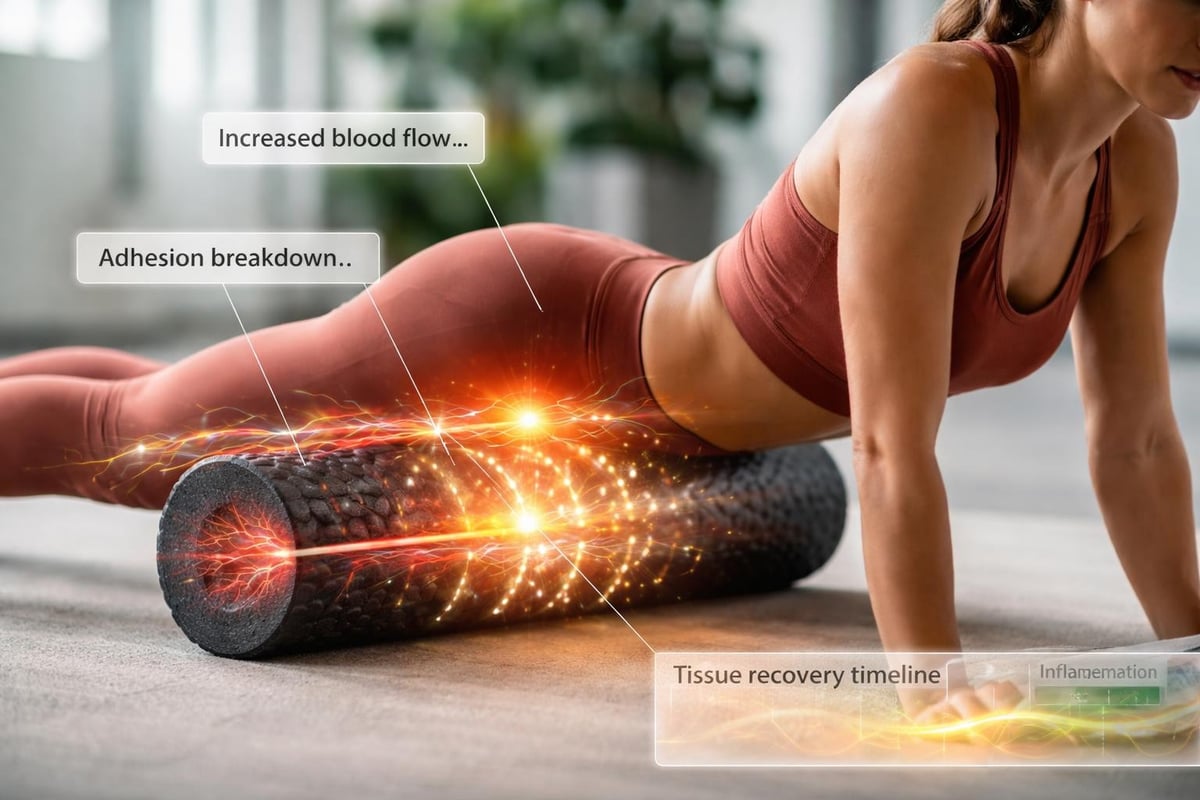
Let's talk about the elephant in the room, or rather, the foam roller under your gym bag. When people ask "foam roller does it work for recovery," they usually mean: "Will this thing help me feel less like I got hit by a truck after leg day?"
The short answer? Absolutely. The longer answer? It's not magic, but it's pretty darn close.
A meta-analysis examining foam rolling effects on performance and recovery found that foam rolling can reduce muscle pain perception and improve flexibility. The researchers analyzed multiple studies and found consistent benefits across different populations and activities.
Here's what makes foam rolling particularly brilliant for recovery: you can do it anywhere, anytime. Stuck in a hotel room on a business trip? Roll it out. Watching your favorite show? Roll it out. Pretending to listen to your friend's drama while secretly working on your IT band? You get the idea.
The American Council on Exercise notes that self-myofascial release through foam rolling can be particularly effective when done consistently, not just when you remember it exists.
Now we're getting to the fun stuff. Can a foam roller actually make you perform better? Will it turn you into a superhero? Well, probably not, but it can definitely help you feel more like one.
Recent studies have shown some fascinating results. Research on professional basketball players examined whether foam roller warm-ups improved ankle mobility and lower limb stability. The findings? Athletes who incorporated foam rolling into their warm-up routine showed measurable improvements in both areas.
But let's be real about what foam roller does it work means for performance:
| Performance Metric | Foam Rolling Impact | Timeline |
|---|---|---|
| Flexibility | Moderate to High | Immediate |
| Sprint Speed | Low to Moderate | 2-4 weeks |
| Strength | Minimal Direct Impact | N/A |
| Endurance | Low | Indirect through recovery |
| Power Output | Low to Moderate | Variable |
The real performance magic happens through improved recovery and injury prevention. Think about it: if you're less sore, more flexible, and recovering faster, you can train harder and more consistently. That's where the real gains come from.
There's actually a strategic difference here that matters:
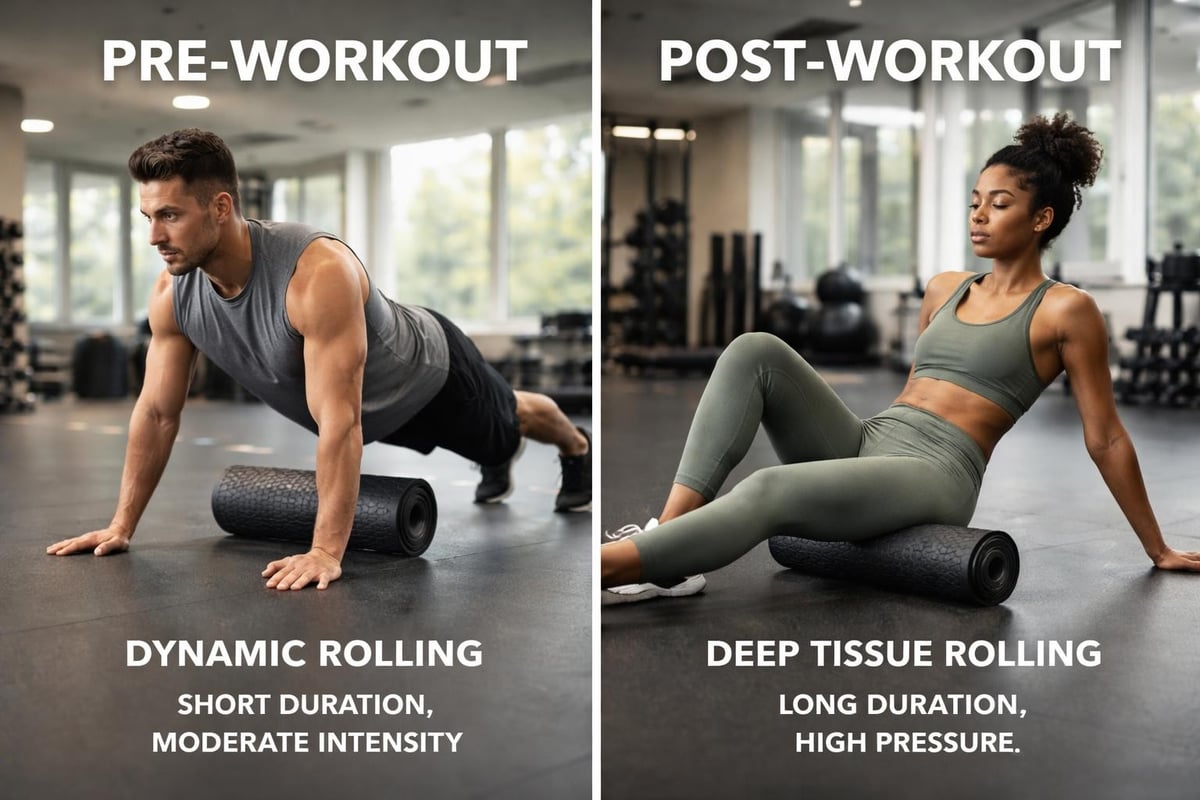
Before your workout: Focus on dynamic rolling (moving while rolling) for 30-60 seconds per muscle group. This primes your nervous system and increases blood flow without over-relaxing the muscles.
After your workout: Go slower and deeper, spending 1-2 minutes on tight areas. This is when you're working on recovery and tissue quality. For those curious about optimizing your recovery routine, Brazyn Life's guide on foam rolling science offers detailed insights into timing and technique.
Here's something nobody talks about enough: foam roller does it work better when you actually use it consistently. Mind-blowing, right? But here's the thing that trips up most people: traditional foam rollers are about as portable as a small tree trunk.
You know what happens to fitness tools that aren't convenient? They become expensive coat racks or cat towers. This is where innovation steps in to save the day.
The evolution of foam roller design has addressed the biggest barrier to consistency: portability. Modern dream chasers need gear that keeps up with their lifestyle, whether that means fitting into a carry-on for a business trip or slipping into a gym bag that's already stuffed with enough gear to outfit a small fitness studio.
Brazyn Life revolutionized this space by creating collapsible foam rollers that maintain full functionality while solving the portability puzzle. The innovation means you can have professional-grade recovery tools wherever life takes you, which directly translates to more consistent use and better results.
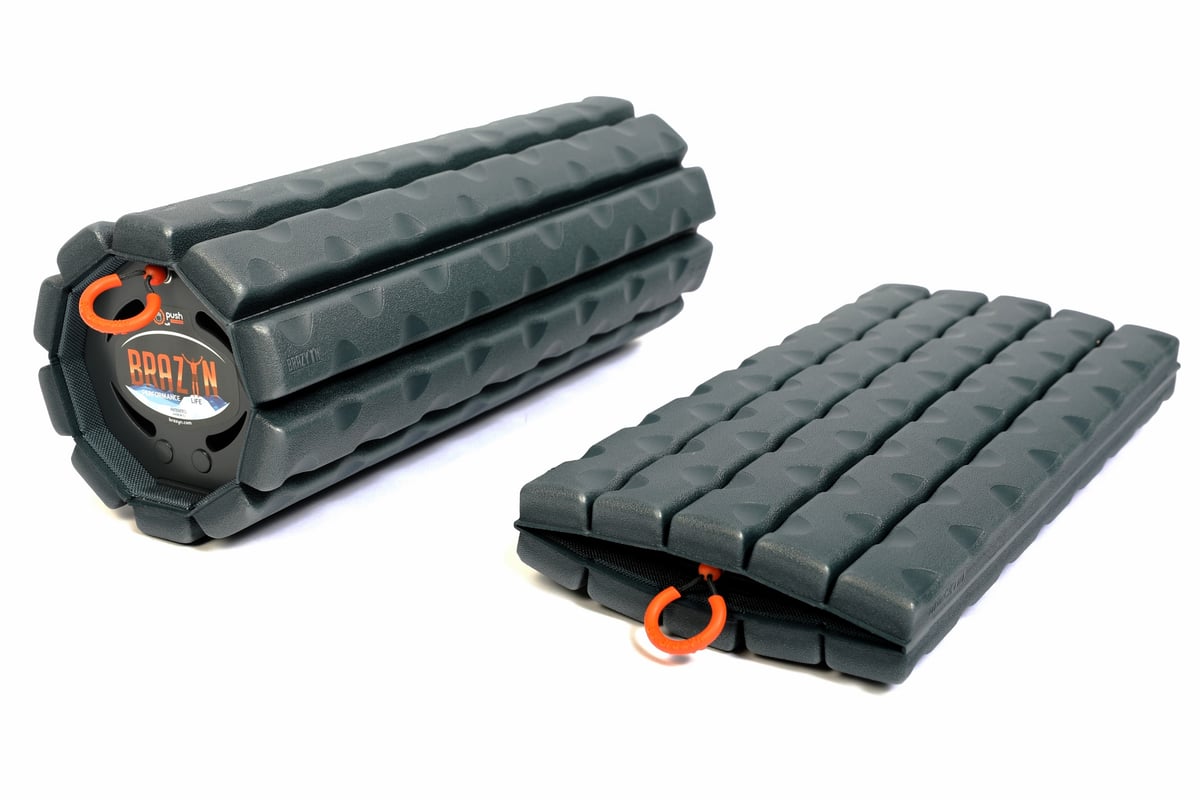
Speaking of game-changers, The Morph Foam Roller collapses flat for easy packing but delivers the same deep tissue work as traditional rollers when expanded. It's like having a full-size foam roller that can shape-shift to fit your life, not the other way around.
Let's address the foam rolling haters, because every fitness tool has them. Some critics say foam roller does it work is the wrong question because it's not a miracle cure. And you know what? They're partly right.
"It's just temporary relief": This criticism has merit. Foam rolling isn't going to fix underlying biomechanical issues or structural problems. If you have a legitimate injury or chronic condition, you need professional help, not just a foam roller.
"The science is mixed": True, some studies show modest effects. But Piedmont Healthcare points out that even conservative estimates show benefits in decreased muscle pain, improved blood circulation, and enhanced flexibility.
"You can hurt yourself": This is actually valid if you're rolling directly on joints, bones, or injured areas. But with proper technique (which takes about five minutes to learn), foam rolling is incredibly safe.
The Ironman Magazine analysis highlights both benefits and risks, emphasizing that proper technique prevents most issues. The key? Don't be a hero. Start gentle and gradually increase pressure as your tissues adapt.
Here's the beautiful thing about foam rolling: it's not just for elite athletes or fitness fanatics. The question of foam roller does it work applies to a surprisingly wide range of people.
Desk Warriors: Sitting all day creates tight hip flexors, stiff backs, and shoulders that feel like they're made of concrete. Rolling can counteract these effects.
Weekend Warriors: You crush it at soccer on Saturday but can barely walk on Sunday? Foam rolling can help bridge that gap.
Serious Athletes: UCLA Health notes that athletes use foam rollers to increase range of motion and shorten recovery time between intense training sessions.
Aging Adults: Maintaining mobility and reducing muscle stiffness becomes increasingly important as we age. Foam rolling offers a gentle, effective option.
Rehabilitation Patients: Under professional guidance, foam rolling can be part of a comprehensive recovery program.
| Activity Type | Primary Benefit | Focus Areas |
|---|---|---|
| Running | IT band relief, calf recovery | Legs, hips, back |
| CrossFit | Full-body recovery | Everything, honestly |
| Yoga/Pilates | Enhanced flexibility | Targeted problem areas |
| Cycling | Hip flexor release | Quads, hip flexors, back |
| Swimming | Shoulder mobility | Upper back, lats, chest |
Plot twist: foam roller does it work depends heavily on whether you're using it correctly. And most people aren't. Don't worry, you're not alone, and it's easy to fix.
The goal isn't to punish yourself. It should feel like "good pain," similar to a deep tissue massage. If you're grimacing like you're in a horror movie, dial it back a notch.
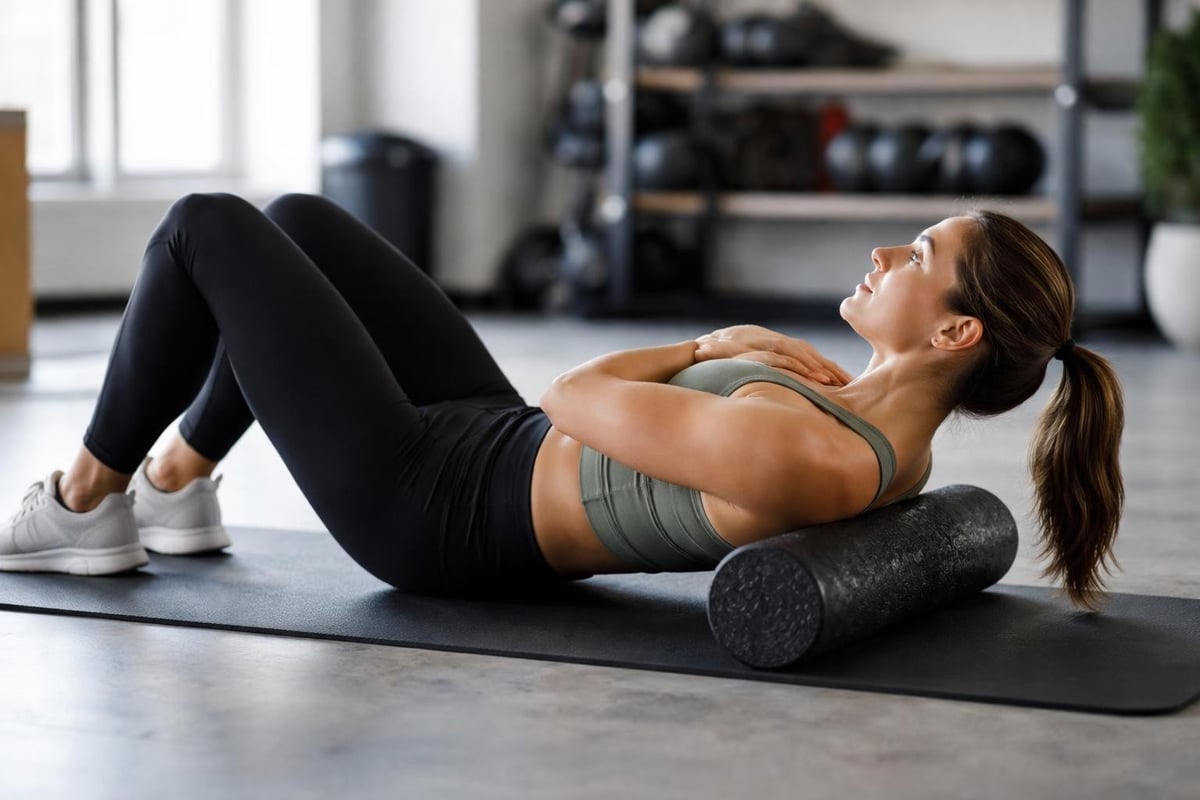
After diving deep into the research, examining real-world results, and looking at what actual scientists have to say, here's the bottom line on foam roller does it work:
Yes, foam rollers work, but they work best as part of a comprehensive approach to fitness and recovery. They're not magic, but they're also not snake oil. The evidence consistently shows benefits for:
The key factors that determine effectiveness include:
Consistency: Using it regularly (not just when you remember) produces better results than sporadic use.
Proper technique: Slow, controlled movements with appropriate pressure beat aggressive, rapid rolling every time.
Realistic expectations: Foam rolling is a tool, not a cure-all. It works best alongside proper training, nutrition, and rest.
Quality equipment: A roller that collapses when you need it or is too inconvenient to use regularly won't deliver results because you won't use it. This is where thoughtful product design makes a real difference in real-world effectiveness.
Multiple studies across different populations and activities have found measurable benefits. While the magnitude of effects varies, the consistency of positive findings across independent research teams suggests that foam rolling provides genuine value beyond placebo effects.
The scientific community agrees: foam rolling can be a valuable tool for active individuals seeking to maintain muscle health, enhance recovery, and improve movement quality. It's not revolutionary, but it's reliably beneficial when used correctly and consistently.
The difference between foam rolling being effective and being a waste of money often comes down to integration. Can you make it part of your daily routine? Will it actually fit into your life?
Start small: Five minutes after your workout is infinitely better than zero minutes. Don't try to roll your entire body for 30 minutes right out of the gate.
Link it to existing habits: Roll while watching TV, during your morning routine, or right after your workout when you're already in fitness mode.
Focus on problem areas: You don't need to roll everything every day. Hit your personal tight spots consistently and do full-body sessions weekly.
Make it accessible: Keep your roller somewhere visible and convenient. Out of sight really is out of mind with fitness equipment.
For those seeking comprehensive guidance on maximizing their foam rolling results, how to roll more and get better results offers practical strategies for building consistency and improving technique.
That's it. Less than five minutes, hits the major problem areas for most people, and can make a noticeable difference in how you feel.
Once you've mastered basic foam rolling, there are ways to level up your game. After all, if foam roller does it work for beginners, imagine what it can do when you really dial in the details.
Foam rolling works even better when combined with other recovery modalities:
The key is understanding that different tools serve different purposes. If you're interested in exploring how various recovery tools work together, checking out yoga and Pilates equipment can provide insights into building a comprehensive mobility practice.
Yes, you can apply the principle of progressive overload to foam rolling:
As your tissue quality improves, you might find that areas that once felt unbearable become almost pleasant. That's progress.
Let's talk money, because foam roller does it work from a financial perspective matters too. A quality foam roller costs anywhere from $20 to $100, depending on features and design.
Compare that to:
A one-time investment of $30-100 that you can use daily for years? That's a no-brainer ROI. Even if foam rolling only reduces your need for professional treatments by a few sessions per year, it pays for itself many times over.
When you frame it this way, the question isn't whether you can afford a foam roller, it's whether you can afford not to have one.
So, foam roller does it work? The science says yes, the athletes agree, and the growing body of research continues to support its benefits for recovery, flexibility, and performance. Whether you're an elite athlete, a weekend warrior, or someone just trying to feel better in your body, foam rolling offers genuine value when done consistently and correctly. Ready to experience the benefits for yourself? Brazyn Life specializes in innovative foam rollers designed for real life, combining professional-grade effectiveness with the portability that makes consistent use actually possible. Your muscles will thank you.
