Your Cart is Empty


Walking into a gym for the first time can feel like stepping into a hardware store where everything is designed to make you sweat. The shiny barbells, intimidating power racks, and mysterious cable machines all promise gains, but which gym lifting equipment actually delivers results? Whether you're building a home setup or just trying to navigate your local fitness center without looking lost, understanding the essentials will transform your training from confused wandering to purposeful progress. Let's break down what matters, what doesn't, and how to make smart choices that fit your goals and space.
Every serious lifting journey starts with a barbell. It's the most versatile piece of gym lifting equipment you'll encounter, and frankly, it's hard to beat the satisfaction of loading plates onto a bar and moving heavy weight.
Olympic barbells are the gold standard, weighing 45 pounds (20kg for women's bars at 33 pounds) and stretching 7 feet long. These rotating sleeve beauties distribute weight evenly and protect your wrists during cleans and snatches. Rogue Fitness popularized high-quality barbell manufacturing in the United States, setting standards that changed the industry.
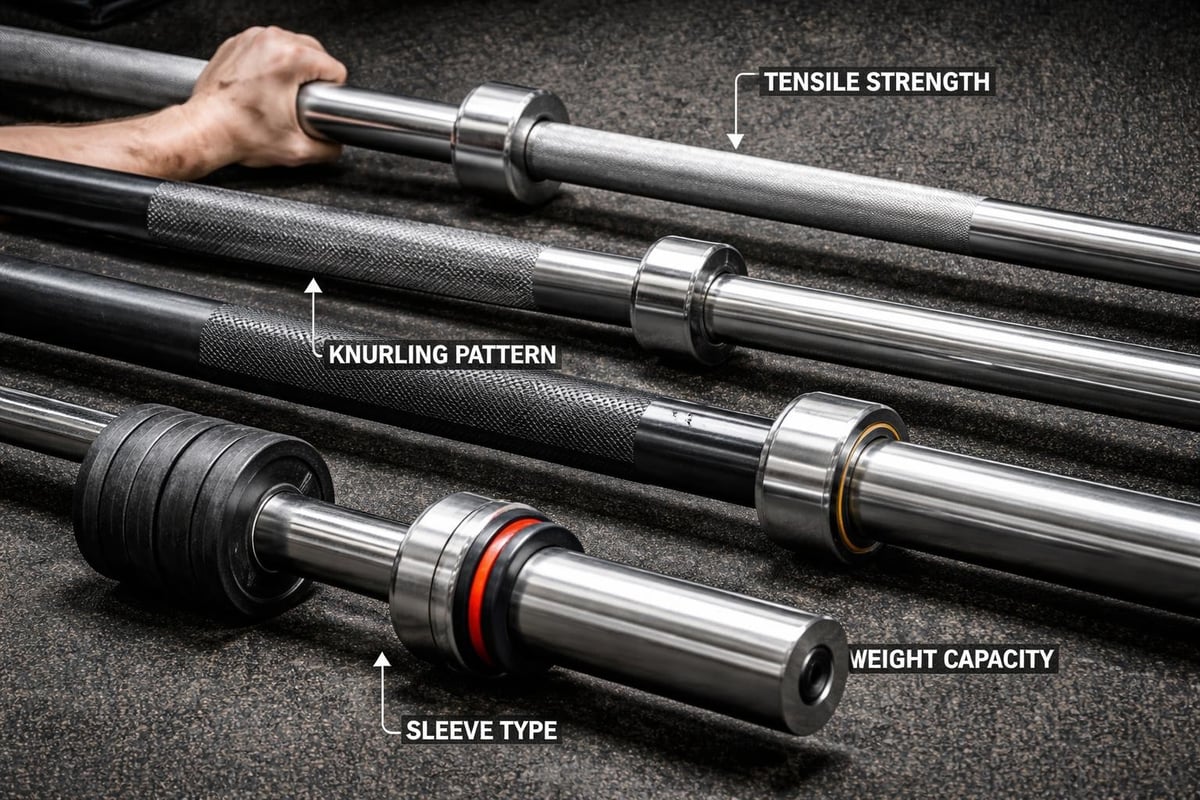
Not all barbells deserve your hard-earned cash. Here's what separates the champions from the participation trophies:
Tensile strength: Look for 190,000 PSI minimum for serious lifting
Knurling pattern: Aggressive enough to grip, gentle enough not to shred your hands
Bushing vs bearing sleeves: Bearings spin smoothly for Olympic lifts, bushings work fine for powerlifting
Weight capacity: Most quality bars handle 1,000+ pounds, but cheaper ones might bend
Weight plates come in more varieties than coffee at a hipster café. Bumper plates (rubber-coated) protect your floors and are mandatory for dropping weights. Iron plates cost less but sound like a car crash when you miss a lift. Calibrated plates offer precision for competitive lifting, though most of us don't need accuracy down to the gram.
Here's a fun fact: the power rack prevents more injuries than any other piece of gym lifting equipment. These metal cages let you push limits without needing a spotter or risking a trip to the emergency room.
A quality power rack includes adjustable safety bars (also called spotter arms), J-hooks for racking your barbell, and usually a pull-up bar on top. The magic happens when you set those safety bars just below your range of motion. Squatting heavy? Set them an inch below your lowest position. Benching alone? Position them above your chest. Fail a rep? The bars catch the weight while you walk away with your dignity intact.
Feature |
Power Rack |
Squat Stand |
Half Rack |
|---|---|---|---|
Footprint |
4'x4' typical |
3'x3' typical |
3'x4' typical |
Safety |
Full coverage |
Limited |
Moderate |
Exercise variety |
15+ movements |
5-8 movements |
10+ movements |
Price range |
$400-2,000 |
$150-500 |
$300-1,200 |
Space considerations matter more than most people think. A full power rack demands about 16 square feet of floor space plus clearance for loading plates. Squat stands shrink that footprint but sacrifice safety features. Half racks split the difference, offering decent protection without dominating your entire garage.
The Westside Barbell training method developed by Louie Simmons relies heavily on rack work, including board presses and box squats that require stable, adjustable equipment. His conjugate system proved that varying exercises and intensities beats monotonous training every time.
Adjustable benches rank among the most underrated gym lifting equipment pieces out there. A quality bench transforms your workout space from "I can do three exercises" to "I have literally dozens of options."
Adjustability determines versatility. Flat benches handle basic pressing but limit your angles. Adjustable benches offer incline, decline, and everything in between, hitting different muscle fibers and preventing boredom.
Weight capacity separates toys from tools. A 600-pound rating minimum ensures stability when you're pressing heavy dumbbells. Cheap benches wobble like a shopping cart with a bad wheel, which kills your confidence and your gains.
Padding thickness affects more than comfort. Too thin and you'll bruise your tailbone. Too thick and you sink in, compromising stability. The Goldilocks zone sits around 2-3 inches of high-density foam.
For folks working with limited space, innovative solutions have emerged. Wall-mounted options and compact designs now deliver full functionality without permanent floor space consumption. After a great lifting session, proper recovery becomes crucial, and that's where tools designed for modern athletes shine.
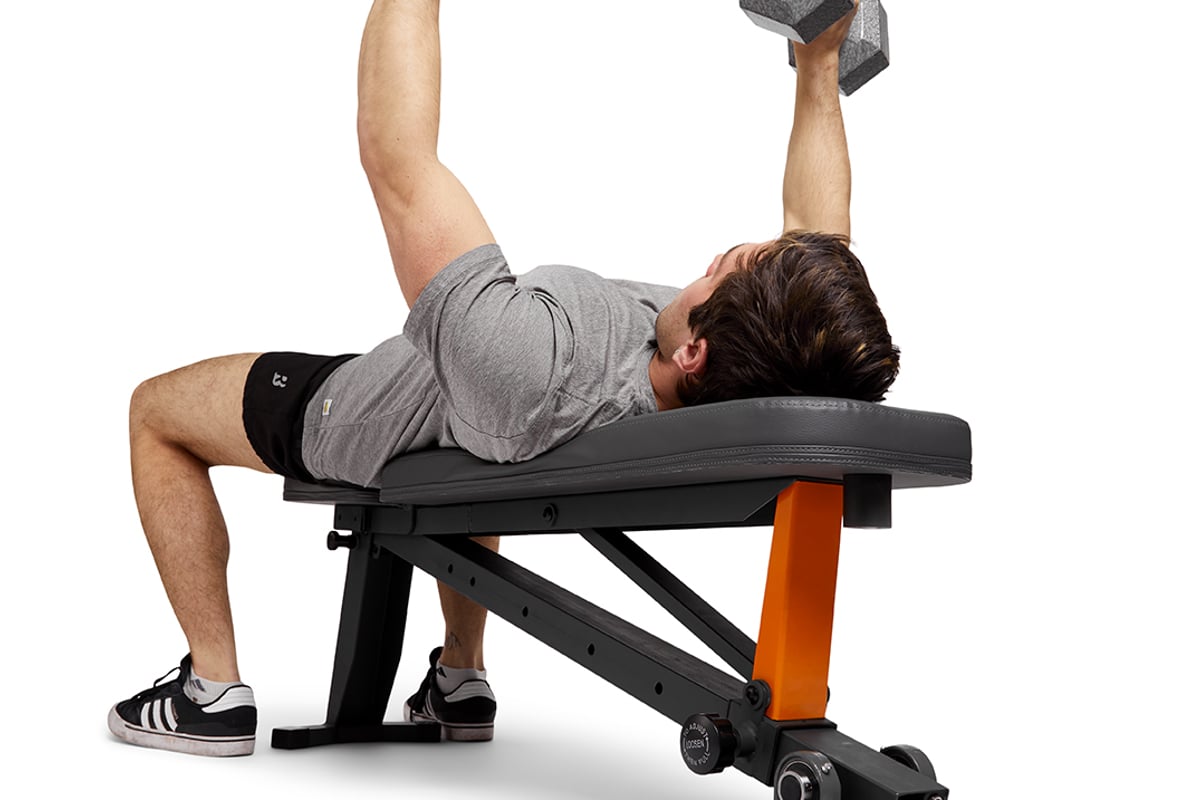
If barbells are the workhorse of strength training, dumbbells are the Swiss Army knife. This gym lifting equipment fixes imbalances, allows unilateral training, and offers movement patterns impossible with a barbell.
Fixed dumbbells line the walls of commercial gyms in neat pairs from 5 to 150 pounds. They're indestructible and ready instantly, but buying a full set costs more than a used car. Adjustable dumbbells let you change weight on a single pair, saving money and space. Modern versions use pins, dials, or magnetic systems to swap plates in seconds.
PowerBlock adjustables: compact, durable, expandable to 90+ pounds per hand
Bowflex SelectTech: smooth dial adjustment, digital tracking options
Ironmaster: classic screw-collar design, can load up to 165 pounds
Plate-loaded handles: cheapest option, requires standard Olympic plates
The science backs dumbbell training hard. Research shows they activate stabilizer muscles 20-30% more than barbell equivalents because each arm works independently. No more letting your dominant side compensate for weakness.
Once you've mastered the basics, specialty bars add variety and target specific weaknesses. These unique pieces of gym lifting equipment solve problems you didn't know you had.
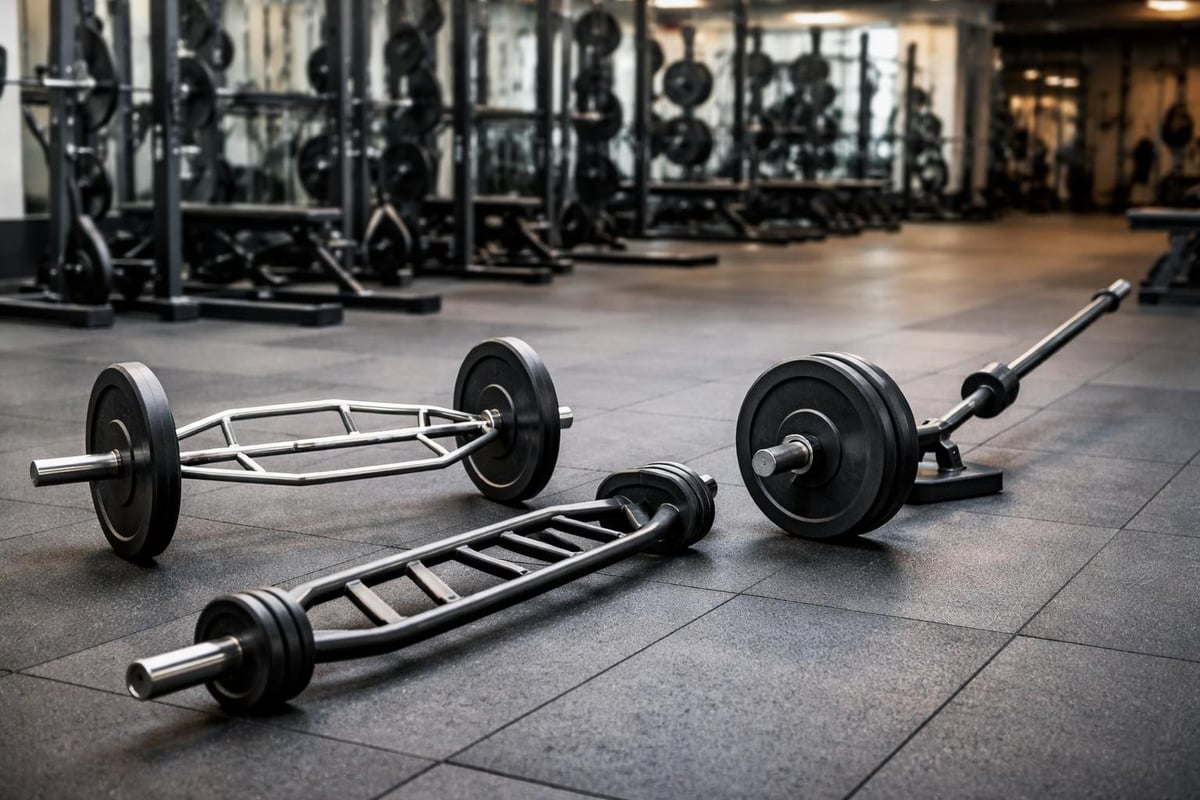
Trap bars (hex bars) make deadlifting safer for people with lower back issues. The neutral grip and centered load reduce spinal stress while still building serious pulling strength. Swiss bars offer multiple neutral-grip positions for pressing movements, saving shoulders from the harsh pronated grip of standard barbells.
Cable systems and plate-loaded machines provide constant tension throughout movements, which differs from free weights where resistance varies through the range of motion. They're not strictly necessary, but cable crossovers and tricep pushdowns offer training stimuli you can't replicate with barbells alone.
Landmine attachments turn a barbell into a multi-directional training tool. Stick one end in a corner (or better, a landmine base) and suddenly you've got options: rows, presses, rotational work, and single-arm variations that crush your core.
The eternal debate rages on. Free weight purists claim machines build "non-functional" strength. Machine advocates argue they're safer and better for isolation. The truth? Both camps are partially right and mostly annoying.
Free weights (barbells, dumbbells) force stabilization, engage more muscle groups simultaneously, and better mimic real-world movements. They also require technique mastery and carry higher injury risk when performed incorrectly. Universal Gym Equipment pioneered modern weight machines in the 1950s, making strength training accessible to people who found free weights intimidating.
Aspect |
Free Weights |
Machines |
|---|---|---|
Muscle activation |
Higher total activation |
Targeted isolation |
Learning curve |
Steeper, requires coaching |
Gentler, self-explanatory |
Injury risk |
Higher without proper form |
Lower, guided movement |
Space efficiency |
Excellent |
Poor, one machine per movement |
Cost |
Better value |
Expensive per exercise |
Strength transfer |
Better to daily life |
Limited transfer |
Hybrid approaches work best for most people. Use free weights for compound movements (squats, deadlifts, presses), then machines for accessory work when fatigue makes form sketchy. A leg press machine after heavy squats lets you safely push to failure without risking a barbell crushing your spine.
Here's where most gym lifting equipment guides drop the ball. Recovery isn't optional, it's where adaptation happens. Modern athletes understand that what you do between sets matters as much as the sets themselves.
Smart lifters incorporate recovery-focused tools into their training ecosystem. Massage guns, foam rollers, and mobility devices accelerate recovery, reduce soreness, and improve range of motion for better lifting mechanics.
Foam rolling increases blood flow to compressed tissues, helping flush metabolic waste products that accumulate during intense training. Studies show regular rolling can improve flexibility by 10-15% without the static stretching that potentially reduces strength output.
The challenge? Traditional recovery tools occupy precious space. Bulky foam rollers sit in corners, unused because they're annoying to store. Massage guns pile up in drawers. But innovative designs now prioritize portability without sacrificing effectiveness, letting you maintain recovery routines whether you're at home, the gym, or traveling for work. Brazyn Life specializes in portable fitness solutions that fit modern lifestyles, recognizing that dream chasers need gear as mobile as their ambitions.
Not everyone needs the same gym lifting equipment collection. Your goals, space, and budget should dictate priorities, not Instagram fitness influencers with corporate sponsorships.
Quality Olympic barbell ($200-400)
Power rack with safety bars ($400-1,000)
Adjustable bench ($200-500)
Weight plates (300-500 pounds total)
Deadlift platform (optional but floor-saving)
Powerlifters live and die by the "big three" movements: squat, bench, deadlift. Everything else is accessory work. Choosing high-quality equipment that can handle serious loading becomes critical when you're moving multiple plates.
Hypertrophy training demands more variety. Add dumbbells, cable systems, and machines to hit muscles from multiple angles. The pump doesn't care about maximum weight, it cares about time under tension and metabolic stress.
Adjustable dumbbells (5-75 pounds minimum)
Cable crossover or functional trainer
Leg press or hack squat machine
Preacher curl bench
Various cable attachments (rope, straight bar, v-bar)
Keep it simple. A quality barbell, adjustable dumbbells, pull-up bar, and some kettlebells cover 90% of effective workouts. Don't overthink it. The best gym lifting equipment is whatever you'll actually use consistently.
The fitness equipment industry loves first-time buyers. Shiny marketing and false promises separate fools from their money faster than a CrossFit class empties a water fountain.
Buying too much too soon tops the mistake list. Start with essentials, master basic movements, then expand as needs become clear. That fancy specialty bar collecting dust could've been three months of quality protein powder.
Prioritizing aesthetics over function creates pretty garage gyms that don't produce results. Who cares if your bumper plates color-coordinate? Do they bounce properly? Are they accurate weight?
Warranties under 1 year (they expect it to break)
Weight capacities not clearly stated
Reviews mentioning wobbling or instability
Prices dramatically below market average
Unknown brands with no customer service history
Detailed equipment guides help comparison shop across brands and categories. Independent reviews matter more than manufacturer claims because companies lie with statistics like politicians lie about campaign promises.
Gym lifting equipment requires minimal maintenance but ignoring basics shortens lifespan dramatically. Barbells that could last decades die in years from neglect.
Barbell care involves three simple steps: brush chalk residue from knurling weekly, oil the sleeves monthly, and never store them standing upright (warps the bar over time). A wire brush and 3-in-1 oil cost $15 total and preserve a $300 investment.
Plate storage prevents trips and extends life. Rubber bumpers shouldn't be stacked more than 8 high (weight compresses and deforms them). Iron plates don't care, but random piles create shin-destroying hazards when you're walking backward after heavy squats.
Cleaning upholstery on benches and machines prevents bacterial buildup and material breakdown. A simple vinegar-water solution works fine. Commercial gym cleaners contain harsh chemicals that deteriorate vinyl faster than use does.
Not everyone has a three-car garage to dedicate to iron. Creative solutions let you build effective setups in spare bedrooms, apartment corners, or outdoor patios.
Folding racks mount to walls and swing away when not in use. They handle serious weight (many rated to 1,000 pounds) while occupying zero floor space between workouts. Pair with adjustable dumbbells and a folding bench for a complete setup that disappears.
Vertical storage maximizes limited square footage. Wall-mounted plate trees, barbell holders, and resistance band racks keep equipment accessible without cluttering walking paths. The fewer toe-stubbing hazards, the more likely you'll actually train.
Garage gym equipment reviews specifically address space constraints, testing how different setups work in real-world cramped environments. Because training in a 10x10 space requires different solutions than outfitting a 500 square foot facility.
Quality gym lifting equipment costs real money. A complete home setup runs $1,500-5,000 depending on bells and whistles. But compare that to commercial gym memberships at $50-150 monthly. Break-even hits around 18-24 months, then you're training free forever.
Resale value stays surprisingly strong for quality brands. Rogue, Eleiko, and Sorinex equipment sells used for 60-80% of retail because demand outpaces supply. Cheap brands lose 90% of value immediately, like driving a new car off the lot.
The real return on investment isn't financial, it's physical. Convenient access to equipment eliminates excuses. No commute, no crowds, no waiting for equipment, no January resolutioners hogging your favorite rack. Understanding what drives results helps prioritize spending on items that actually matter versus trendy gadgets that gather dust.
Today's strength training incorporates technology and science that legendary lifters like Randall Strossen could only dream about. Velocity-based training, autoregulation, and data tracking inform programming decisions.
Force plates measure power output during lifts, showing when fatigue impacts bar speed. Apps track volume, intensity, and progression over months and years. Smart equipment provides instant feedback on form and performance.
But here's the thing: none of that fancy tech matters if basic gym lifting equipment isn't solid. A wobbly bench destroys confidence faster than analytics build it. Master fundamentals first, add technology second.
Selecting the right gym lifting equipment transforms training from frustrating to empowering. Whether you're loading a barbell in your garage or navigating a commercial gym, understanding what works and why puts you miles ahead of people randomly following workout videos. Start with quality basics, add pieces as needs emerge, and maintain what you've got. Remember that recovery deserves as much attention as the weights themselves-your body adapts during rest, not during reps. If you're ready to build a complete training ecosystem that supports both intense workouts and smart recovery, Brazyn Life creates innovative solutions for athletes who refuse to compromise on either performance or convenience.
Article written usingRankPill.
