Your Cart is Empty


Physical training equipment is any gear that helps you build strength, improve mobility, raise your heart rate or recover afterward, and for home workouts the best picks are small, versatile and easy to stash. You don't need a garage full of iron. A handful of smart pieces can cover every major muscle group, travel in a carry-on and keep you moving whether you're in a studio apartment or a hotel room in another time zone.
This guide walks you from the basics to a confident setup, with no treadmill-shaped hole in your living room required.
Physical training equipment falls into four jobs: resistance, cardio, mobility and recovery. Every piece you buy should do at least one of them, and the best pieces do two.
Most shopping mistakes happen when people buy for only one job. A shiny squat rack handles resistance beautifully and does nothing for the stiff hips you earned from sitting through a flight. Think of your kit like a good carry-on: every item has to earn its space.
You need equipment for roughly 150 minutes of moderate activity a week plus two days of strength work, because that's the baseline adults are guided to hit. The CDC's adult activity guidelines recommend at least 150 minutes of moderate-intensity activity each week, or 75 minutes of vigorous activity, plus muscle-strengthening activity on at least 2 days a week.
That number is friendlier than it sounds. The same guidance notes the aerobic target can be split into shorter sessions, such as 30 minutes a day on 5 days. Ten minutes of jump rope here and a band circuit there count.
It also tells you what to buy. Strength work should involve all major muscle groups, including the legs, hips, back, abdomen, chest, shoulders and arms. So your gear needs to hit pushing, pulling, legs and core, not just biceps (sorry, mirror enthusiasts).
If you're returning after a long break, ease in. The Office of Disease Prevention and Health Promotion advises inactive people to start with small amounts of activity and gradually work toward the recommended weekly levels. Your equipment list can start small too.
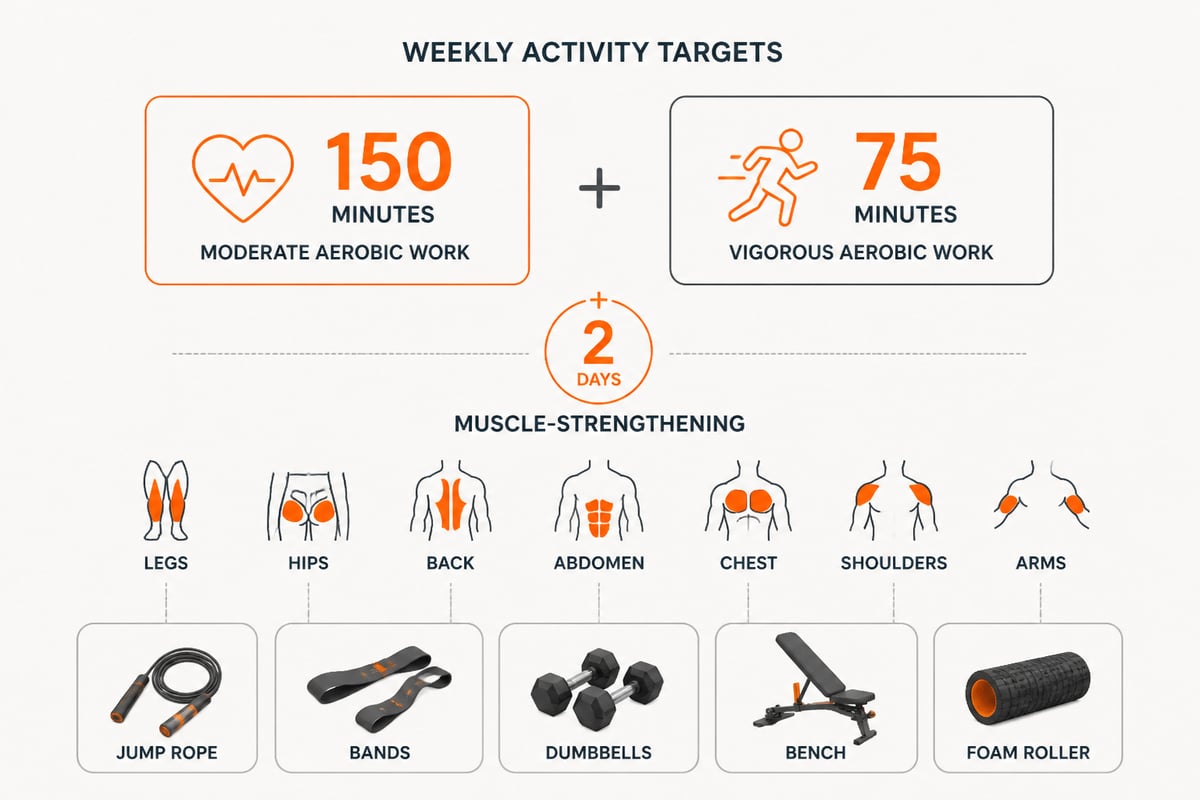
A starter kit needs five things: bands, a pair of adjustable or mid-weight dumbbells, a mat, a jump rope and a foam roller. Together they cost less than a few months of many gym memberships and fit in a single closet shelf.
If you want more ideas for compact options, this roundup of simple exercise equipment covers low-fuss choices that work in small apartments.
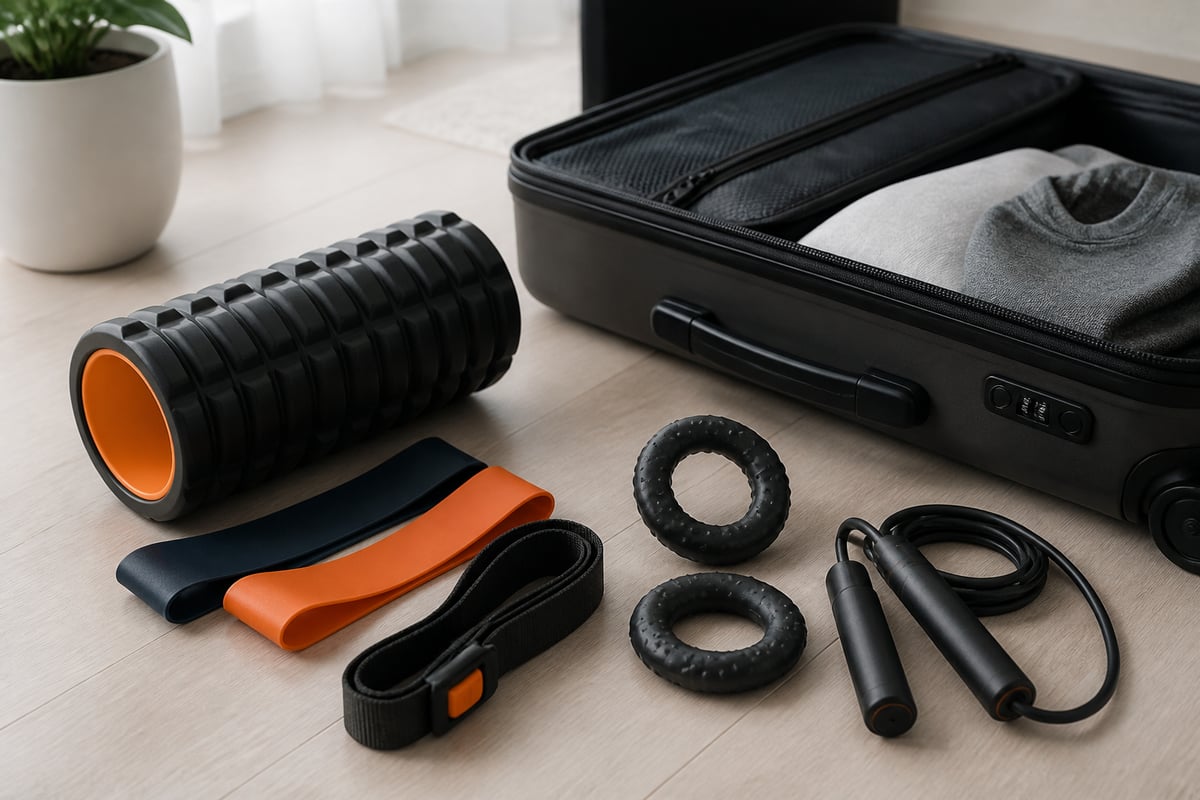
The best travel gear is light, compact and useful for more than one move, which points to bands, a jump rope, a strap and a collapsible roller. If it doesn't fit alongside your shoes and a toiletry bag, it stays home.
Recovery is where travelers get the biggest return. Long flights and cramped seats tighten hips, backs and calves, and a solid roller is the fastest fix. The catch is that a standard foam roller is basically a pool noodle with an attitude problem when you try to pack it.
That's the problem the Morph from Brazyn Life solves. It's a standard-size foam roller with a collapsible core, so it packs down for travel and still works at full size when you're rolling out your quads. It's built for travel, yoga, pilates, general fitness and everyday recovery, which makes it a rare piece of kit that earns its space in both a gym bag and a suitcase. The design is patented, and the brand has been featured on Shark Tank.
A few add-ons stretch the kit further:
You cover them by assigning one tool to each movement pattern: push, pull, hinge, squat and carry or brace. With bands and a pair of dumbbells, you can hit every one of those patterns.
| Movement | Example exercise | Gear that works |
|---|---|---|
| Push | Push-up, overhead press | Mat, dumbbells, bands |
| Pull | Band row, one-arm row | Bands, dumbbells, bench |
| Hinge | Romanian deadlift, glute bridge | Dumbbells, loop band |
| Squat | Goblet squat, split squat | Dumbbell, bench |
| Core | Plank, dead bug, pilates series | Mat |
Core work deserves its own mention, since you rarely need machines for it. A mat and a little patience go a long way, and this guide to gym equipment for core strength offers more options if you want variety.
Pairing two sessions of strength work with your aerobic minutes fits the weekly structure the CDC recommends for adults.
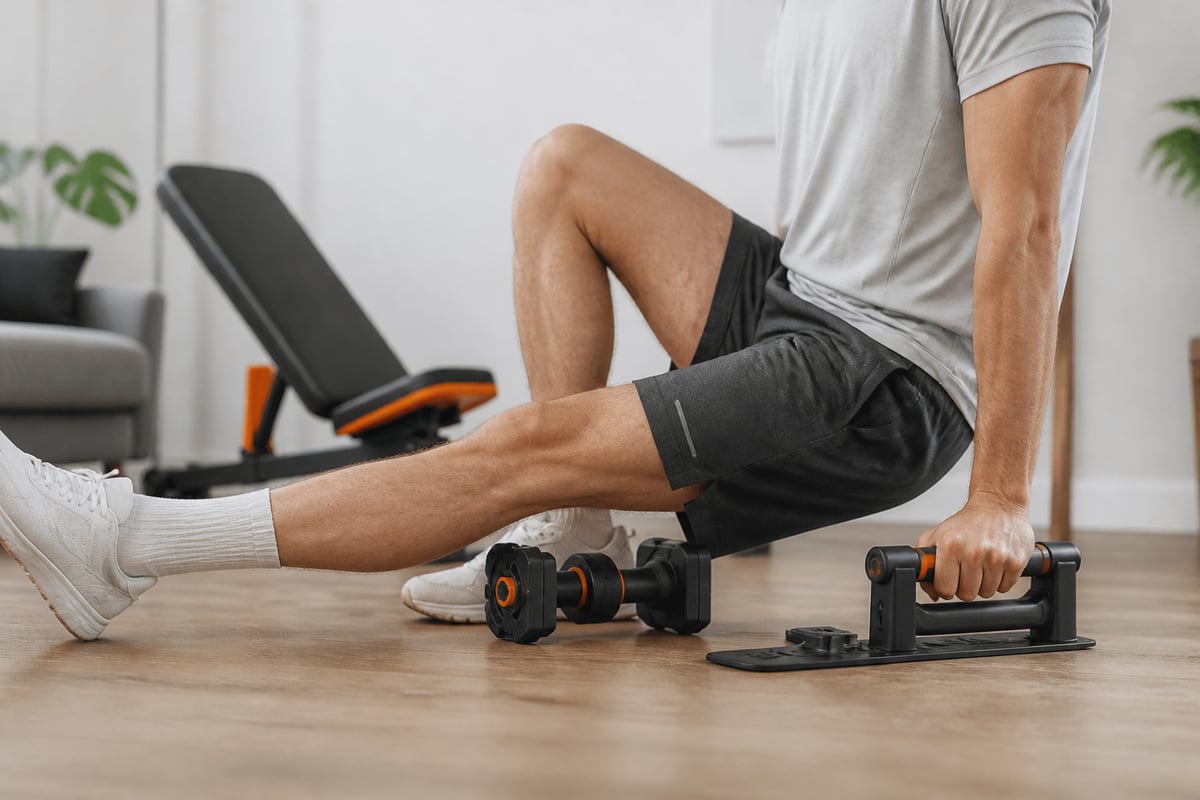
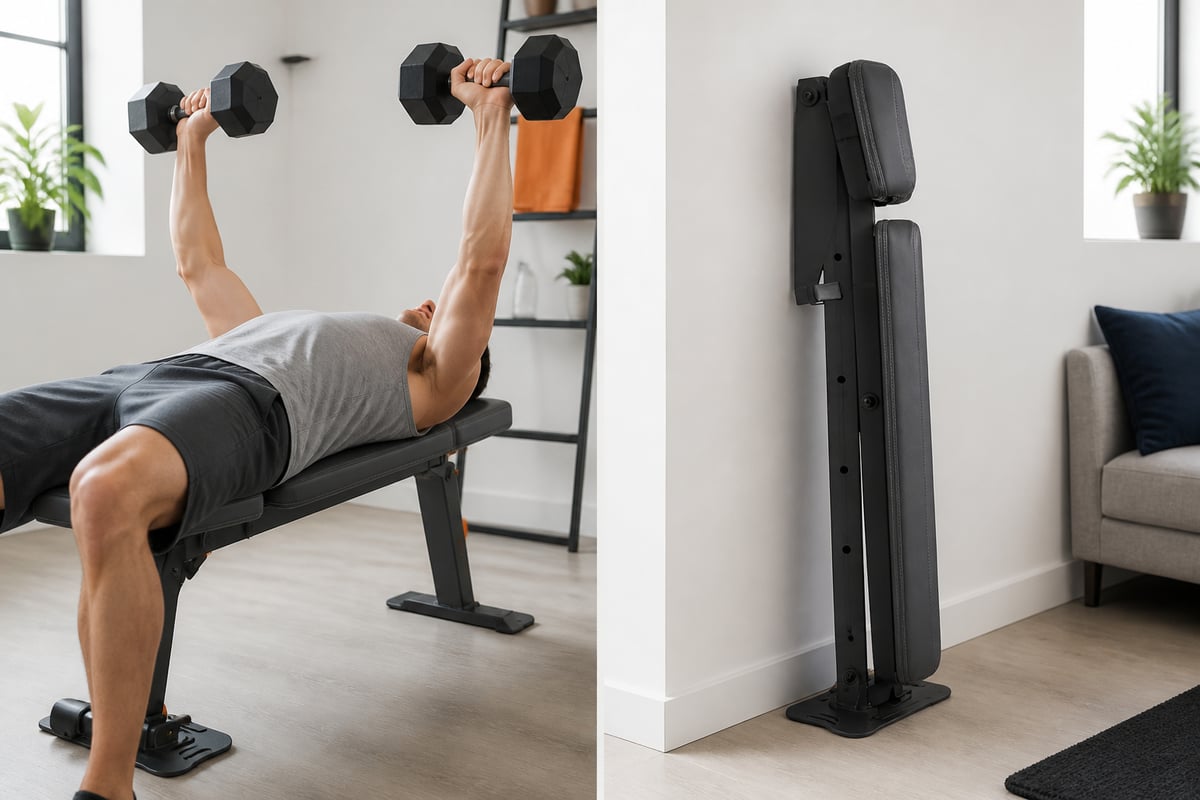
A bench is the one bulky addition worth considering, because it unlocks incline presses, supported rows, step-ups and seated work that floor exercises can't match. The trouble is that most benches are furniture-sized and demand permanent floor space.
Folding designs fix that. The FLiPBENCH from Brazyn Life gives you the functionality of a premium incline and decline bench but takes up only 1 square foot when you're not using it. Flip it down for a workout, flip it up and your floor space is yours again. It pairs well with a dumbbell set or a connected home fitness system, and it suits anyone trying to build a gym in an unused nook.
If you're comparing options before you commit, the top home gym equipment breakdown is a useful reference for what's worth the floor space.
Recovery gear is the physical training equipment that keeps you consistent, since the sessions you skip because of soreness don't count toward any weekly target. Treat it as part of the plan, not a bonus.
A simple recovery stack looks like this:
Roll slowly, pause on tight spots for 20 to 30 seconds and breathe. If a spot is sharp or painful rather than just tender, stop. Persistent joint or tendon pain deserves a professional opinion, and a specialist musculoskeletal team such as GD Health Clinic is the kind of resource worth knowing about for injuries that gear can't fix.
For yoga and pilates fans, a pilates equipment guide shows how a few small tools can turn a floor space into a full studio.
Store your gear by frequency of use: daily items within arm's reach, weekly items on a shelf and bulky items folded or hidden. If setting up takes more than two minutes, you'll find reasons to skip the session.
Some practical rules:
Mindset helps here as much as storage. If you want accountability for building habits around the gear you own, a fitness and mindset coach like The Father Forge focuses on custom programs and mental resilience for training at home.
Buy new for items that touch your body or wear out, such as bands, mats and foam, and consider used or refurbished for heavy, durable items like dumbbells, benches and racks. Iron doesn't care how many owners it has had.
Used gear saves real money on weights, but inspect anything with moving parts, cables or padding.
Before any purchase, run this quick test:
Two yeses and you're probably fine. Three or four, buy it.
A workable week pairs two strength sessions with three short cardio blocks and a few minutes of rolling and mobility on most days. It lines up with the CDC's strength-on-two-days guidance without taking over your life.
| Day | Focus | Time |
|---|---|---|
| Monday | Full-body strength (dumbbells, bands) | 30 to 40 min |
| Tuesday | Jump rope or brisk walk, then roll | 20 to 30 min |
| Wednesday | Mobility, yoga or pilates on the mat | 20 to 30 min |
| Thursday | Full-body strength (bench, bands) | 30 to 40 min |
| Friday | Cardio of your choice, then roll | 30 min |
| Weekend | Active fun, long walk, light stretch | Flexible |
Swap days freely. On travel weeks, drop to bands, a jump rope and your collapsible roller, and you'll still hit both strength days. Starting slowly and building activity up over time is the approach recommended for people who are new to exercise.
If you want to keep exploring ideas as your kit grows, this overview of innovative fitness equipment is a good next browse.
Your next step is to pick one gap in your current routine, whether that's strength, cardio or recovery, and fill it with a single piece of gear this week. If recovery is the gap, Brazyn Life makes it easy to start with a collapsible roller, and if floor space is the problem, the FLiPBENCH folds away when your workout is done. Shop now and build a setup that goes wherever your training does.
