Your Cart is Empty


Exercise and fitness equipment is any gear that helps you build cardio fitness, strength, flexibility or recovery, from a jump rope to a full squat rack. The best setup for a home gym is the one that matches your goals, fits your floor space and gets used at least a few times a week.
That last part matters more than any spec sheet. A treadmill that becomes a very expensive coat rack helps nobody, so this guide walks you through what to buy, what to skip and how to build a space that actually earns its square footage.
You need far less than the fitness industry would like you to believe: a clear patch of floor, one or two types of resistance, and a way to recover afterward.
The CDC says adults should get at least 150 minutes of moderate-intensity aerobic activity per week, or 75 minutes of vigorous activity, or an equivalent mix. It also recommends muscle-strengthening activities on at least 2 days each week, working all major muscle groups.
That gives you three buckets to shop for:
Notice how forgiving those buckets are. Cardio can be a brisk walk or a jump rope. Strength can be a pair of dumbbells, a band or your own body weight, which the American Heart Association lists alongside free weights and machines as valid resistance. Recovery can be a mat and a foam roller. A beginner who owns one item from each bucket already meets the guidelines on paper, and can add pieces only when a real gap shows up, like wanting heavier loads or a rainy-day cardio option.
Everything else is a bonus. If you want a quick tour of the basics that fit a small space, this rundown of small exercise equipment for home is a good place to start.
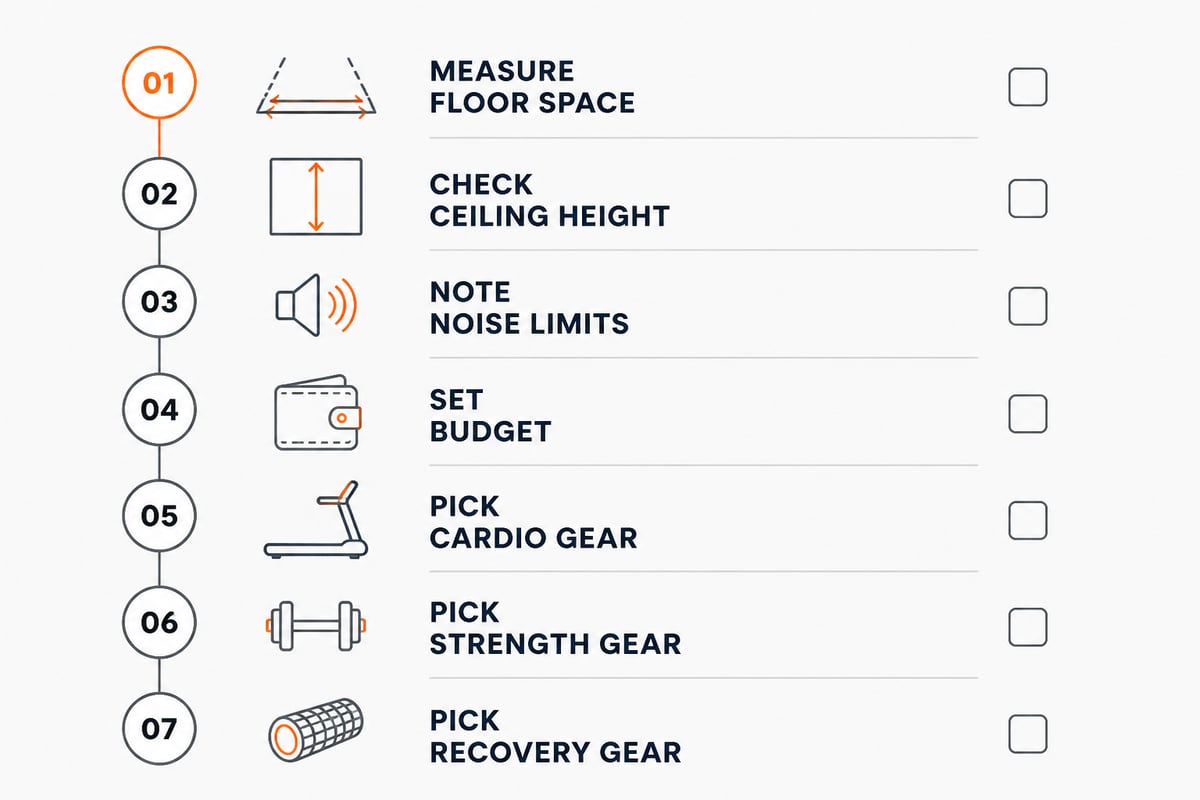
Plan around the floor you actually have, then spend in the order of how often you will use each item.
Grab a tape measure before you grab your wallet. A rowing machine, a treadmill and a power rack all want different amounts of room, and ceiling height matters if you plan to press weights overhead or jump.
A simple way to size things up:
If money is tight, secondhand gear can stretch it. Plenty of lifters pick up used exercise equipment for sale or look at refurbished exercise equipment for the bigger, pricier pieces. Check moving parts, cables and welds before you hand over cash.
Pick the cardio machine you will enjoy using, because the best one is the one you will not dread.
Start with the weekly target from the CDC: 150 minutes of moderate activity, or 75 minutes of vigorous activity. Spread across five days, that is 30 moderate minutes a day, roughly a podcast episode or one sitcom. A machine you like makes that feel like a treat. A machine you resent turns it into a chore you negotiate your way out of by Wednesday. Try before you buy if you can, since a bike seat or an elliptical stride that feels fine for two minutes in a store can feel very different at minute 25.
Here is how the common options compare:
| Equipment | Best for | Space needed | Impact on joints |
|---|---|---|---|
| Treadmill | Walking, running, incline work | Large | Moderate to high |
| Stationary bike | Steady cardio, intervals | Medium | Low |
| Rowing machine | Full-body cardio | Large (but stores upright) | Low |
| Elliptical | Low-impact endurance | Large | Low |
| Jump rope | Quick, high-intensity bursts | Tiny | High |
If you are on a tight budget or a tight floor plan, a jump rope or a pair of good walking shoes does a surprising amount of work. Stationary machines shine when weather, schedules or neighborhood hills get in the way, and this overview of stationary gym equipment covers the main choices.
Want to understand why cardio and strength training feel so different in the body? Brazyn Life explains the split in its guide to aerobic vs anaerobic exercise.
Start with adjustable or low-footprint resistance, like dumbbells, bands and a bench, then add heavier gear once your routine sticks.
The American Heart Association notes that strength training can use free weights, machines or body weight as resistance. So you have options, and none of them require a basement full of iron.
A sensible first-purchase list:
On sets and reps, the CDC says a strength-training set can be 8 to 12 repetitions, that one set is a starting point, and that two or three sets may provide additional benefit. You do not need a complicated program to begin. For ideas on what to do with those bands, try these resistance band workouts.
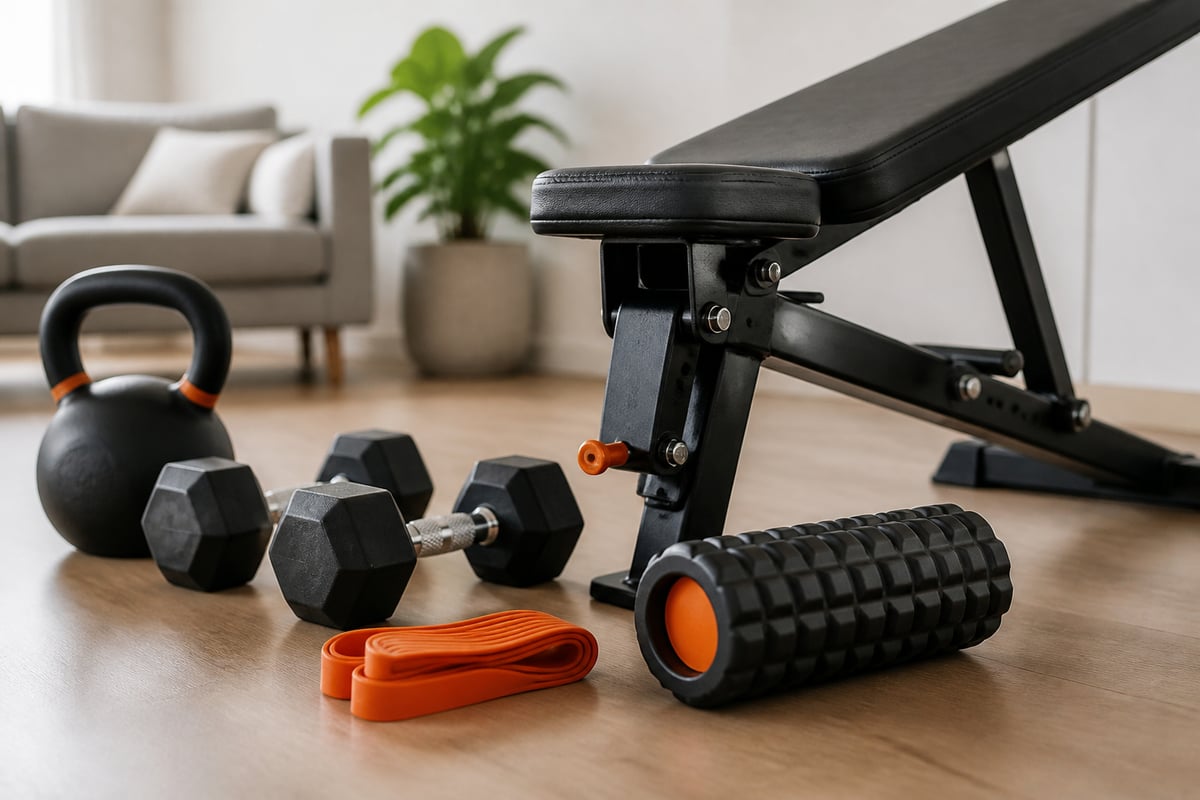
A bench is worth having because it unlocks dozens of exercises, but a standard one eats floor space you may not have.
Think about what a bench actually adds. Lying on it, you can press dumbbells for chest and shoulders. Sitting on it, you can do overhead presses with your back supported. Facing it, you can do step-ups, split squats and incline push-ups. Lying chest-down on an incline, you can row. That is a lot of variety from one piece of furniture, and it means you can cover every major muscle group, which is what the CDC's twice-weekly strength recommendation asks for. The catch is that a fixed bench is roughly the size of a twin mattress that never goes away, and many apartments and shared rooms simply cannot give up that footprint.
That is the problem a folding design solves. The FLiPBENCH gives you the function of an incline/decline bench but takes up only 1 square foot when you are not using it. Flip it down for your workout, flip it up and your floor is yours again. It is a smart match for a dumbbell set, a weight rack or a connected home fitness system, especially in a spare nook or shared room.
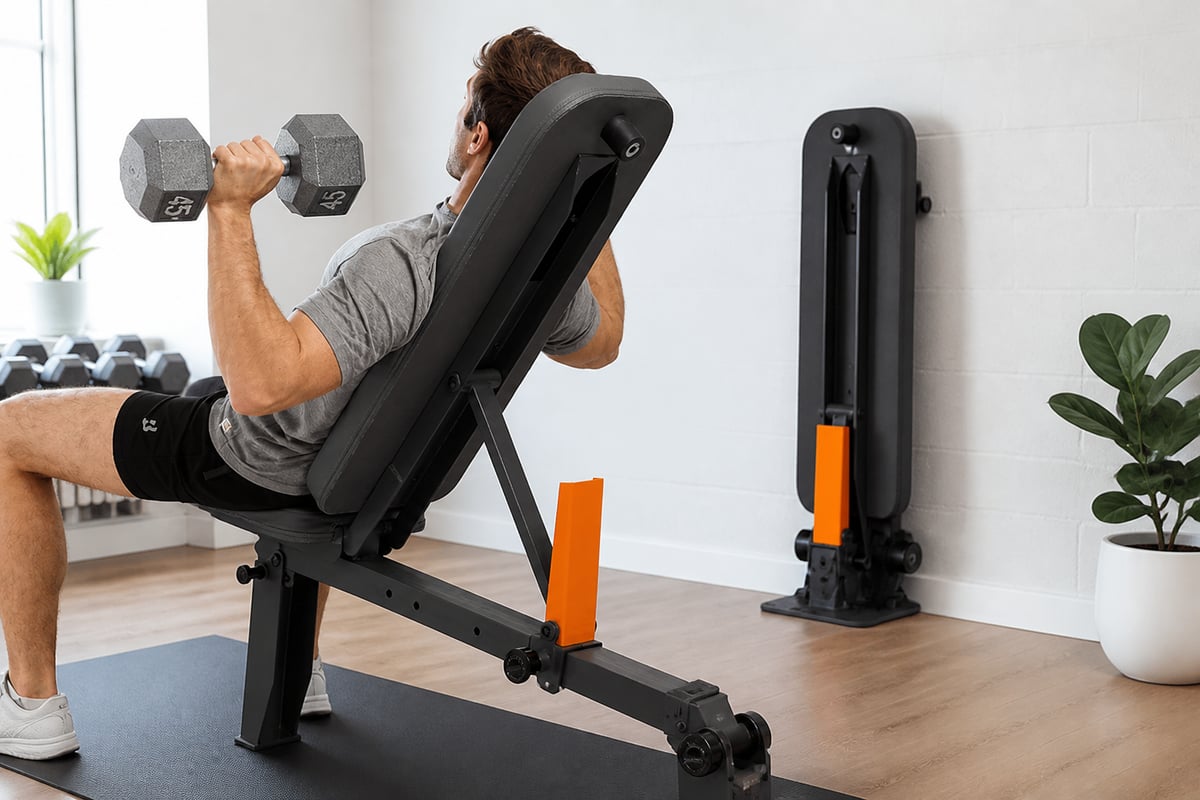
If you are weighing bench styles, these guides to fitness gear for bench press and multi-functional gym equipment can help you compare.
Floor-based gear like mats, bands and balls builds core strength and flexibility in a few square feet.
Yoga and pilates need very little: a mat, maybe a strap or a small ball. They also pair well with heavier training, since mobility work helps you move through a full range of motion. Browse this primer on yoga and pilates equipment or the pilates workout equipment list for starting points.
For the middle of your body, simple tools go a long way. Planks, dead bugs and band-resisted rotations do plenty without a machine, and this look at gym equipment for core strength shows what else you can add.
If you are curious about the physical side of training, the guide to how top athletes train has habits worth borrowing. And if building muscle is the goal, nutrition counts as much as gear. Brazyn Life's piece on protein and your body covers the basics. For men weighing training, hormones and body composition with a clinician, a physician-led practice like Maximum Performance Wellness Center is one example of where that conversation can happen.
Recovery gear belongs in your setup because you only get stronger if you can train consistently, and tight, sore muscles make consistency harder.
This is the piece that often gets bought last, if at all. A foam roller, a massage tool or a stretching strap takes up almost no room and gets used after every session. It is also the category that travels best, which matters if you train on the road, in hotel gyms or in a spare bedroom.
The Brazyn Life Morph is a collapsible foam roller that packs down for travel. It is built for travel, yoga, pilates, general fitness and everyday recovery, and its patented design earned it a feature on Shark Tank. If you want to customize it, the Morph skins swap the look, and the Morph extension kit adds versatility.
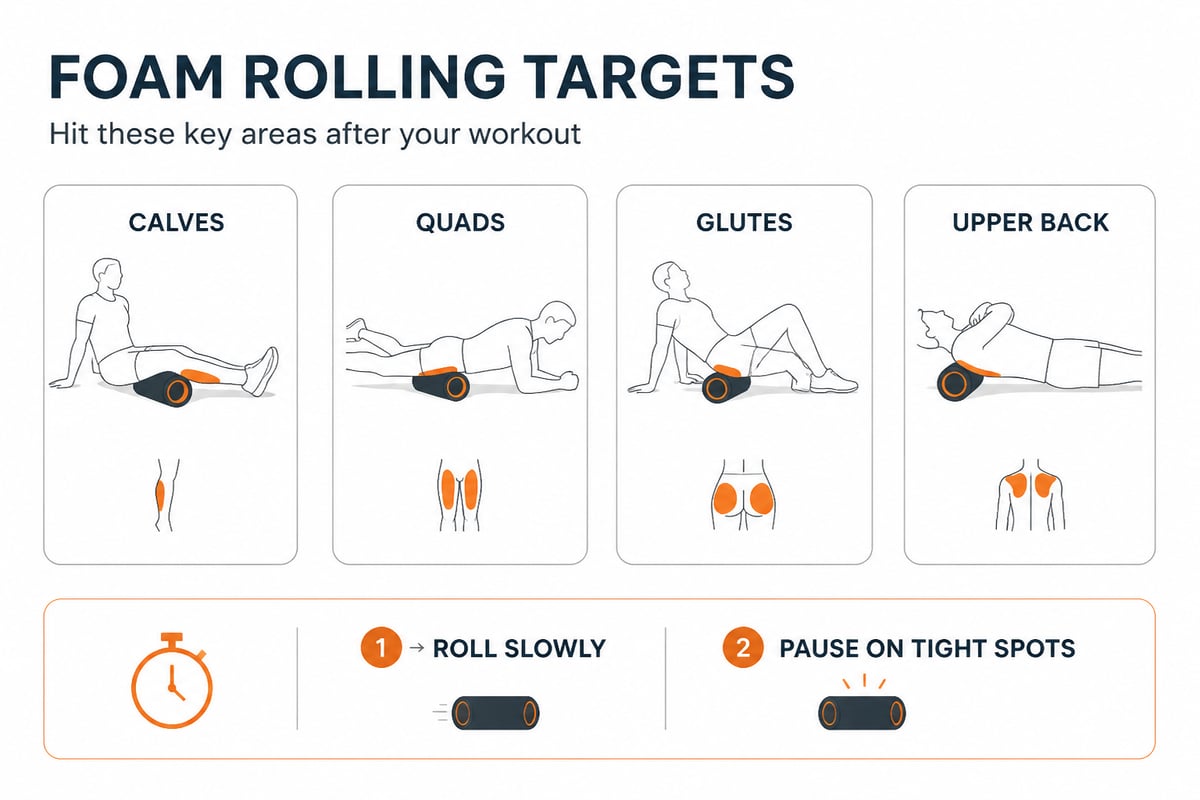
To get the most from a roller, read the do's and don'ts of foam rolling and try the top 5 foam rolling exercises. For tools beyond the roller, the Morph stick and massage rings reach spots a roller cannot.
Set up your space so the first rep is easy: gear visible, floor clear and no setup tax before you start.
Small design choices change behavior more than motivation does. Put your mat where you can see it. Keep bands on a hook. Store heavy items low. If everything lives in a closet behind a stack of boxes, you will skip the workout.
A layout that works for most small rooms:
For more layouts and gear pairings, see this list of top home gym equipment and these indoor gym equipment picks.
Increase effort gradually, learn the form before adding weight, and let your body tell you when to back off.
Starting light and building up gradually is the sensible approach, so do not go from the couch to a heavy squat on day one. Start light, add a little each week and treat soreness as feedback, not a trophy.
A few habits keep you training for years:
If you have a health condition, an injury or questions about what is safe, talk with a clinician first. Printed patient education from publishers like Mediscript can also help you understand wound care, medications and recovery in plain language.
Your next step is simple: measure the spot in your home where a workout could happen, then pick one piece from each bucket, cardio, strength and recovery, and start there. When you are ready to add the recovery piece, check out the FLiPBENCH for a space-saving strength base, and see how Brazyn Life can help you shop now for portable foam rollers and other gear built for people who train at home, in the gym and on the road.
