Your Cart is Empty


The strength training equipment every home gym needs comes down to four core pieces: a barbell, a rack or squat stand, adjustable dumbbells and an adjustable bench. Add a way to recover and you have a setup that covers squats, presses, rows, deadlifts and almost everything in between. You do not need a warehouse full of machines, just a few well-chosen tools and the discipline to use them.
This list walks through six items, from the heavy iron to the gear that keeps you moving the next morning. Prices are approximate as of November 2026 and will shift with sales and shipping.
The Ohio Bar is a 20 kg (44 lb) Olympic barbell that handles squats, presses, deadlifts and Olympic lifts in one piece of steel. Everything else in a home gym is built around a barbell, so this is the purchase to get right first. The 28.5 mm shaft diameter keeps your grip comfortable on deadlifts and rows without feeling oversized on presses. The 190,000 PSI tensile strength steel is built to handle heavy loads without taking a permanent bend after a heavy set. Picture a typical week: squats on Monday, overhead presses on Wednesday, deadlifts on Friday, all with the same bar and no swapping gear.
Best for: home-gym lifters who want one versatile bar for squats, presses, deadlifts and Olympic lifts, without buying a specialty bar for each.
Verdict: A 2,000 lb capacity is more than you will load, which is exactly the point of buying once.
The SML-2C Squat Stand 2.0 is a compact rack for squats, bench presses and overhead work, built from heavy-gauge steel. A barbell without a safe place to rack it is just a very expensive hallway hazard. The 3 x 3 in, 11-gauge steel uprights give the frame a solid build for heavy squats. Westside hole spacing through the bench area means the hooks can sit close together at the heights where small adjustments matter most, such as setting a bench press start point a notch higher or lower. Because the stand takes a standard Olympic barbell, it pairs directly with the bar in item one.
Best for: lifters with limited floor space who still want a sturdy platform for squats, benching and overhead pressing.
Verdict: Squat stands take less room than a full cage, which matters when your gym is also your garage or spare bedroom.
If you are still deciding how much rack you need, the strength training equipment guide at Iron Company compares cages, half racks and stands side by side.
The Pro Series Adjustable Dumbbells replace multiple pairs of fixed dumbbells with a single compact pair that adjusts by pin. Dumbbells fill the gaps a barbell leaves: single-arm rows, lunges, curls and lateral raises. Each dumbbell adjusts from 5 to 50 lb, so one pair can cover light shoulder raises and heavier one-arm rows. Weight changes in 2.5- or 5-lb increments, which gives you room to progress in small, steady steps instead of jumping ten pounds at once. The selector pin design keeps switching weights between exercises quick and simple.
Best for: home-gym users who want broad dumbbell weight coverage without surrendering half a wall to a rack.
Verdict: Fast to adjust and small to store, which means you will actually use them between sets.
The Super Bench PRO V2 is an adjustable, foldable weight bench that supports flat, incline and seated work. Pair it with the barbell and dumbbells above and your pressing and rowing options multiply quickly. The adjustable seat and back positions let you set a steady incline for dumbbell presses, or sit upright for seated shoulder work, instead of tolerating one fixed angle. Compatibility with Ironmaster bench attachments means you can add accessories later rather than replacing the bench. When the session ends, the foldable design lets you tuck it against a wall or into a closet, so the floor space goes back to being a floor.
Best for: lifters who want one versatile bench for presses, incline work, dumbbell training and add-on attachments.
Verdict: A bench that adjusts and folds is the difference between a gym and a clutter problem.
The FLiPBENCH is an incline/decline bench that flips up against the wall when you are done, taking roughly one square foot of floor space. If your gym doubles as a living area, a bench that vanishes is a genuine feature. Having both incline and decline positions on one bench opens up chest-focused dumbbell presses at different angles, plus decline work that many fixed flat benches cannot offer. Flipping it down takes a moment, so a guest room can switch from office to workout space in under a minute. Because it uses so little floor when stored, it suits apartments, bedrooms and shared garages where every foot is contested.
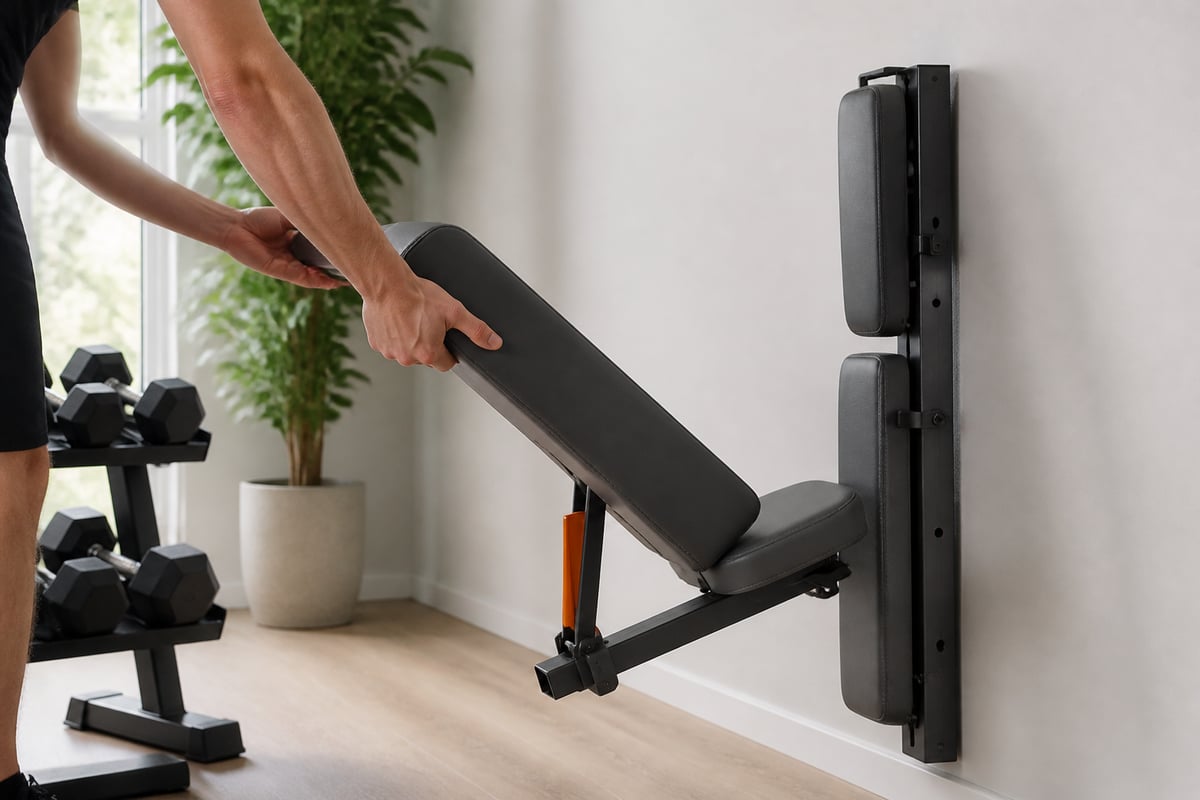
Brazyn Life describes it as delivering the functionality of a premium incline/decline bench. Brazyn Life's FLiPBENCH page has more details on the bench.
Best for: small rooms and shared spaces where floor space has to be reclaimed after every workout.
Verdict: A smart pick when square footage, not budget, is your limiting factor.
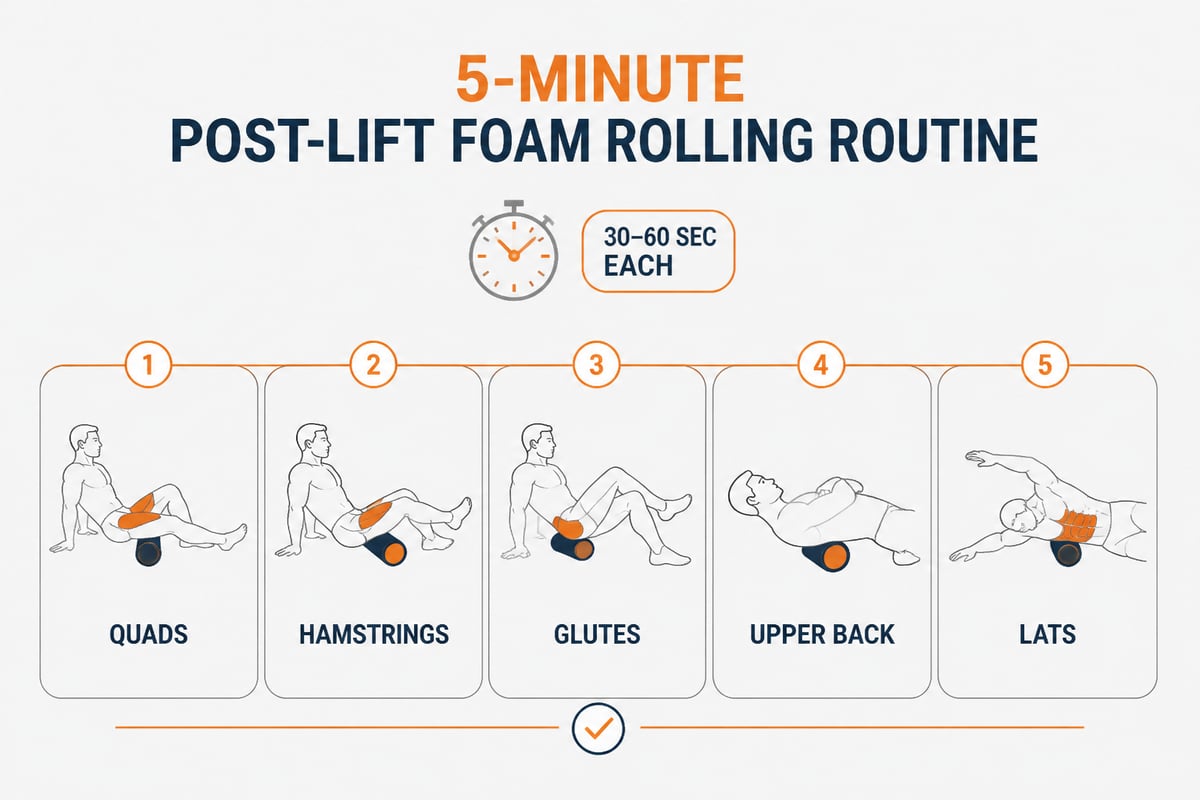
The Morph Foam Roller is a standard-size foam roller with a collapsible core, so it packs down flat for travel. Lifting breaks muscle down; recovery is where you actually get stronger, and a roller is the cheapest tool for loosening up before and after sessions. After heavy squats, spend a minute on the quads and glutes, then move to the upper back after pressing day to ease the stiffness that builds from bench work. Keeping a roller within reach of the rack makes it far more likely you will use it, since the best recovery tool is the one already on the floor.
Brazyn Life built it for travel, yoga, pilates, general fitness and everyday recovery, and it has been featured on Shark Tank and carries patented designs. Because it collapses, it works as a hotel-room roller on Monday and a garage-gym roller on Saturday.
Best for: anyone who trains at home, at the gym and on the road and wants one roller for all three.
Verdict: The least glamorous piece of strength training equipment on this list, and the one that keeps you showing up.
| Item | Category | Key spec | Approx. price |
|---|---|---|---|
| Ohio Bar | Barbell | 20 kg, 190,000 PSI steel | US$305 |
| SML-2C Squat Stand 2.0 | Rack | 3 x 3 in, 11-gauge uprights | US$495 |
| Pro Series Adjustable Dumbbells | Dumbbells | 5 to 50 lb per hand | US$429 |
| Super Bench PRO V2 | Bench | Adjustable and foldable | US$399 |
| FLiPBENCH | Wall-flip bench | Uses about 1 sq ft stored | Check product page |
| The Morph Foam Roller | Recovery | Collapsible core | Check product page |
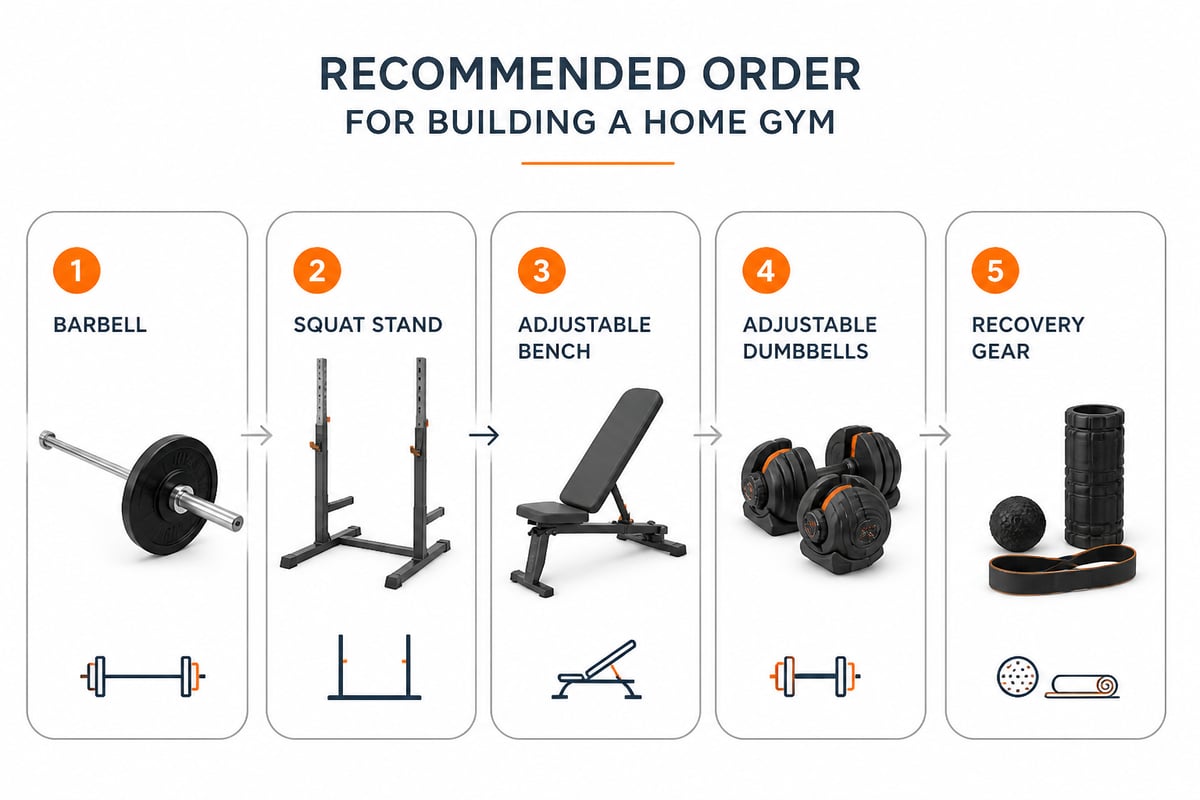
Start with the bar and rack, then add a bench, then dumbbells, then recovery tools. That order matches how much each piece expands what you can train. A barbell and stand cover squats, presses and pulls on their own, a bench opens up incline and flat pressing, and dumbbells add the isolation and single-arm work.
Buying in stages also protects your budget and your floor. Live with the first two pieces for a month and you will know whether you need a bigger rack, a heavier set of dumbbells or simply more room. For more ideas on what to add next, Brazyn Life's roundups on top home gym equipment and small exercise equipment for home are good places to browse.
The 2 2 2 rule is a loose progression guideline, not a law of physics: if you can complete two extra reps on your last set for two sessions in a row, raise the weight. It keeps progress steady without chasing ego lifts.
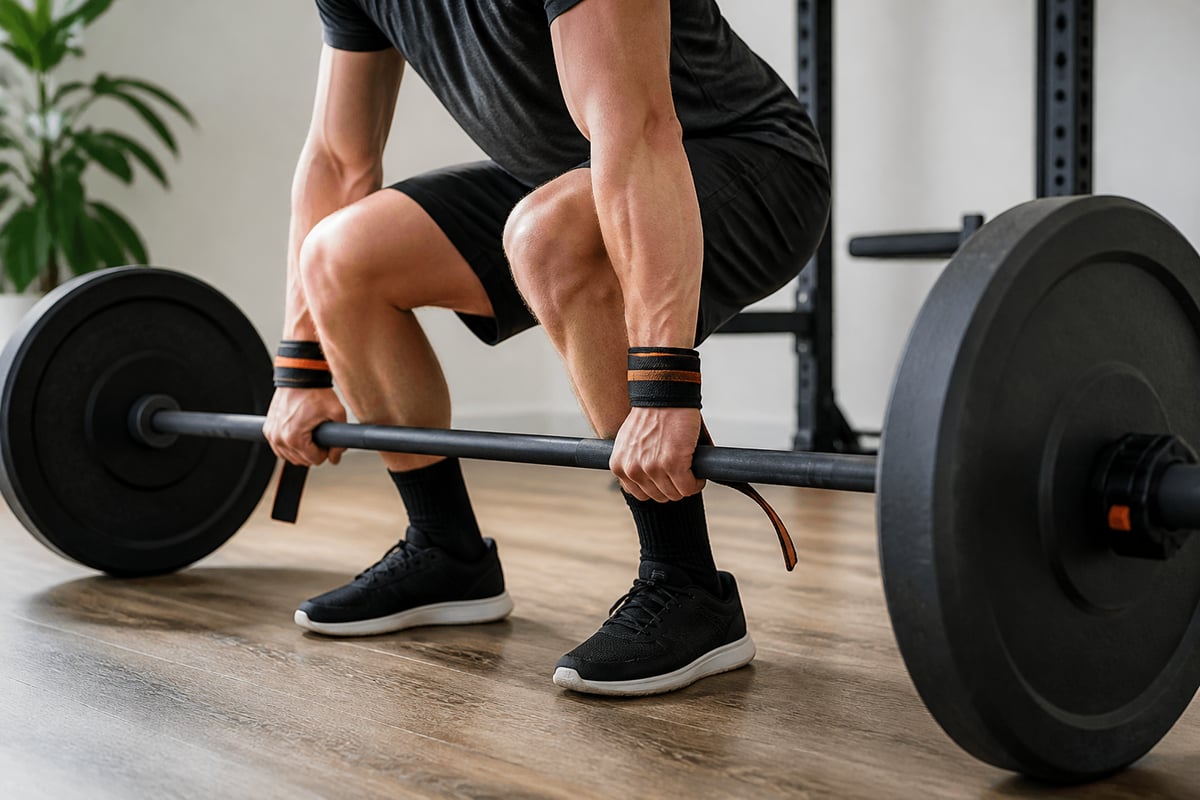
A functional setup fits in roughly a 6 x 8 foot patch of floor, enough for a stand, a bar and a bench. The four core items above add up to about US$1,628, before plates, which are the one thing this list leaves out. Used plates are common and sell well below new prices, so shop secondhand there.
Keep ceiling height in mind. Overhead pressing needs room above you and a loaded bar needs room beside you, so measure before you buy a rack. For more on equipment that works in tight spaces, see this breakdown of multi-functional gym equipment.
Cable towers, leg-press machines and dedicated cardio equipment can all wait until you have outgrown the basics. Specialty bars, bands, kettlebells and a pull-up bar are useful additions once the core four are in place. Adding them early mostly adds clutter.
One extra worth considering is the mobility side of your routine. Tight hips and shoulders limit squats and overhead work more often than a lack of weight does, which is why recovery gear earns a spot next to the iron. Brazyn Life's guide to gym lifting equipment covers more accessories worth knowing about.
Common strength trainings include squats, deadlifts, bench presses, overhead presses, rows and pull-ups, along with dumbbell work like lunges and curls. Most programs build around those compound lifts and add a few isolation exercises for the muscles that need extra attention.
For most people a barbell, squat stand and adjustable bench beat any single machine because they cover far more movements. If space is tight, a wall-flip bench plus adjustable dumbbells gives you a surprising amount of training variety in a small footprint.
Your next step is simple: measure the floor and ceiling in the room you plan to train in, then pick the barbell and stand that fit it. Once the iron is sorted, add recovery to your setup with a collapsible roller that travels as well as it stores. Shop now at Brazyn Life to find gear built for training at home, at the gym and on the road, including The Morph Foam Roller.
