Your Cart is Empty


The fastest way to find a fitness equipment shop near me is to search a map app for "gym equipment store" or "exercise equipment" instead of a brand name, filter by open now, and call the top three before you drive anywhere. Most people lose an hour to wrong turns and out-of-stock shelves, so a two-minute phone call is the best shortcut you have.
This guide walks you from the first search to confident buying. You will learn which search terms work, what kinds of stores exist, how to judge one in person, and when a small piece of portable recovery gear makes the trip unnecessary.
A search for a fitness equipment shop near me returns a mix of big-box sporting goods stores, specialty gym equipment dealers, used equipment resellers, and the occasional physical therapy supply shop. Map results sort by distance and reviews, so the closest pin is not always the one with what you need. A store with 4.8 stars might be a boutique that sells only kettlebells, while the 4.2-star warehouse down the road has the full rack lineup.
Here is how the main store types differ:
| Store type | Typically stocks | Good for |
|---|---|---|
| Big-box sporting goods | Mats, bands, light weights, foam rollers | Quick grabs and returns |
| Specialty gym equipment dealer | Racks, benches, cardio machines | Large purchases you want to test |
| Used or refurbished reseller | Discounted machines and weights | Stretching a budget |
| Physical therapy or wellness shop | Massage tools, braces, mobility gear | Recovery-focused items |
Knowing which category you need before you search saves a lot of driving. A yoga strap and a squat rack live in very different parts of town. Big-box shelves are built for impulse buys, so expect a handful of basic models rather than a deep selection. Specialty dealers often have staff who can talk through your space and goals, which is worth a lot if you are buying your first machine. Used resellers change inventory constantly, so a quick call beats trusting last week's listing. And a physical therapy shop is an underrated stop for hands-on recovery tools you can pick up and try before you commit.
Use specific search terms, check the map listings, and confirm stock by phone, in that order. That sequence takes about five minutes and filters out most dead ends.
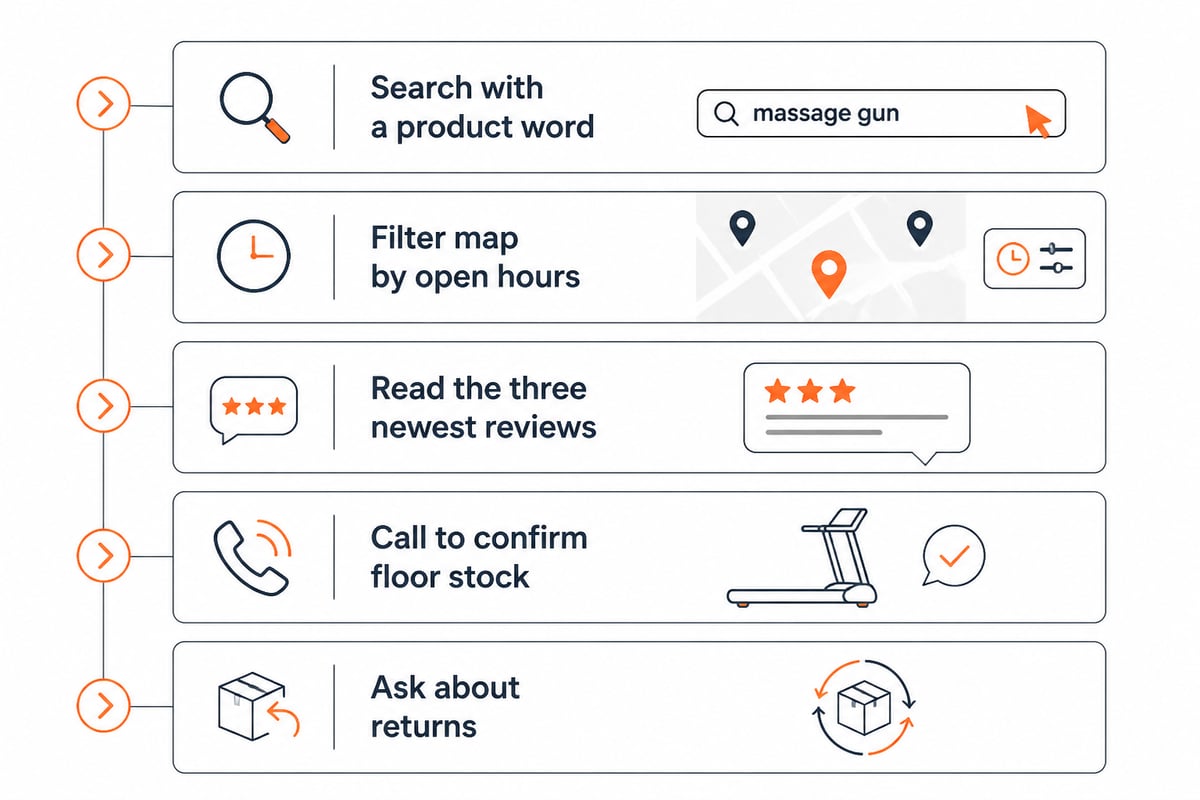
One more trick: voice search on your phone handles "fitness equipment near me open now" surprisingly well, and it is handy when you are walking to the car.
Test the gear with your own body, because comfort and fit are things a product photo cannot tell you. Consumer Reports recommends trying a treadmill before buying when you can, checking comfort, foot clearance, display readability, and whether the controls are easy to reach. That same logic applies to nearly everything in the building.
Run through this quick checklist:
Staff who ask what you are training for are a good sign. Staff who steer you straight to the priciest item are not.
Budget depends on how far you take your home setup, and the range is wide. According to Consumer Reports, a bare-bones home gym can cost less than $200, with resistance bands around $18 and a mat running $20 to $100 or more.
Step up and the numbers climb quickly. The same guide puts a next-level home gym at $600 to $2,000, with exercise bikes at $200 to $1,500 or more and adjustable dumbbells at $180 to $700 or more. A full setup can reach $5,000 to $12,000 or more, and treadmills alone run $1,000 to $6,000 or more.
That spread is the reason a shop visit pays off for big machines. Standing next to a $3,000 treadmill is a better filter than a star rating.
For smaller budgets, used and refurbished gear is worth a look. Our breakdown of refurbished exercise equipment covers what to inspect, and the guide to used exercise equipment for sale explains how to avoid secondhand headaches.
Buy bulky, expensive, or fit-sensitive gear in person, and order small, low-risk items online. That split saves both gas and regret. The logic is simple: the more money a piece costs and the more it has to match your body or your room, the less a product photo can tell you.
Worth the drive:
Fine to skip the trip:
A good rule of thumb: if you could mail it back in a padded envelope without swearing, buy it online. If it needs a dolly, try it first.
If you want ideas for the smaller end of the spectrum, the roundup of small exercise equipment for home is a good starting point, and the one on yoga and pilates equipment covers the studio side.
Recovery tools are the one category where you often do not need a store at all, especially if you travel or train in more than one place. A foam roller that fits a suitcase solves a problem a local shop cannot: staying consistent when your routine leaves home.
That is the idea behind the Morph from Brazyn Life, a standard-size foam roller with a collapsible core so it packs down for travel. It is built for yoga, pilates, general fitness, and everyday recovery, and its designs are patented. The brand was also featured on Shark Tank.
If you like to customize, the Morph Skins add a different look, and the Morph Extension Kit is there if you want to build on the setup. For anyone who wants more than one tool in the bag, the Morph bundles group products together. For current pricing, sizing, and what ships in each bundle, check the product pages directly.
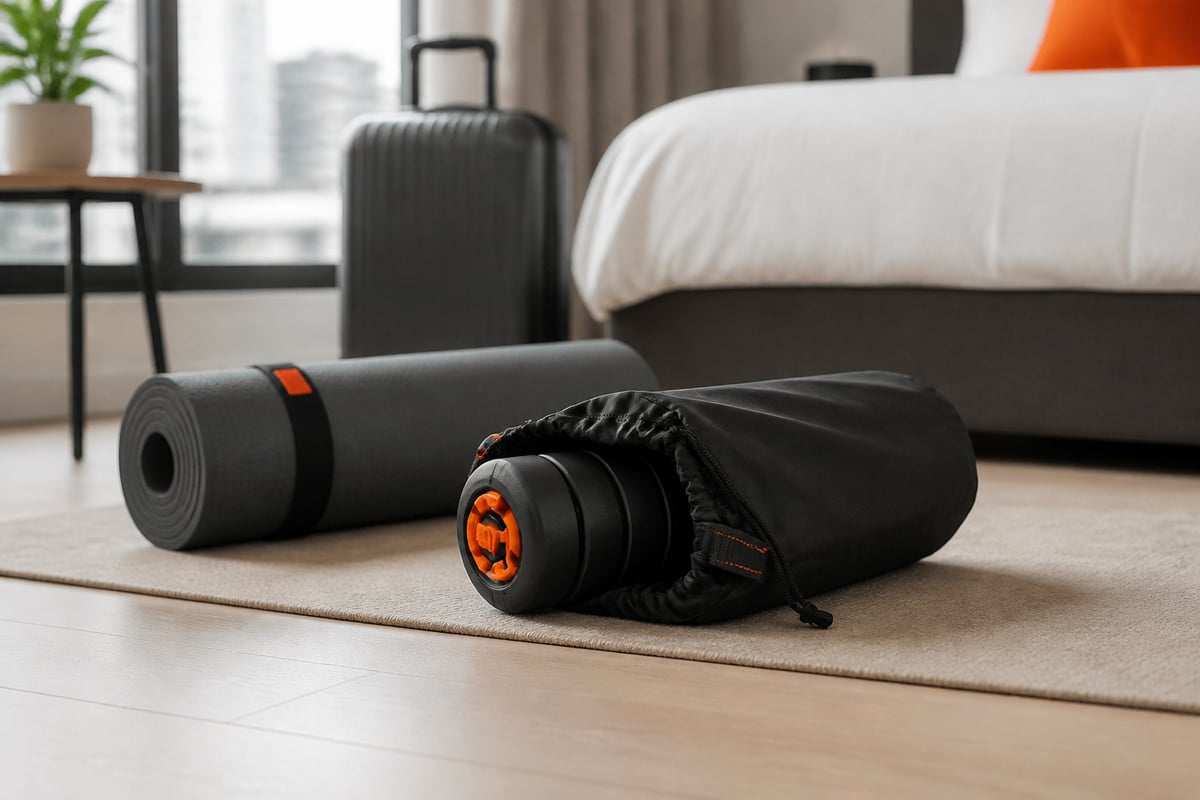
Shipping is simple to plan around, too, so check the product pages for current shipping terms.
Start small and stay consistent, because a roller you use for ten minutes a day beats a rack you use twice. The CDC's guidance on adding physical activity for adults suggests breaking your recommended activity time into manageable portions, and the same approach works for recovery.
A simple pattern looks like this:
For stretching, the Brazyn Fit Strap pairs well with rolling, and the massage rings are a compact way to work hands, forearms, and smaller trouble spots. Add a resistance band kit and you have a mobility-and-strength toolkit that weighs less than a pair of sneakers.
Travel is where routines usually fall apart, and where portable gear earns its keep. A hotel gym often has a lonely treadmill and a few dumbbells, and almost never a decent roller.
Pack for it like you would pack for any trip. If you are heading to the mountains, a quick look at Ski.Vacations can help you plan where to ski and stay, and a collapsible roller makes post-slope legs far happier. If your travel ends with a soak, luxury hot tubs from Arctic Spas show how some people pair heat with a rolling session to unwind. And once you are done for the night, comfortable sleepwear matters more than most people admit, which is where something like PEARLYjams comes in for the whole-family set.
Even on a road trip, ten minutes of rolling at a rest stop beats sitting stiff for the next three hours.
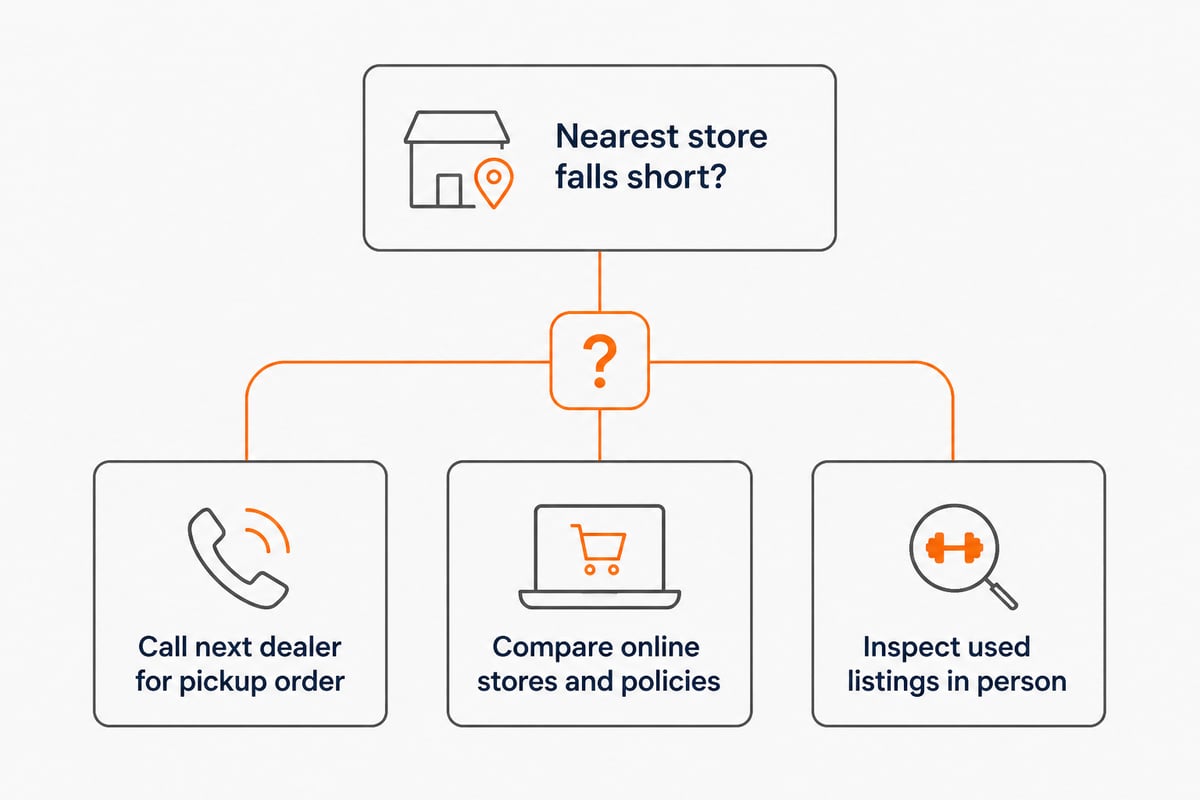
If the nearest fitness equipment shop near me comes up short, widen the radius a little, then compare against online options before settling. A 20-minute drive to a specialty dealer often beats a 5-minute drive to a store that stocks one dusty bench. Specialty dealers tend to keep a real showroom floor, so you can test several models side by side instead of guessing from one.
Your options, in order:
Your next step is simple: open your map app, search for a specific product like "foam roller store," and call the top result to confirm floor stock before you drive. If your gear needs to travel with you, Brazyn Life makes it easy to shop now for collapsible foam rollers and portable recovery tools that pack down for the road. Browse the product pages for current details, then pick the piece that fits your routine.
