Your Cart is Empty


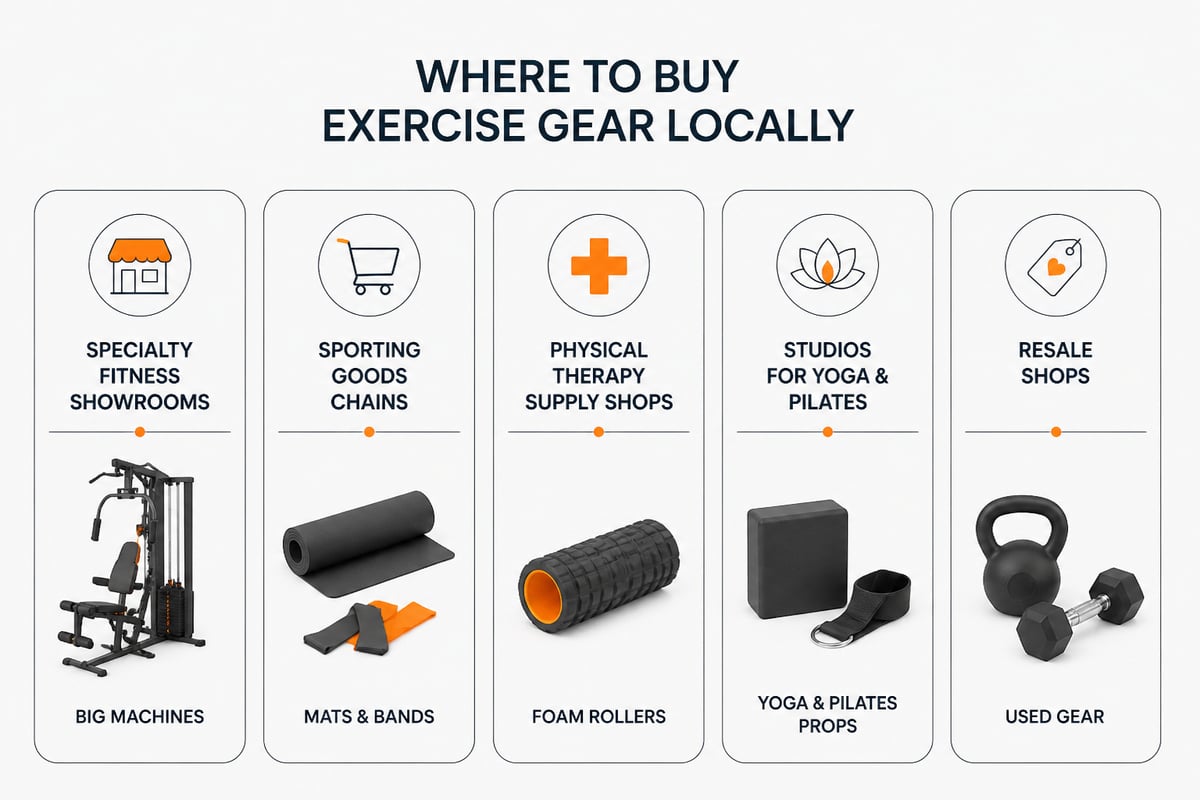
The fastest way to find an exercise equipment shop near me is to search your map app for "fitness equipment store," then narrow by what you plan to buy: big machines come from specialty fitness showrooms, while yoga, pilates and foam rolling gear turns up in sporting goods chains, physical therapy supply shops and online brands that ship to your door. If you travel often or like to stay active on the go, you may find the best pick is smaller, lighter and easier to pack than anything on a showroom floor.
This guide walks you through where to look, what to check before you leave the house, and how to decide between a store visit and ordering online.
You can find a local exercise equipment shop through map apps, review sites, sporting goods chains, specialty fitness showrooms and even secondhand marketplaces, and each one suits a different kind of buyer.
Start with the obvious: type "fitness equipment store" or "gym equipment store" into Google Maps or Apple Maps while your location is on. Sort by distance, then by rating. Review platforms like Yelp also keep lists of local gear shops, and the photos people post show you what the floor really looks like.
Here are the main store types you will run into:
Before you visit any store, decide what you want the gear to do, how much room you have, and how often you will actually use it, because those three answers shape every purchase.
The CDC says adults should get at least 150 minutes of moderate-intensity physical activity each week, plus muscle-strengthening activity on at least 2 days a week. Look at that target and ask which pieces of equipment would make hitting it easier for you, not just which ones look impressive.
A quick pre-shop checklist:
If you are still sorting out categories, our overview of exercise and fitness equipment breaks down the basics.
When you walk into a fitness store, test the gear with your body, ask about service after the sale, and check the details that never show up in a product photo.
Consumer Reports advises trying a treadmill before buying when possible, and it suggests checking deck comfort, foot clearance, display readability and control access. That advice works for most big equipment. Stand on it, step on it, grab the handles, and pay attention to anything that wobbles or feels awkward.
For smaller recovery and mobility gear, run through these checks:
Ask the staff plain questions. How long has the store carried this brand? What happens if a part breaks? Who handles delivery? A good salesperson answers without squirming.
A local store wins when you need to test something heavy or get same-day pickup, while online wins on selection, price comparison and portable gear that you already know you like.
Here is a side-by-side view:
| Factor | Local shop | Online store |
|---|---|---|
| Try before you buy | Yes | No |
| Selection | Limited to shelf space | Usually much wider |
| Same-day pickup | Often | Rarely |
| Delivery of heavy items | Sometimes included | Often extra |
| Compact travel gear | Hit or miss | Easy to find |
| Price comparison | Slower | Quick |
A hybrid approach works well. Visit a shop to feel the size and firmness of an item, then compare prices online. For lighter items, going straight online usually saves time. Our guide to the fitness equipment online store experience explains what to look for in a good web shop.
Plan on more space than the product dimensions suggest, since you need room to use the gear, step around it and get safely on and off.
Consumer Reports lists a typical treadmill at about 77 inches long by 35 inches wide, and it recommends leaving clearance on each side and at least 6 feet behind it for access and safety. That adds up to a footprint far larger than the machine itself, and it surprises a lot of first-time buyers in small apartments.
Compare that with a mat and a roller. A yoga mat needs roughly the length of your body plus a little elbow room. A foam roller needs about as much floor as a person lying down. This is why so many apartment dwellers and frequent travelers skip big machines and build a routine around compact gear. If that sounds like you, take a look at our rundown of small exercise equipment for home.
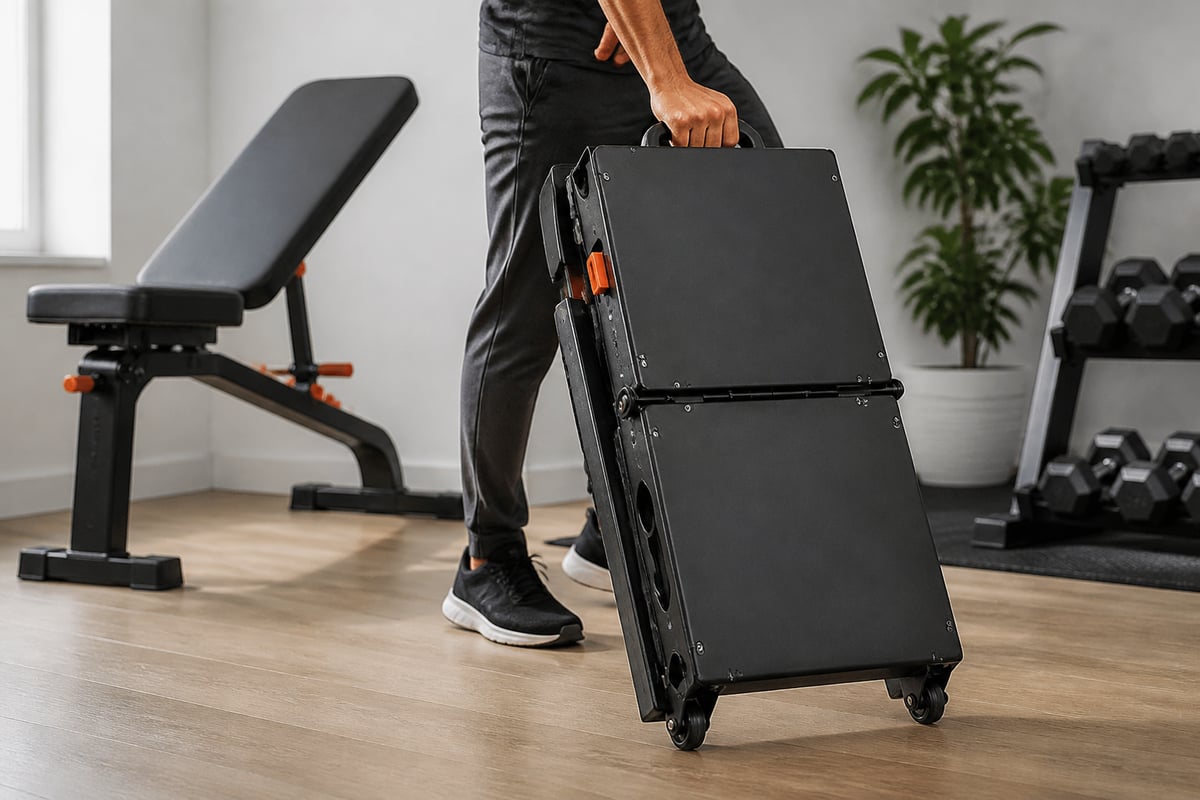
If you are often on the road, the best gear is whatever fits in your bag and still does its job in a hotel room, so portability should rank above showroom shine.
Think about a typical trip. You land after a long flight, your hips are tight, your back is cranky, and the hotel gym has a single rusty dumbbell and a broken bike. A compact recovery tool turns your room into a place where you can stretch, roll out and move.
This is where the Morph from Brazyn Life fits. It is a standard-size foam roller with a collapsible core, so it packs down for travel and still works for yoga, pilates, general fitness and everyday recovery. It is also a patented design that was featured on Shark Tank. You can browse the full lineup in the Morph collection, or look at the Morph bundles if you want accessories in one order.
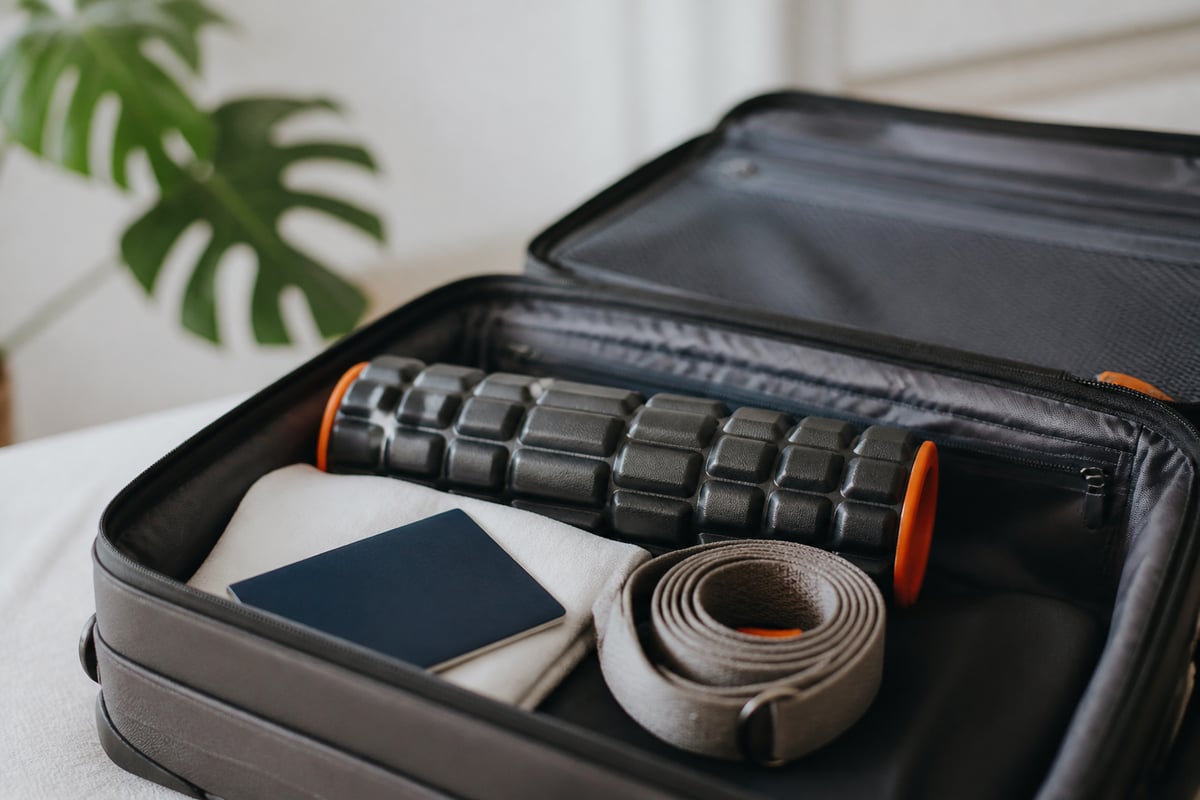
For pilates and yoga practice on the road, pair a roller with a strap and a thin mat. Our guide to yoga and pilates equipment lists the pieces worth packing.
Buy in person anything you need to sit on, stand on, grip or load with weight, and order online anything light, simple and easy to return.
Worth testing in person:
Fine to order online:
If you land in the second group and want a travel-friendly option, you can check Brazyn Life's full product catalog. Brazyn Life offers shipping on US orders, and for shipping costs, sizes, materials or return details, the product pages and contact page are the right place to confirm specifics.
You get the most from a visit by going with a short list, a time limit and a few smart questions, so you leave with a decision instead of a headache.
Try this simple routine:
Many shops run floor-model sales and refurbished stock that is cheaper than new.
If no good store is nearby, use studios, physical therapists, classifieds and online brands to fill the gap, since each can point you to quality gear without a long drive.
You can also try before you commit to a routine. A few sessions with borrowed gear will tell you whether you enjoy foam rolling enough to own a roller. If you are new to it, our walkthrough of top foam rolling exercises gives you a starting sequence.
The most common mistakes are buying for the person you hope to become, skipping the measuring tape, and ignoring how often you will really use the gear.
Patience pays here. The right piece of gear is the one you pick up on a tired Tuesday without arguing with yourself.
Your next step is simple: open your map app, search "fitness equipment store," and pick two shops to compare with a short checklist in hand. If portable recovery matters more to you than a showroom full of machines, Brazyn Life makes it easy to shop now for a collapsible Morph foam roller that goes wherever your next adventure does.
