Your Cart is Empty


The best way to find exercise equipment stores near me is to search your map app for specific store types (sporting goods chains, specialty fitness shops, big-box home improvement stores, and resale shops), then call ahead to confirm they stock what you actually want. For foam rollers, yoga and pilates gear, a quick phone call beats a wasted drive every time. Local shopping is great for touching, squeezing and testing, and this guide shows you how to do it efficiently, plus how to cover the gaps when your travel schedule outruns the nearest storefront.
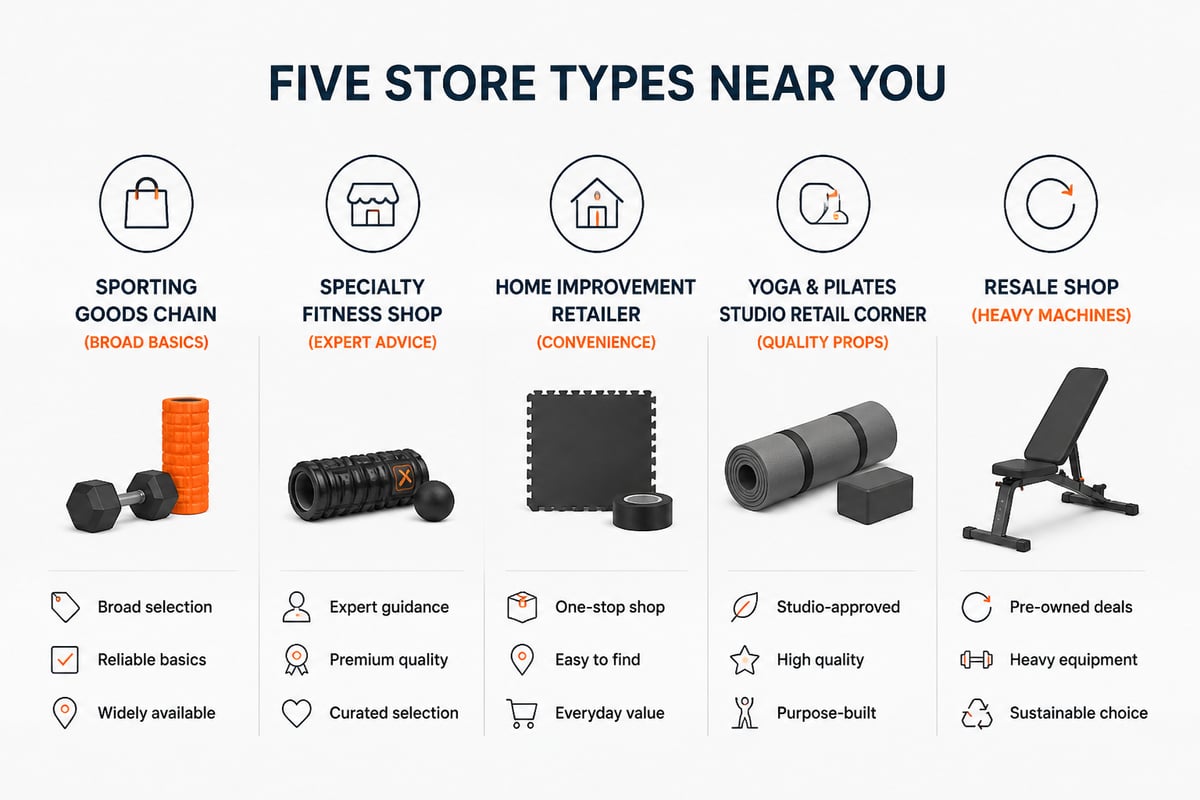
Most towns offer five types of stores that sell exercise gear, and each one is good at something different.
If you want a longer rundown of how to scout local options, Brazyn Life also has a guide to finding an exercise equipment shop near me.
Searching smarter means swapping one vague query for several specific ones and checking the results on a map, not just a list.
Try these in your map app or search bar:
Then sort by distance and check three things before you leave the house: opening hours, recent reviews and photos of the actual shelves. Customer photos are gold. If every picture shows treadmills and nothing smaller, the store probably isn't your foam roller destination.
Also remember that your hotel, airport or vacation rental changes the equation. Searching from your current location (not your home zip code) is the whole point of a "near me" search for a traveler.
Shopping in person lets you judge three things a product page can't: firmness, size and how it feels in your hands.
For a foam roller, press down on it with your palm and then your forearm. A roller that feels rock hard in the store will feel harder against a sore quad, and one that squishes flat will do very little. Check the length against your suitcase or gym bag, since a standard-size roller is bulky for travel.
For yoga and pilates gear, run through this quick checklist:
Take your time. The staff would rather you test three rollers than return one.
Portability matters because recovery gear only works if it makes the trip with you, and most traditional foam rollers don't fit in a carry-on.
Regular movement is the goal for most adults. The CDC says adults should get at least 150 minutes of moderate-intensity physical activity each week and muscle-strengthening activity on at least 2 days. Travel weeks are exactly when that routine slips, and the recovery work that keeps you moving (rolling out tight hips after a flight, easing calves after a long walking day) tends to be the first thing dropped.
A compact tool changes the math. If your recovery gear packs down small, you'll actually use it in a hotel room. That's the thinking behind the Morph from Brazyn Life, a standard-size foam roller with a collapsible core so it packs down for travel. It's built for travel, yoga, pilates, general fitness and everyday recovery, and it's been featured on Shark Tank, with patented designs behind it.
Buy gear local when fit, texture or size is a gamble, and order online when you already know exactly what you want.
| Item | Better local | Better online |
|---|---|---|
| Yoga mat | Yes, test grip and thickness | If you already own your favorite |
| Foam roller (first purchase) | Yes, test firmness | Once you know your preference |
| Resistance bands | Either | Either |
| Collapsible or travel-specific recovery gear | Rarely stocked locally | Usually easier online |
| Heavy machines | Yes, pick up or delivery | Only with solid shipping terms |
The travel-friendly category is where local stores most often come up short. Collapsible rollers and compact recovery tools are niche, so many shops simply don't carry them. If your first stop strikes out, browsing Brazyn Life's full catalog is a faster path than driving to a third store. Brazyn Life's product pages are the place to confirm details like sizing and specs and current shipping terms.
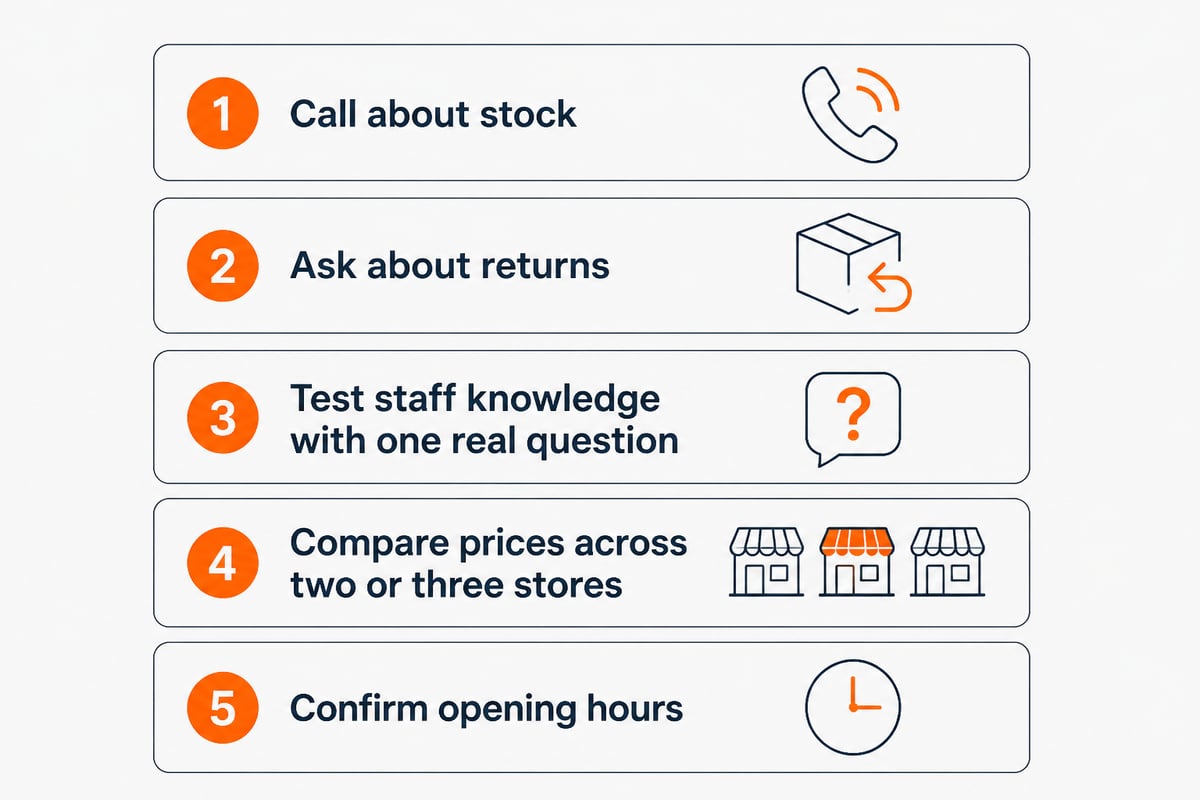
Comparing stores takes about ten minutes if you check the same five things for each one.
A good phone call often ends with "we don't carry that, but try..." which is still a win. You've saved a trip.
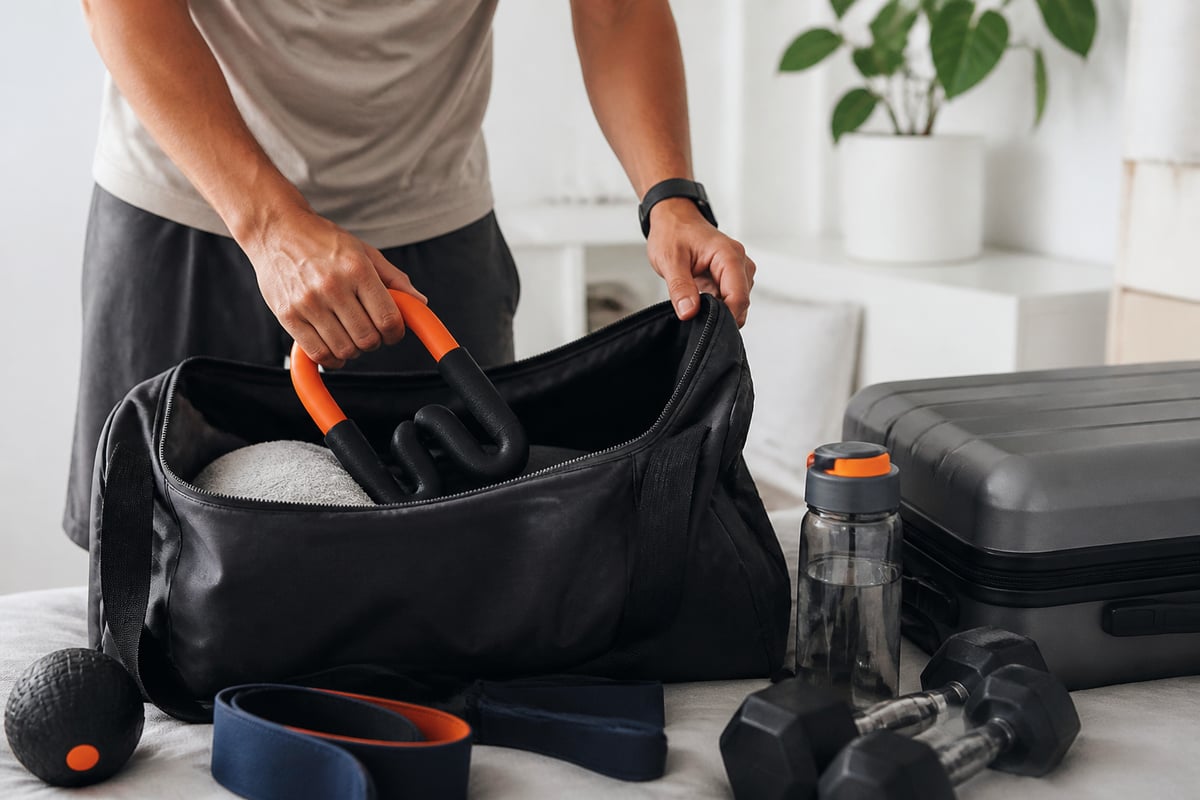
Travelers can skip the store hunt entirely by packing a small kit that covers foam rolling, stretching and light strength work.
A solid carry-on recovery kit looks like this:
Everything above fits a regular suitcase without a fight.
A routine works best when it's small, repeatable and tied to something you already do, like brushing your teeth or finishing a run.
Start modestly. Federal guidance notes that adults who are inactive can start with small amounts of activity and gradually work toward at least 150 minutes of moderate-to-vigorous aerobic activity weekly, plus two days of muscle strengthening. Recovery work supports that goal by keeping you comfortable enough to show up again tomorrow.
A simple template for a travel week:
Not sure what counts toward your weekly total? The CDC explains which activities count toward aerobic and muscle-strengthening recommendations, including how to spread activity across the week. Rolling out is recovery rather than a replacement for those minutes, but it makes the minutes easier to keep.
Smart questions are specific, short and aimed at things the packaging won't tell you.
If the staff can answer these without reaching for a sales script, you've found a shop worth returning to. If they can't, politely thank them and move on. Plenty of exercise equipment stores near me have friendly teams, but friendly and knowledgeable are two different things.
Yes, and for most active travelers it's the smartest approach: test the basics in a store, then order the specialty items online.
A practical split looks like this. Visit a local shop for your mat, blocks and anything where feel matters. Then fill the travel-specific gaps online, where the selection is deeper.
One more tip: personalize your gear so it doesn't get mixed up at the gym or in a shared bag. Morph skins are one way to give a roller a look that's clearly yours.
Should I buy my first foam roller in a store? Yes if you can. Firmness is personal, and a two-minute test saves a return.
Are big-box stores or specialty shops better? Big-box stores win on price and convenience. Specialty shops win on advice and curated quality.
What if no store nearby carries travel-friendly gear? That's common. A collapsible roller is a specialty item, so ordering online is often faster than searching.
Is used gear okay for recovery tools? For machines, often. For anything that touches your skin, many people prefer new.
When should I check with a doctor? If you're new to exercise or managing a health condition, the CDC's page on getting started with physical activity includes guidance on when to talk with a healthcare provider.
Your next step is simple: open your map app, search "yoga props store" and "sporting goods store" within your current location, and call the top two to ask about firm foam rollers and travel-friendly options. If neither has what you need, skip the third drive and look at gear designed to travel with you. Brazyn Life makes collapsible foam rollers and other portable fitness gear for people on the move, so shop now and have your recovery kit packed before your next trip.
