Your Cart is Empty


If you're typing "gym equipment near me" into a search bar, you most likely want one of two things: a store you can walk into today, or a short list of machines worth driving to see. This article gives you both, plus a few ways to make sure the trip isn't wasted.
Local fitness stores come in a few flavors: big-box sporting goods chains, independent specialty shops, and secondhand dealers. Each stocks different gear, and none of them can promise your exact machine is on the floor. So the plan is to know what you want before you walk in, and to know what travels well if you can't find it close by.
Below are six options, from adjustable dumbbells to a collapsible foam roller, with specs, approximate prices as of November 2026, and honest verdicts. Then we get into how to shop locally without burning a Saturday.
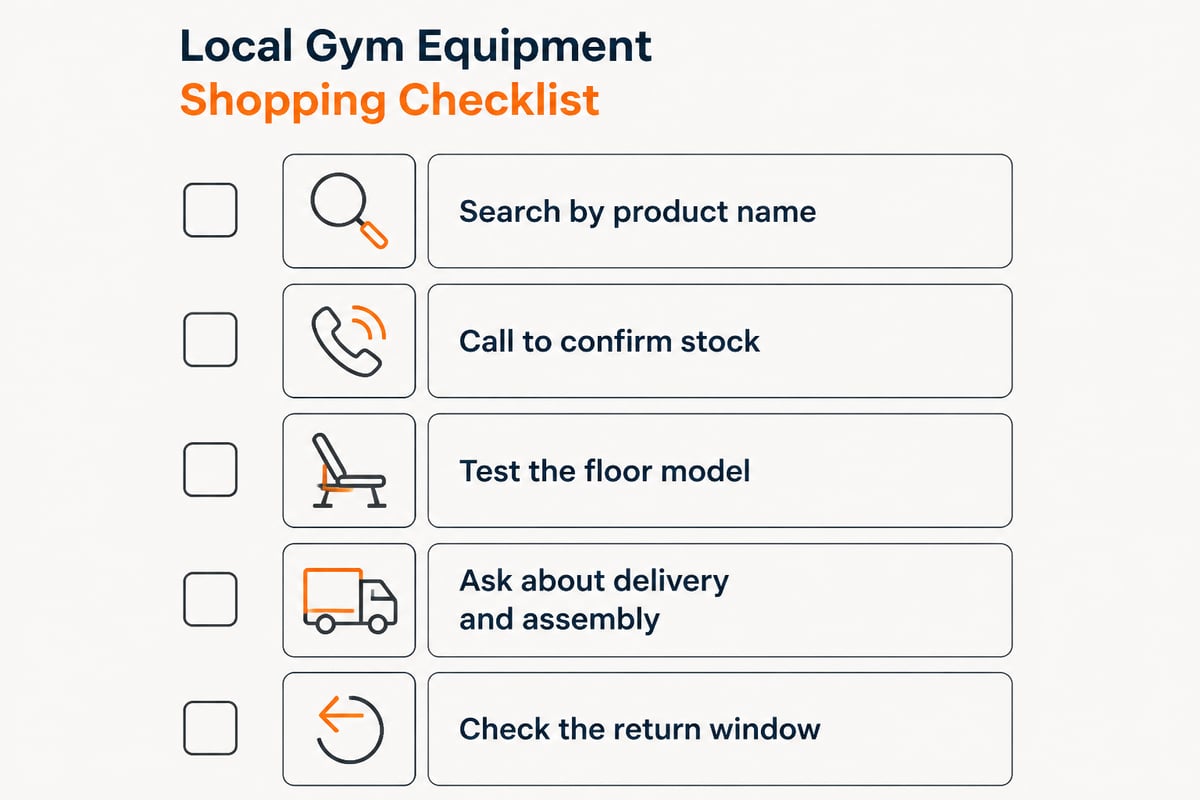
The fastest way to find gym equipment near you is to search a specific product name in a maps app, then call the store before you drive. Stock changes daily, and a listing that says "fitness equipment" can mean anything from treadmills to yoga mats.
Here is a quick routine that saves gas and patience:
If you'd rather browse before you go, our breakdown of a gym equipment shop near me explains what different store types usually carry.
The Bowflex SelectTech 552 is a dial-adjustable dumbbell pair that replaces a whole rack, and it is the easiest big-ticket item to find in a local store.
Best for: anyone who wants varied strength work from a compact footprint, such as presses, rows, lunges and curls, without a wall of fixed weights.
Consumer Reports puts adjustable dumbbells at $180 to $700 or more, so this one sits comfortably mid-range. Try the dial in person if you can, because a smooth click matters when you're mid-set. The 5 lb starting point also covers warm-ups and shoulder work, while the 52.5 lb top end leaves room to progress on rows and presses.
Verdict: A space-saving strength starter that earns its price.
The Concept2 RowErg is an air-resistance rowing machine that folds for storage, and it is a staple of commercial gyms and garage setups alike.
Best for: athletes and everyday trainees who want durable, full-body cardio and don't mind the machine's bulk when it's open.
Rowers are long, so measure your space and check that the store will let you sit on one. Ten minutes on it tells you more than any spec sheet. Because air resistance responds to your effort, a gentle pull feels easy and a hard one feels heavy, and the monitor's split times and power readout let you see that difference right away.
Verdict: A workhorse for full-body conditioning that holds up to hard use.
The NordicTrack Commercial 1750 is a foldable treadmill with incline and decline training, built for people who want connected workouts at home.
Best for: walkers and runners who want guided, hill-style sessions on a screen.
Consumer Reports lists treadmills at $1,000 to $6,000 or more, so the 1750 lands in the lower-middle of that range. Treadmills are heavy and loud on hard floors, so ask a store rep about delivery before you commit. Incline lets you simulate climbs without leaving the room, and decline work adds variety that a flat belt can't, so one machine can cover easy walks and tougher hill sessions.
Verdict: A solid, foldable treadmill for steady cardio with plenty of programming behind it.
The NordicTrack X24 Bike is a connected exercise bike with a large touchscreen and incline and decline features, aimed at riders who like interactive classes.
Best for: cyclists who want interactive workouts and quiet operation indoors.
Magnetic resistance keeps noise down, which helps if your bike lives near a shared wall. The footprint is sizable, so confirm the dimensions fit your room before you buy. With 24 resistance levels, you can ease through a recovery spin or crank up the load for intervals, and the 350 lb capacity suits a wide range of riders.
Verdict: A premium, screen-forward bike that is pricey but well equipped.
The FLiPBENCH is an incline/decline bench that flips up to take about 1 square foot of floor space, which makes it a smart pick when your "gym" doubles as a living room.
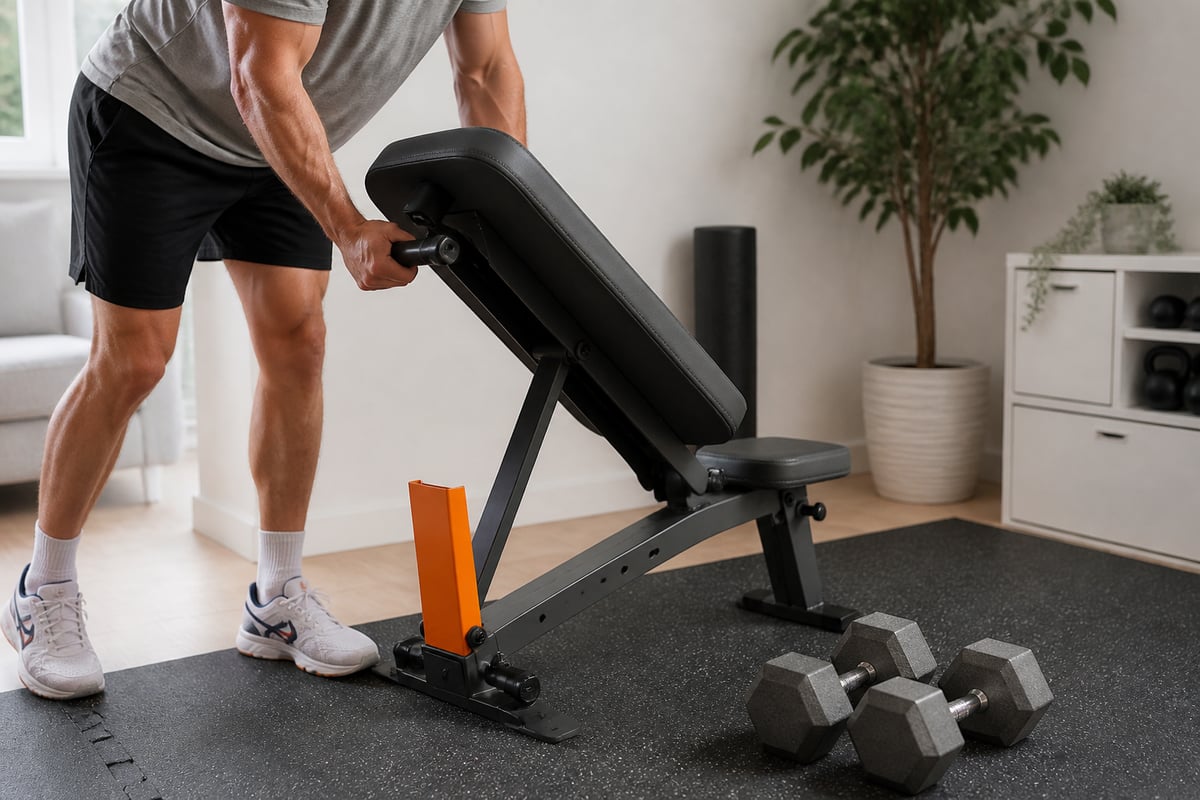
Best for: pairing with adjustable dumbbells in a small space where floor area is the real constraint.
It also teams up neatly with item 1, because a dial dumbbell set plus a bench that folds away covers a lot of strength ground in one corner. An incline or decline angle changes which part of the chest and shoulders do the work, so the same pair of dumbbells gives you several distinct presses and flyes.
Verdict: A floor-space saver that makes dumbbell training feel like a full setup.
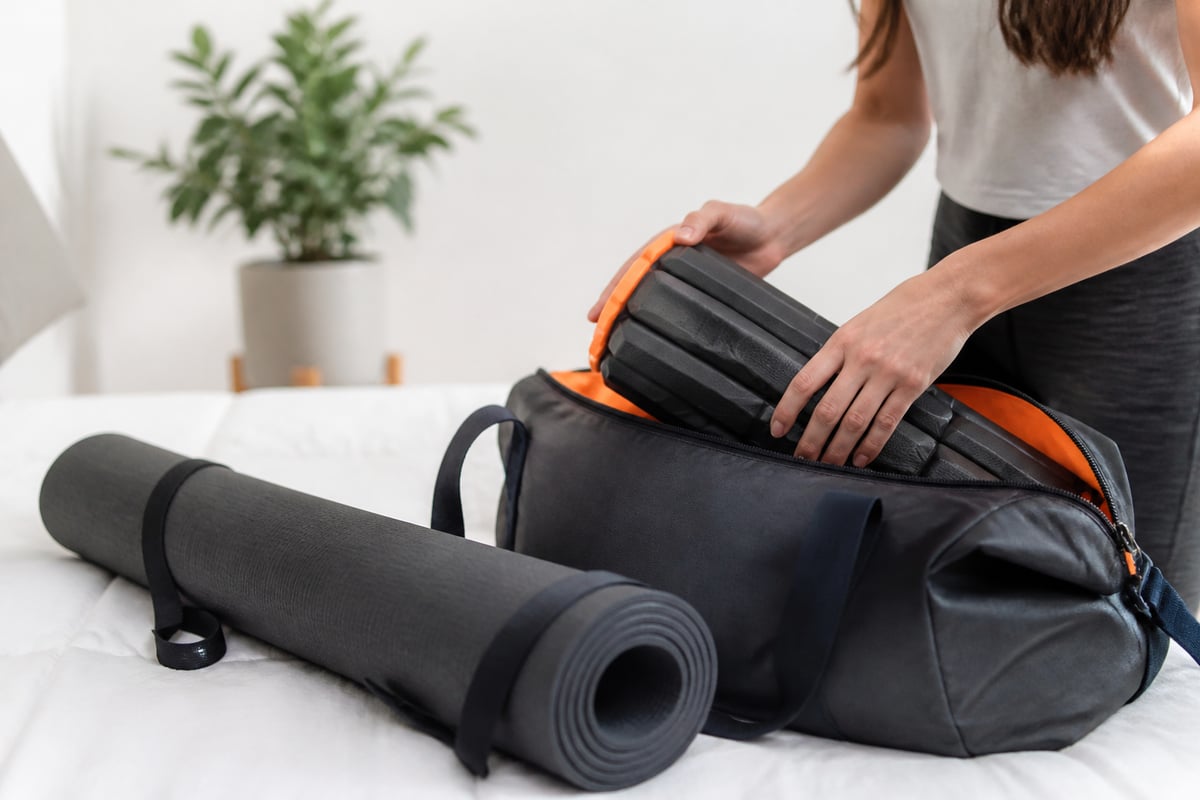
The Morph is a standard-size foam roller with a collapsible core, so it packs down for travel without feeling like a compromise at home.
Best for: active adults who recover at home, in the gym or on the road and want a roller that fits in a bag.
Foam rollers are hard to find in good variety at many local stores, and a rigid one eats suitcase space. A collapsible design solves both problems. If you want to build out a kit, the Morph bundles collection is worth a look. Because it keeps a standard-size feel when open, you can use it on quads, calves and upper back after a workout, then fold it flat for the trip home.
Verdict: The easy-to-pack recovery tool that works at home and on trips.
| Item | Type | Approx. price (Nov 2026) | Key spec | Suits |
|---|---|---|---|---|
| Bowflex SelectTech 552 | Adjustable dumbbells | $399 | 5 to 52.5 lb | Compact strength work |
| Concept2 RowErg | Rowing machine | $990 | Air resistance, folds | Full-body cardio |
| NordicTrack Commercial 1750 | Treadmill | $1,999 | Incline/decline, iFIT | Connected walking and running |
| NordicTrack X24 Bike | Exercise bike | $2,799.99 | 24 in screen, 24 levels | Interactive indoor cycling |
| FLiPBENCH | Flip-up bench | See product page | About 1 sq ft stored | Small-space dumbbell training |
| The Morph Foam Roller | Collapsible roller | See product page | Collapsible core | Recovery at home and on the road |
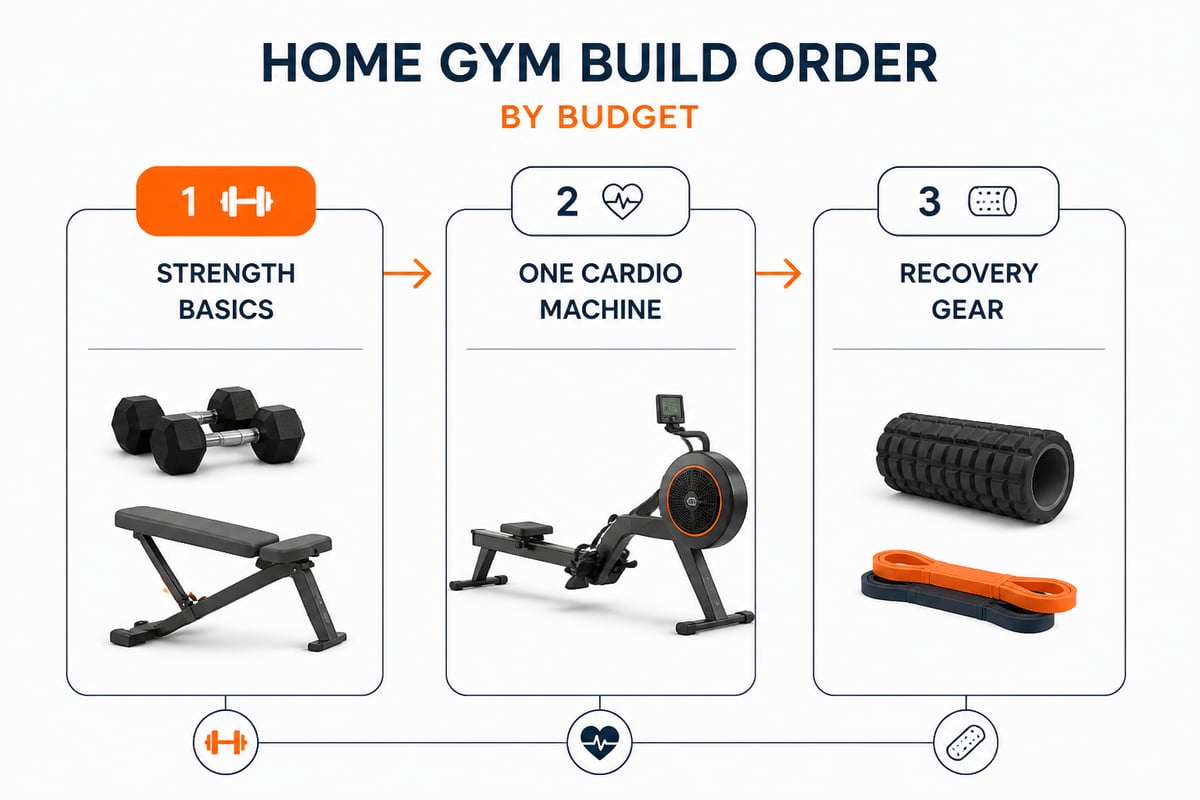
Budget depends heavily on what you buy first. Consumer Reports estimates a next-level home gym at $600 to $2,000, covering basic equipment, a cardio machine and dumbbells. A full setup can cost considerably more, which is why starting small makes sense.
A sensible order of operations looks like this:
It also helps to know that strength training is not going out of style. In the 2025 ACSM fitness trends survey, drawn from clinicians, researchers and fitness practitioners, traditional strength training ranked fifth. For ideas on what else belongs in a kit, our list of top home gym equipment is a good next stop.
Recovery tools are the category where "gym equipment near me" searches most often come up short, so plan to buy them online or carry them with you. Big machines get the floor space, while rollers, straps and bands get a single shelf or none at all.
That gap matters because recovery is the part of training you do away from the gym. Think hotel rooms, airport gates, a yoga class across town, a pilates session at a friend's place. Portable gear has to survive a carry-on, and it should do more than one job.
A few things to look for in travel-friendly recovery gear:
For more on matching tools to routines, see our overview of yoga and pilates equipment.
Testing in person is the single biggest advantage of shopping locally, so use it. Ten focused minutes on a floor model prevents most buyer's remorse.
Ask about returns while you are standing there. Policies for large equipment can differ from smaller items, so get it explained before you pay.
Not every shop will have what you want, and that is fine. If the local trip fails, a few fallbacks keep your plan moving:
For a bit of lifestyle context, brands like Tinc show how much everyday gear is shifting toward reusable and low-waste choices, which is a useful lens when you're buying equipment meant to last years.
Your next step is simple: pick one item from the list above, search its exact name in your maps app, and call the closest store to confirm it is in stock. If the recovery side of your routine is the missing piece, or you want gear that packs down for the road, Brazyn Life builds portable, functional fitness products, and you can start with The Morph Foam Roller and shop now to put a collapsible roller in your next bag.
