Your Cart is Empty


The fastest way to find fitness gear near me is to match each item to the right kind of store: big-box sporting goods chains for shoes and bulky machines, specialty shops for hands-on testing, and online retailers for portable recovery tools you can order in two clicks. This guide shows you where to look, what to check before you pay, and which purchases are smarter to make from your couch.
You can buy workout machines at sporting goods chains, home improvement stores, warehouse clubs, specialty fitness showrooms, and secondhand marketplaces, and each one has a different strength.
Here is a quick map of what each store type does best:
| Store type | Best for | Watch out for |
|---|---|---|
| Sporting goods chains | Shoes, apparel, dumbbells, mats, bands | Limited staff expertise on specialty gear |
| Home improvement stores | Basic benches, racks, rubber flooring | Smaller selection of recovery tools |
| Warehouse clubs | Bundles, adjustable dumbbells, mats | Stock rotates, so no guaranteed restocks |
| Specialty fitness showrooms | Treadmills, ellipticals, bikes you can test | Higher prices, sales pressure |
| Secondhand marketplaces | Plates, barbells, bikes, benches | No warranty, condition varies |
| Online brand stores | Portable and travel-friendly gear | You can't touch it first |
A good rule of thumb: buy the thing you have to wear or stand on in person, and buy the thing that fits in a gym bag online. Your feet are a very strict judge. Your foam roller is not.
If you want more store-hunting angles, this breakdown of gym equipment near me covers what to look for before you drive anywhere.
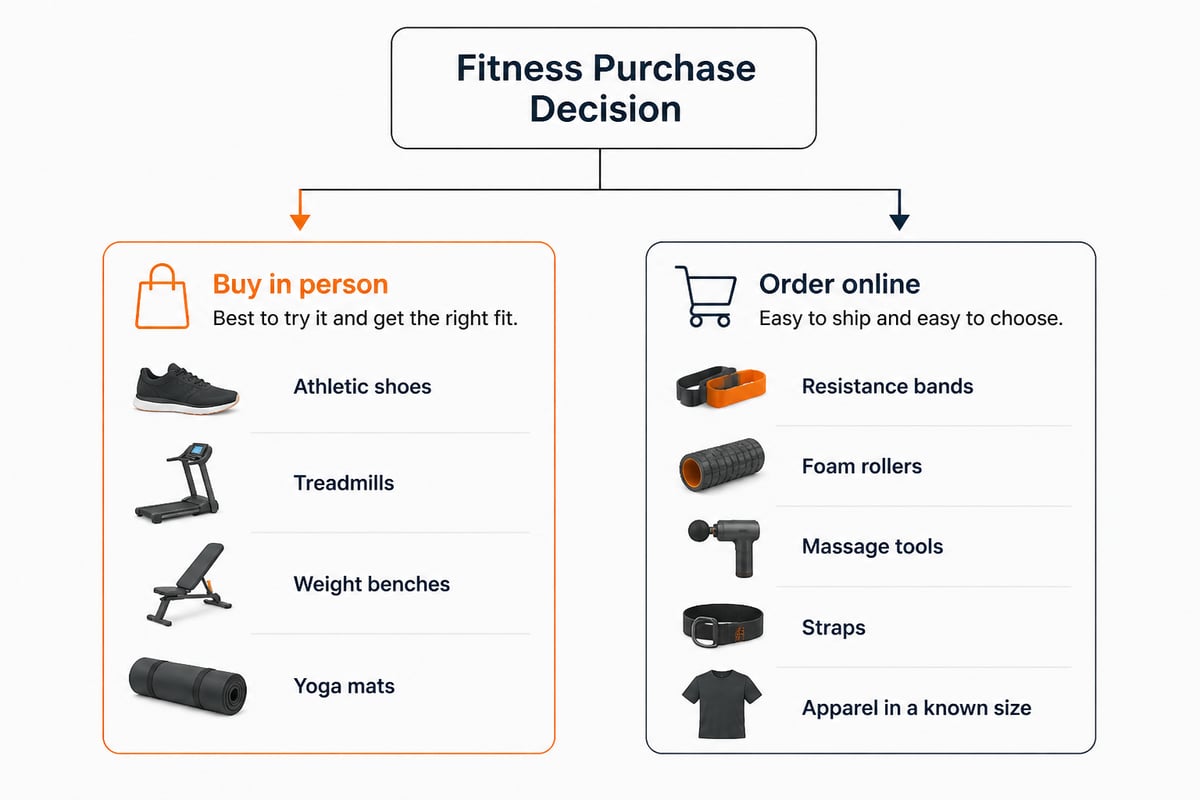
Buy anything that touches your body in a fit-sensitive way in person, and order anything that is standardized, compact, or easy to return online.
Buy in person:
Order online:
Local stores are great at the first list. The second list is where online shops win on selection, and where you can compare options without a salesperson hovering nearby.
Test gear by using it the way you actually will: loaded, moving, and for longer than the thirty seconds a salesperson expects.
Start with shoes, where the research is clear. AAOS OrthoInfo recommends leaving at least 1/2 inch between your longest toe and the tip of the shoe, and trying them on with the socks you normally wear for that activity. It also advises trying on both shoes, securing the laces, and walking on different surfaces in the store. Their guidance on finding the right shoe fit also covers measuring your feet and choosing footwear suited to your activity.
For machines, run through this checklist:
Dress like you are going to work out. Yes, you will look a little silly doing lunges in the aisle. Nobody has ever regretted a good test drive.
Measure your space before you shop, because the most expensive mistake in home fitness is a machine that does not fit the room.
For treadmills, Consumer Reports recommends at least 2 feet of clearance on each side and 6 feet behind the machine. That is a lot more floor than the footprint on the box suggests.
A few other measuring habits worth adopting:
That last point is where fold-flat and collapsible designs earn their keep. A bench that disappears when you are done is a very different purchase from one that becomes a permanent coat rack.
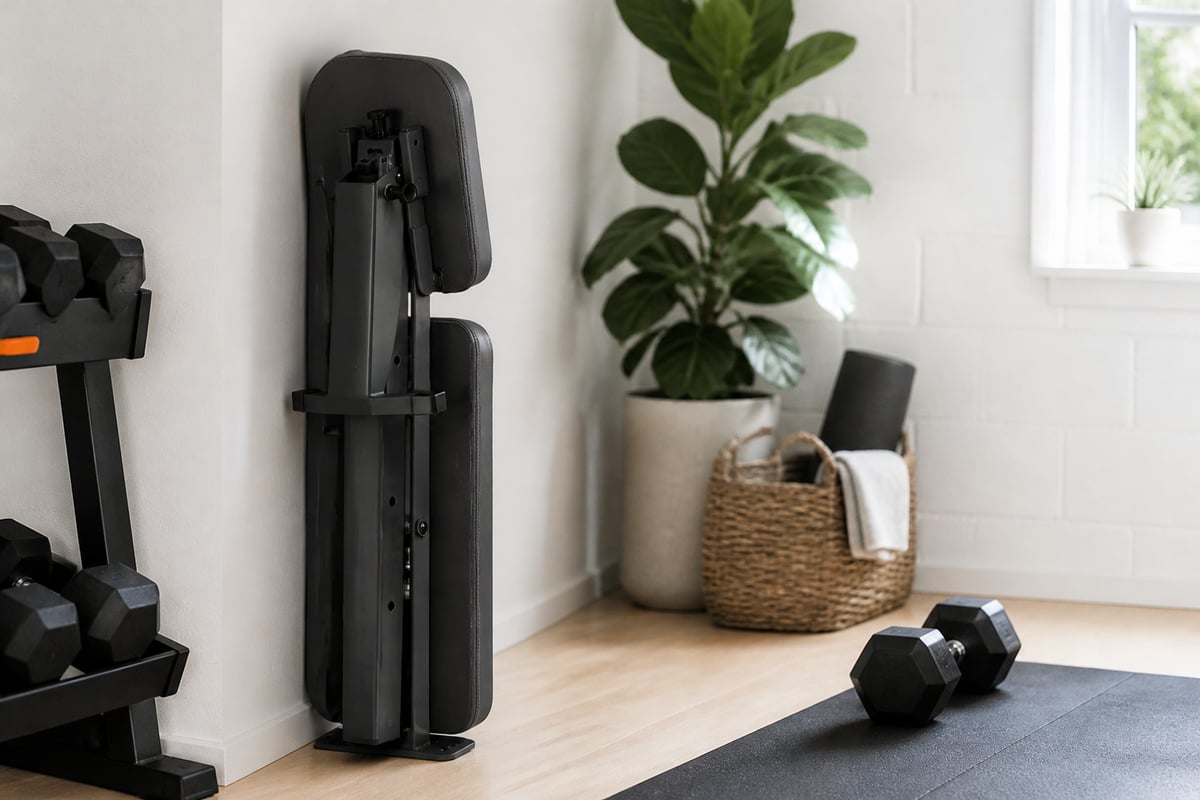
If floor space is your main obstacle, the FLiPBENCH is built around that exact problem. It offers the function of an incline/decline bench but takes up about 1 square foot when you are not using it, so you can flip it down for your workout and flip it up to reclaim the room.
Buy used equipment only after checking the moving parts, the electronics, and the warranty situation, since secondhand sellers rarely offer a return window.
Consumer Reports explains how to assess used equipment, including treadmill belt condition, motor operation, incline function, and warranty. Apply the same logic to everything else:
On that last point, resistance bands can break and snap back. Mass General Brigham recommends inspecting them for cuts and cracks before and after every workout. A used band with unknown history is not a bargain.
The top 10 pieces of gym equipment for most active adults are a mix of strength, cardio, mobility, and recovery tools that cover the whole week.
Notice how many of these are small. Gear that packs down gets used more often, and gear that gets used beats gear that looks impressive in the garage. For a deeper rundown, see this guide to exercise and fitness equipment.
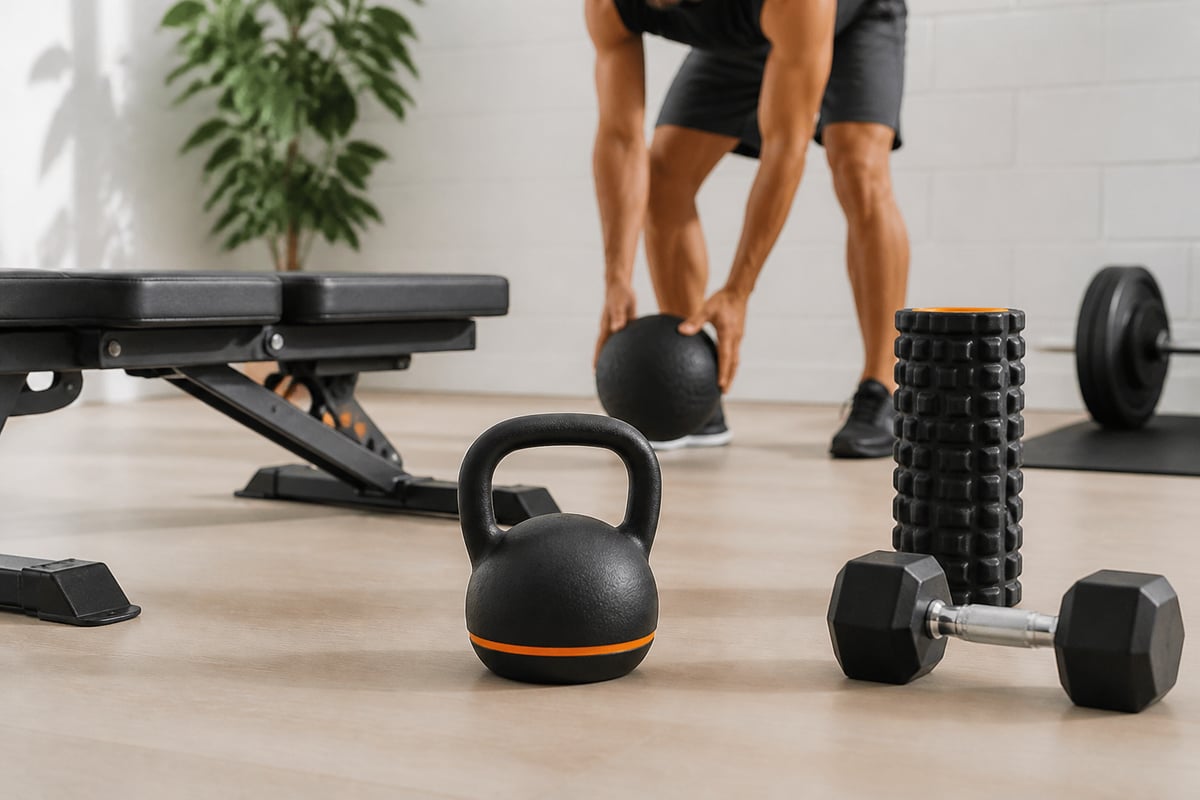
Portable recovery gear keeps your routine intact when you travel, work out in a crowded gym, or practice yoga and pilates away from home.
Recovery is the part of fitness most people plan the least. Recovery habits can be short too: a few minutes of rolling after a run is a smart use of time, not a lavish one.
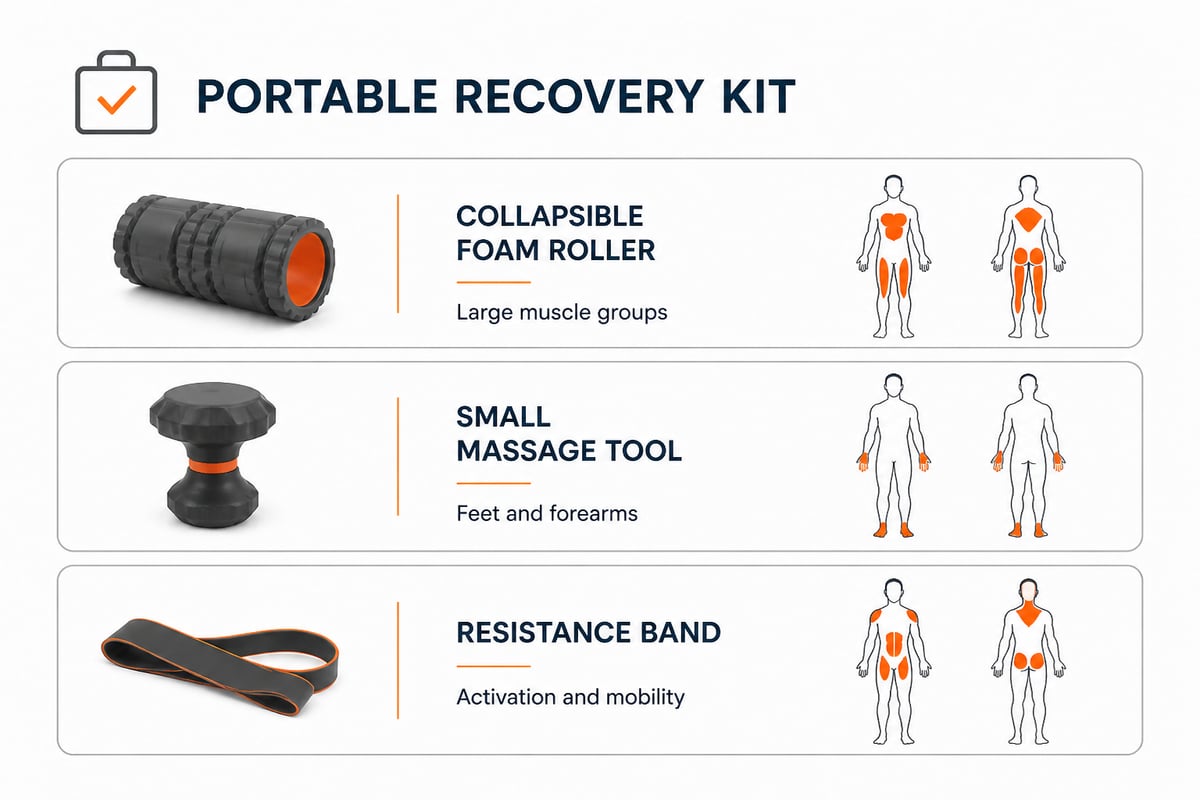
Collapsible gear is where portability gets practical. The Morph from Brazyn Life is a standard-size foam roller with a collapsible core, so it packs down for travel and expands when you are ready to roll. It is built for travel, yoga, pilates, general fitness, and everyday recovery, and it has patented designs. You can browse the Morph bundles to see the options, or pair one with massage rings for the spots a roller cannot reach.
Here is one simple recovery kit idea that could fit in a carry-on:
Most local stores do not stock this kind of gear, which is a good reason to order it ahead of a trip and shop the rest locally. If you are comparing shops, these notes on a fitness equipment shop near me can help you sort what is worth the drive.
Plan a short, targeted trip: decide what you need, call ahead, and visit no more than two stores.
Here is a simple process:
If your search is for a particular shop type, this guide to a gym equipment shop near me breaks down what separates a useful store from a dusty warehouse.
One more tip: stores run their best sales around holidays and season changes, but a sale price on the wrong item is still the wrong price. Stick to your list.
The 3-3-3 rule is a popular, informal fitness framework, usually described as three workouts a week, three exercises per session, and three sets of each, though it is not an official guideline.
It is a handy way to keep a home routine simple, and it pairs well with a small gear collection: a bench, a pair of dumbbells, and a roller for recovery cover most of it. For official targets, the CDC's adult activity guidance is the better benchmark, and the CDC recommendations for adults 65 and older add balance work to the mix. If you have a health condition, talk to a clinician before starting a new program.
Start with the national sporting goods chains and big-box retailers in your area, since most list local inventory on their websites. Add one independent running or fitness specialty shop for expert fitting, especially for shoes. Checking two or three stores is plenty.
It depends on the item. Online shops often win on selection and portable accessories, while local stores can win on bulky items where shipping costs and returns get complicated. Compare the total price, including delivery, assembly, and the return window.
You can, but test it first. Check belt condition, motor operation, incline function, and warranty, as Consumer Reports advises. If the seller will not let you see it run, walk away.
Before your next shopping trip, write a three-item shortlist, measure your space, and decide which pieces you will try in person and which you will order ahead. For the recovery side of that list, the FLiPBENCH and the collapsible Morph foam roller are built for people who want gear that works hard and packs away fast, and you can shop now at Brazyn Life to see what fits your routine.
