Your Cart is Empty


You know that feeling when your legs are screaming after leg day, or your IT band feels like a guitar string pulled way too tight? Yeah, we've all been there. While foam rollers get most of the glory in the recovery world, there's an underrated hero that deserves some serious respect: the humble massage stick. This simple yet mighty tool has been quietly transforming how athletes, fitness enthusiasts, and weekend warriors tackle muscle soreness since the 1990s. Think of it as your personal masseuse that never complains, never charges by the hour, and fits perfectly in your gym bag.
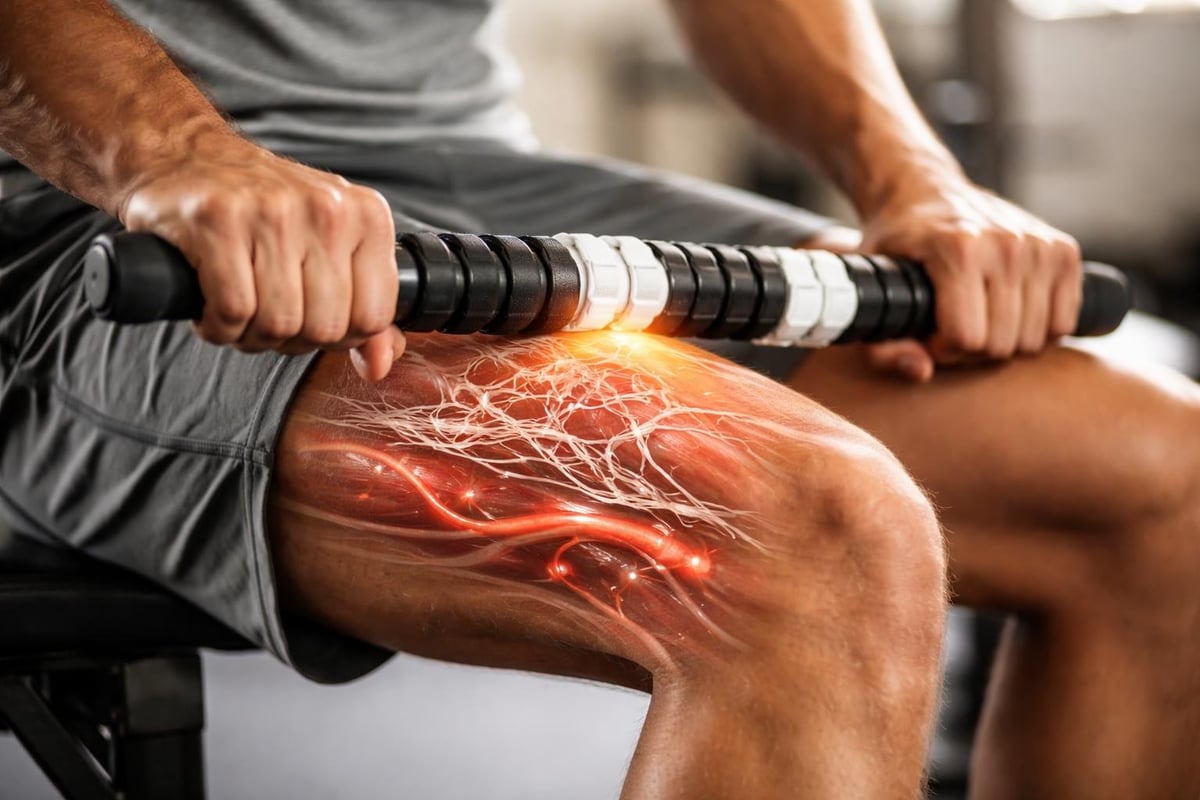
A massage stick is basically a handheld cylinder with rotating segments that glide over your muscles, applying targeted pressure to break up adhesions, increase blood flow, and help you feel human again after intense workouts. Unlike foam rollers where you use your body weight, massage sticks put you in total control of the pressure and angle.
The design is brilliantly simple: a central rod with freely spinning rollers or beads that grip and release your muscle tissue as you roll back and forth. Some versions feature textured surfaces, others are smooth, and the handles on each end let you apply as much or as little pressure as your muscles can handle.
Research shows that using a massage stick for muscle recovery can significantly impact your post-workout bounce-back. A study examining massage sticks' effects on muscle performance found that self-myofascial release techniques improved flexibility without negatively impacting strength or power output.
Here's what happens when you roll:
Think of your fascia (the connective tissue surrounding muscles) like plastic wrap that's been crumpled up. Rolling helps smooth it back out, restoring normal movement patterns and reducing that stiff, achy feeling.
Not all massage sticks are created equal, and choosing the right one depends on your specific needs, pain tolerance, and fitness goals.
| Type | Best For | Intensity Level | Portability |
|---|---|---|---|
| Standard Roller Stick | General recovery, beginners | Medium | Excellent |
| Textured/Knobby Stick | Deep tissue work, trigger points | High | Good |
| Vibrating Stick | Tech lovers, enhanced circulation | Medium-High | Fair |
| Collapsible Stick | Travelers, space-savers | Medium | Exceptional |
Standard roller sticks feature smooth, evenly spaced rollers and work great for all-around muscle maintenance. They're gentle enough for daily use but firm enough to make a real difference.
Textured sticks come with ridges, bumps, or specially designed surfaces that dig deeper into stubborn knots. These bad boys mean business and aren't for the faint of heart.
Vibrating massage sticks add percussion therapy to the rolling action, which some users swear increases effectiveness. The jury's still out on whether the vibration adds significant benefits, but it definitely feels pretty amazing.
For those of us who value multi-functional gym equipment that doesn't hog space, collapsible versions offer the same benefits in a more travel-friendly package.
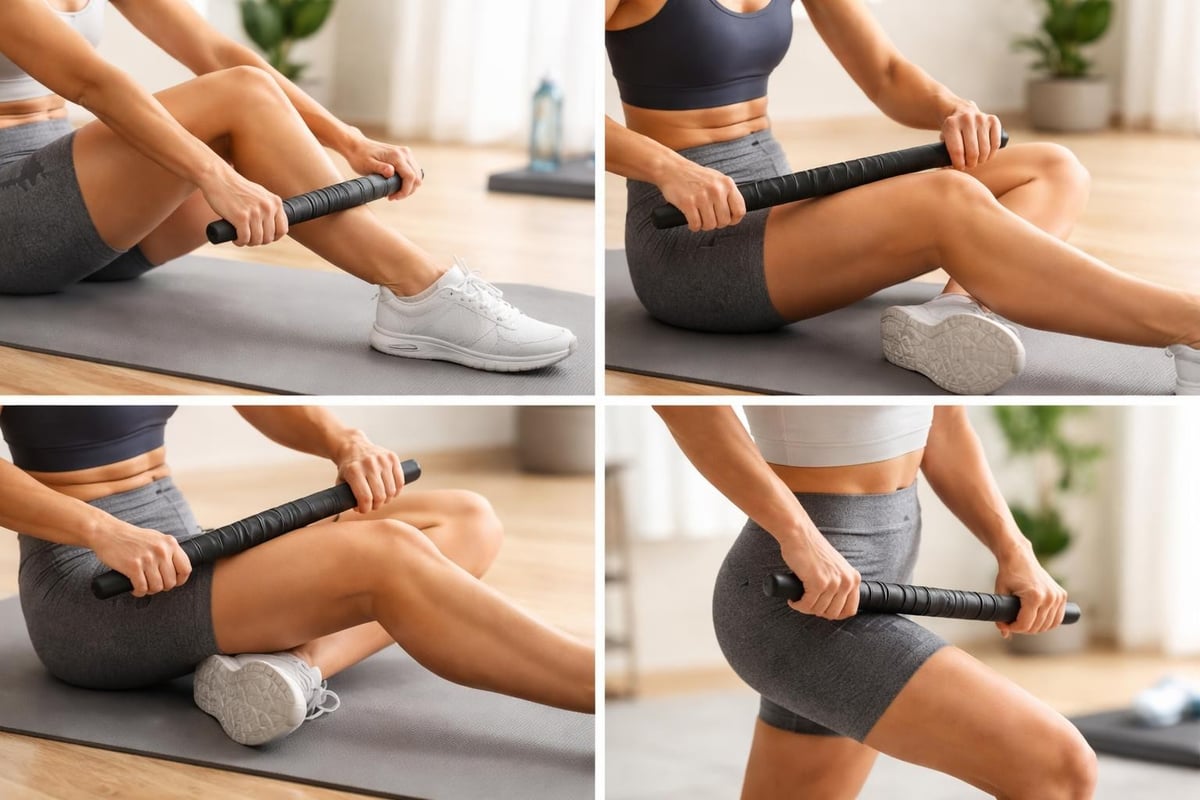
Proper technique separates the pros from the amateurs. You can't just wildly roll up and down your leg and expect miracles. Here's the real deal.
Pro tip: Never roll directly on bones, joints, or injured areas. Stick to the meaty parts (literally).
Your calves, quads, hamstrings, and IT bands are massage stick goldmines. According to research comparing different soft tissue techniques, focused rolling on these areas produces measurable improvements in range of motion.
For calves, sit down and place the stick behind your lower leg. Roll from just above your ankle to just below your knee, rotating your foot to hit different angles. Your calves do a ton of work whether you're running, jumping, or just walking around all day, so they deserve some TLC.
The IT band (that strip running down the outside of your thigh) is notoriously cranky. While it's technically fascia rather than muscle, rolling it can provide relief from knee pain and hip tightness. Fair warning: IT band rolling can be spicy, so start gentle.
Let's cut through the marketing hype and focus on what massage sticks genuinely deliver.
Professional massages cost $80-150 per session in most cities in 2026. A quality massage stick runs $15-40 once and lasts for years. The math is pretty straightforward. Plus, you can use it whenever you want, in your pajamas if that's your vibe.
While most people think of massage sticks purely for recovery, experts note they're equally valuable for pre-workout muscle activation. A few minutes of rolling before your workout increases muscle temperature and improves elasticity, potentially reducing injury risk.
That "I can't sit down without grimacing" feeling 24-48 hours after a tough workout? Rolling can significantly dial it down. The ten benefits outlined by fitness professionals include decreased DOMS duration and intensity.
Key benefits at a glance:
The recovery tool market is crowded in 2026. Let's see how massage sticks stack up against the competition.
Foam rollers use your body weight for pressure, which can be intense (sometimes too intense). Massage sticks give you precise control, making them ideal for beginners or sensitive areas. They're also way easier to pack for travel.
However, foam rollers excel at larger muscle groups like your back, where it's tough to generate enough pressure with a handheld tool. For those seeking innovative workout equipment that combines portability with effectiveness, consider tools that adapt to multiple scenarios.
Massage guns deliver percussive therapy through rapid, pulsing movements. They're fantastic for quick relief and feel incredibly satisfying. But they're also expensive ($100-600), require charging, and can be overkill for general maintenance.
Massage sticks are mechanical, never need batteries, and cost a fraction of the price. They also force you to work more slowly and methodically, which can be therapeutic in itself. Sometimes simple is better.
Professional massage therapists bring expertise, intuition, and techniques that no tool can replicate. But for everyday muscle maintenance, a massage stick handles 80% of what you need at 5% of the cost.
Think of it this way: You brush your teeth daily and see the dentist twice a year. Same logic applies here. Daily self-care with a massage stick, occasional professional treatment when things get complicated.
Once you've mastered the basics, try these next-level approaches.
Instead of rolling parallel to the muscle fibers, try rolling perpendicular to them. This technique for myofascial release can break up adhesions that longitudinal rolling misses. It feels weird at first but can produce impressive results for stubborn knots.
Pair your massage stick with other modalities for enhanced benefits. Try rolling immediately after a hot shower when muscles are warm and pliable. Or alternate between rolling and static stretching for improved flexibility gains.
Some athletes use massage sticks alongside traditional massage techniques to maintain the benefits between professional sessions.
Runners: Focus on calves, IT bands, and the plantar fascia (bottom of feet) to prevent common overuse injuries.
Cyclists: Hit the quads, hip flexors, and glutes to counteract the repetitive motion of pedaling.
CrossFitters: Everything needs attention, but prioritize shoulders, lats, and hip flexors that take a beating from Olympic lifts and gymnastics movements.
Desk Warriors: Upper traps, forearms, and the muscles around your shoulder blades desperately need rolling if you spend hours at a computer.
Even with a simple tool like a massage stick, people find creative ways to mess it up. Avoid these rookie errors.
This isn't a race. Slow, deliberate movements give your nervous system time to release tension. Speedy rolling just irritates tissues without providing therapeutic benefits. Aim for that one-inch-per-second pace mentioned earlier.
Myofascial release releases metabolic waste products into your bloodstream. Without adequate hydration, you might feel sluggish or get headaches after rolling sessions. Chug that water before and after.
There's "good hurt" (mild discomfort as tight tissues release) and "bad hurt" (sharp, shooting pain that signals damage). Learn the difference. If something feels genuinely wrong, stop immediately.
Consistency beats intensity. Five minutes of daily rolling prevents more problems than 30 minutes once a week when you can barely walk. Build it into your routine like brushing your teeth.
With dozens of options available in 2026, here's how to narrow it down.
For beginners: Start with a standard, medium-firmness roller stick without aggressive textures. Learn proper technique before graduating to more intense versions.
For athletes: Invest in a durable stick with replaceable rollers. You'll use it frequently enough that quality matters.
For travelers: Portability is king. Look for collapsible designs or compact versions that fit easily in carry-on luggage. Some innovative options, like the Morph Stick, combine effectiveness with space-saving design.
For specific problem areas: Consider specialized sticks with different roller textures or shapes designed for particular muscle groups.
Budget considerations: You don't need to spend a fortune. Even basic models deliver real benefits if used consistently and correctly.
The best recovery tool is the one you actually use. Here's how to make rolling a habit that sticks (pun absolutely intended).
Spend 5-10 minutes rolling major muscle groups each morning. It's like a cup of coffee for your muscles, waking them up and preparing them for the day ahead. You'll be amazed how much better you move.
Within 30 minutes of finishing your workout, hit the muscles you just trained. This speeds waste removal and jumpstarts recovery. Keep a massage stick in your gym bag so there's no excuse.
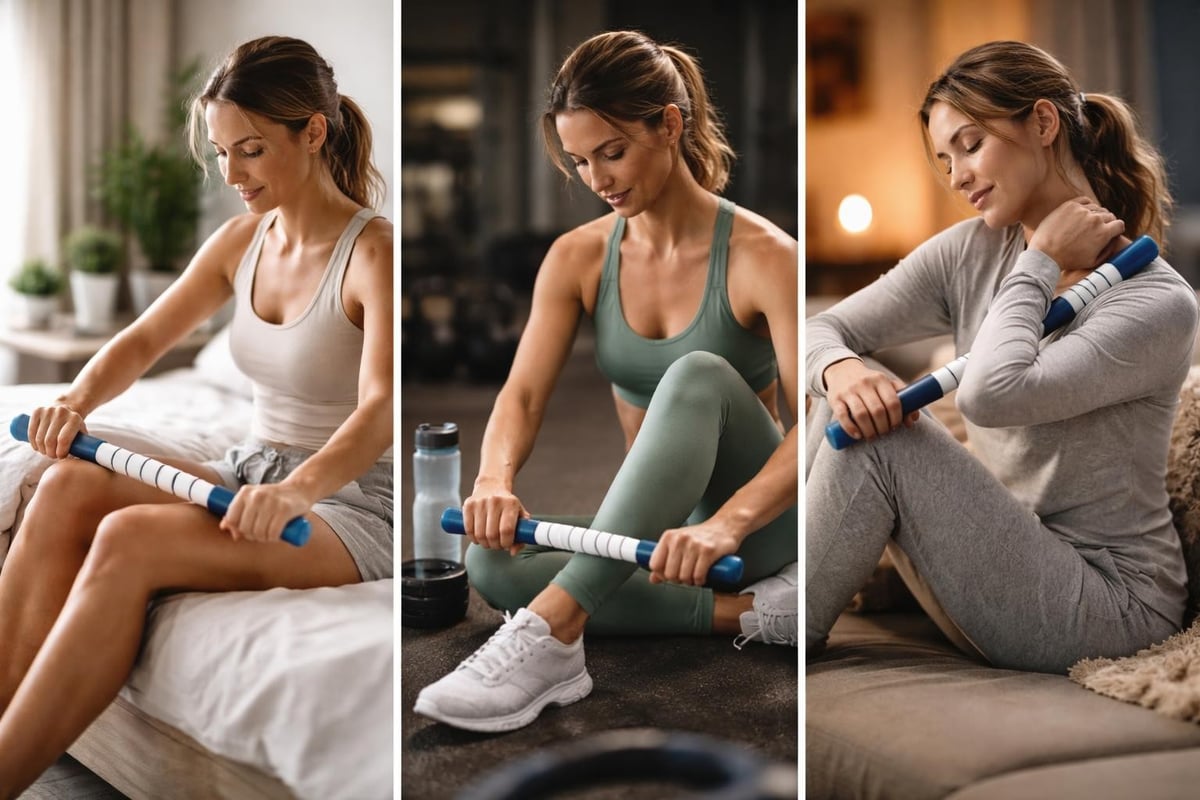
Use gentle rolling as part of your bedtime routine. The repetitive motion can be meditative, and releasing muscle tension may improve sleep quality. Focus on areas that feel tight or uncomfortable.
On days you're not training hard, rolling keeps blood flowing and prevents stiffness from setting in. It's the perfect active recovery activity that doesn't require much energy or motivation.
As we progress through 2026, recovery technology continues evolving. Smart massage sticks with pressure sensors and app connectivity are hitting the market, though whether they're worth the premium price remains debatable.
What's not debatable: The fundamental principle of applying pressure to soft tissue to improve function isn't going anywhere. Whether you use a high-tech vibrating stick or a basic roller model, you're tapping into techniques therapists have used for centuries.
The real innovation isn't in the tools themselves but in our growing understanding of how to use them effectively. As research continues and more people experience the benefits firsthand, self-care tools like massage sticks become less "nice to have" and more "essential equipment."
Theory is great, but let's talk practical implementation. You're busy. You're tired. You have a million things competing for your attention. How do you actually make massage stick usage a consistent habit?
Piggyback on existing routines. Keep your massage stick next to where you watch TV. Roll while binging your favorite show. Or place it by your coffee maker and roll while your morning brew is brewing.
Start ridiculously small. Don't commit to 20-minute sessions. Start with literally one muscle group for two minutes. Success breeds motivation. Once it's a habit, expanding is easy.
Use external accountability. Tell a friend you're committing to daily rolling. Better yet, find a workout buddy who'll do it with you. Social pressure is powerful.
Track your progress. Note how you feel before and after rolling sessions. When you see the correlation between consistent use and feeling better, motivation takes care of itself.
If you're serious about recovery but want tools that fit your active lifestyle, Brazyn Life creates innovative gear for people who refuse to compromise between effectiveness and convenience. Their approach to fitness equipment prioritizes portability without sacrificing performance, perfect for modern athletes who need their gear to keep up with their ambitions.
Whether you're a seasoned athlete or just trying to feel less creaky getting out of bed, a massage stick offers accessible, effective self-care that fits any budget or lifestyle. The combination of simplicity, affordability, and genuine results makes it one of the smartest additions to any recovery toolkit. Ready to roll your way to better recovery and performance? Check out Brazyn Life for innovative fitness gear designed for people who demand both quality and convenience from their recovery tools.
