Your Cart is Empty


Pilates has exploded in popularity over the past few years, and if you've been scrolling through social media lately, you've probably seen countless videos of people gracefully working their cores on various contraptions that look like they belong in a sci-fi movie. But here's the thing: you don't need to invest in a full studio setup to get amazing results from Pilates. Whether you're a seasoned practitioner or just starting out, understanding the world of pilates workout equipment can help you build a practice that fits your lifestyle, space, and budget. Let's dive into everything you need to know about choosing the right gear to support your Pilates journey in 2026.
Pilates workout equipment isn't just fancy gym gear with a different name slapped on it. Joseph Pilates originally designed these tools to help people build strength, flexibility, and body awareness through controlled movements and resistance. The equipment creates feedback loops that help you understand where your body is in space, which is pretty darn cool when you think about it.
What sets Pilates equipment apart from traditional fitness gear is the emphasis on spring-based resistance, adjustable difficulty levels, and the ability to support proper alignment throughout each movement. Common Pilates myths often suggest you need expensive equipment to get started, but that's not entirely true.
When most people think of pilates workout equipment, the reformer immediately comes to mind. This sliding carriage system uses springs to create resistance and can accommodate hundreds of different exercises. The Cadillac (also called the Trapeze Table) looks like a fancy bed frame with bars and springs attached, perfect for advanced work and rehabilitation.
The Wunda Chair is a compact piece that packs a serious punch despite its small footprint. Meanwhile, the Ladder Barrel helps with back extension and flexibility work. These traditional pieces are what you'll find in most dedicated Pilates studios, and they're absolute workhorses.
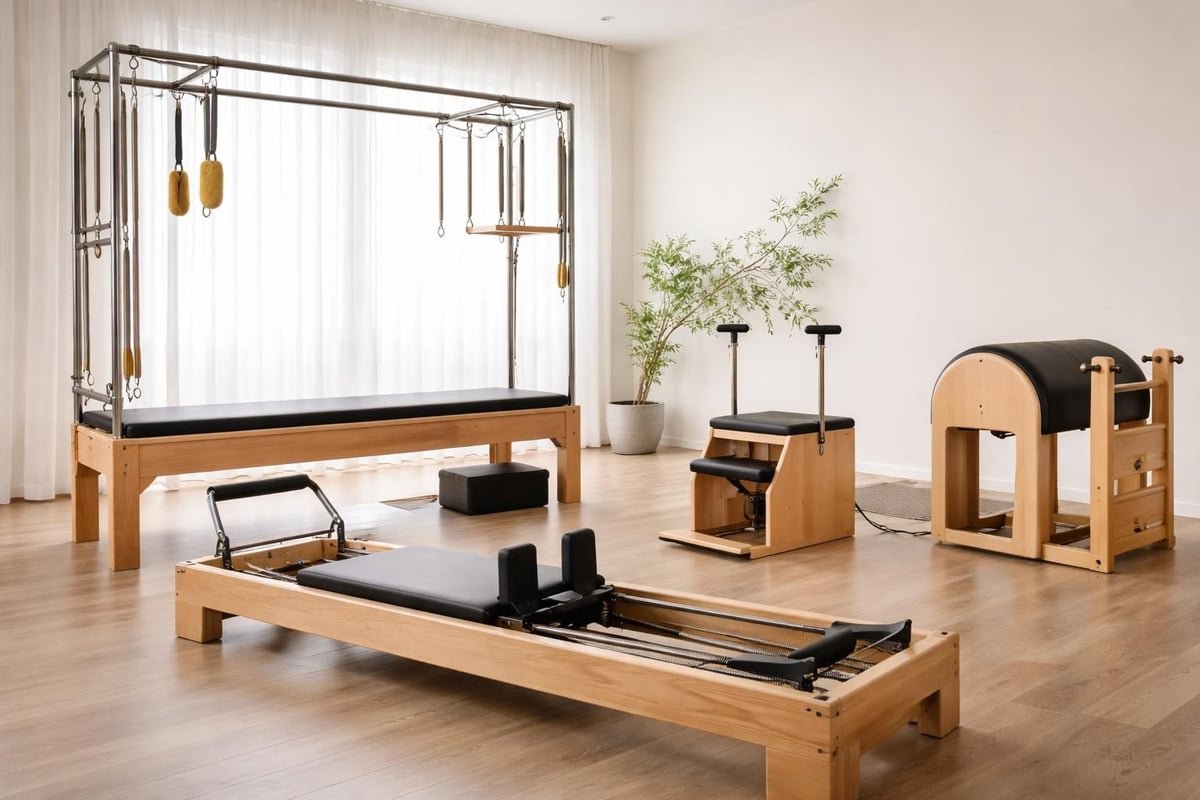
Here's a quick comparison of the classic equipment:
| Equipment | Space Required | Price Range | Best For |
|---|---|---|---|
| Reformer | 7-8 feet long | $2,000-$5,000+ | Full-body workouts, all levels |
| Cadillac | 6-7 feet long | $3,000-$6,000+ | Advanced practice, rehabilitation |
| Wunda Chair | 2-3 feet | $800-$2,000 | Small spaces, targeted strength |
| Ladder Barrel | 4-5 feet | $500-$1,500 | Flexibility, back work |
You can absolutely practice Pilates without any equipment at all, but having the right mat-based tools can seriously level up your practice. A quality Pilates mat is thicker than a yoga mat (usually around 0.5 inches) to provide cushioning for your spine during rolling exercises.
Essential mat accessories include:
These tools are incredibly portable and budget-friendly. You can easily pack them in a gym bag or suitcase, making them perfect for people who travel frequently or have limited space at home. For those interested in exploring more about yoga and Pilates equipment, the crossover between these practices offers even more versatility.
Start with the basics and add pieces as your practice evolves. Your first purchase should be a quality mat that won't slip during exercises. From there, a set of resistance bands gives you the most bang for your buck because they can modify countless exercises.
The Pilates ring comes next. This seemingly simple circle creates incredible resistance for strengthening your inner thighs, arms, and core. Don't underestimate how much burn you can get from this innocent-looking piece of equipment!
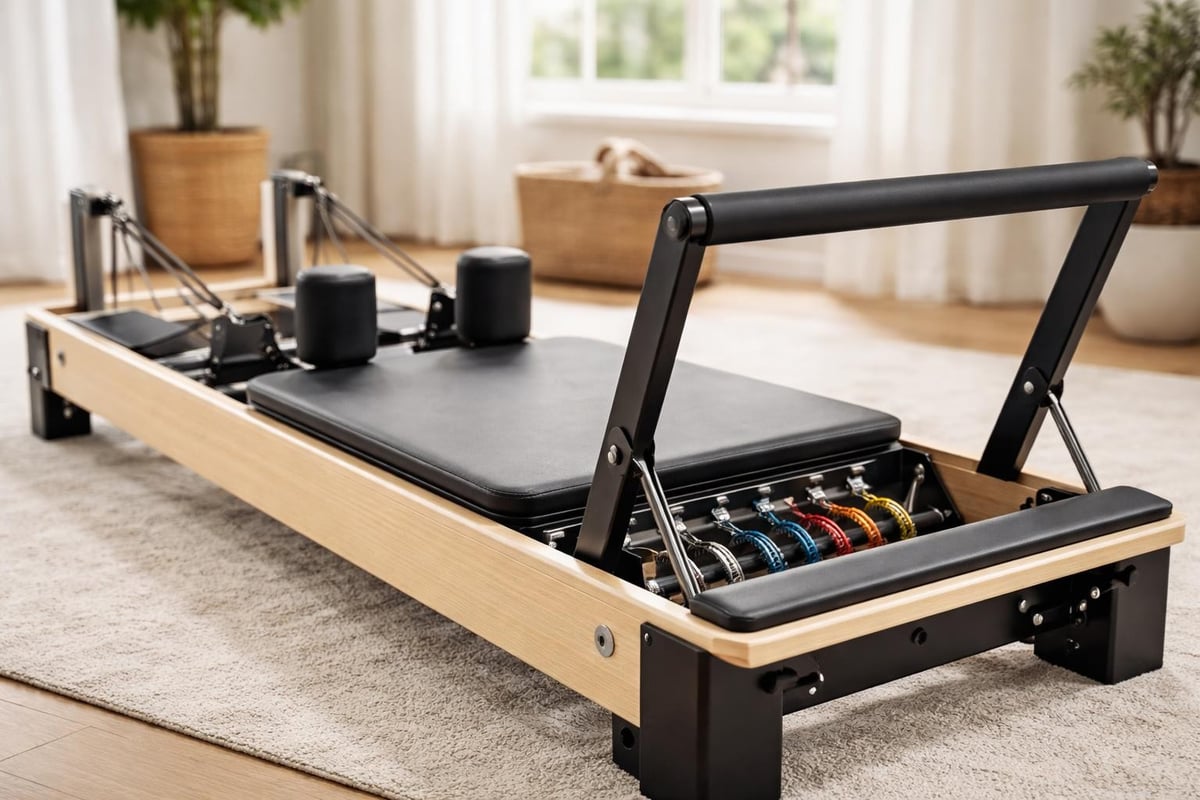
The at-home reformer market has absolutely blown up in recent years, with companies creating more compact and affordable versions of the studio staple. These machines typically cost between $300 and $3,000, depending on features and build quality. At-home reformer options have become increasingly sophisticated, offering app connectivity and virtual classes.
Key features to look for in a home reformer:
The beauty of a home reformer is that you can practice whenever inspiration strikes. No driving to the studio, no competing for equipment, and you can wear whatever you want (pajamas totally count as workout clothes in our book).
Some portable reformer systems have hit the market that fold down to fit under a bed or stand upright in a closet. While these might not have all the bells and whistles of a full-size studio reformer, they're fantastic for maintaining your practice at home.
Don't sleep on the small accessories! These mighty tools might be tiny, but they can transform your Pilates practice in ways that surprise even veteran practitioners. Pilates balls (both small 9-inch balls and larger stability balls) add instability that forces your core to work harder during every exercise.
Resistance bands come in various tensions, letting you progressively challenge yourself as you get stronger. Loop bands are particularly useful for lower body work, while longer bands with handles work great for arm exercises. Expert recommendations for Pilates accessories emphasize quality over quantity when building your collection.
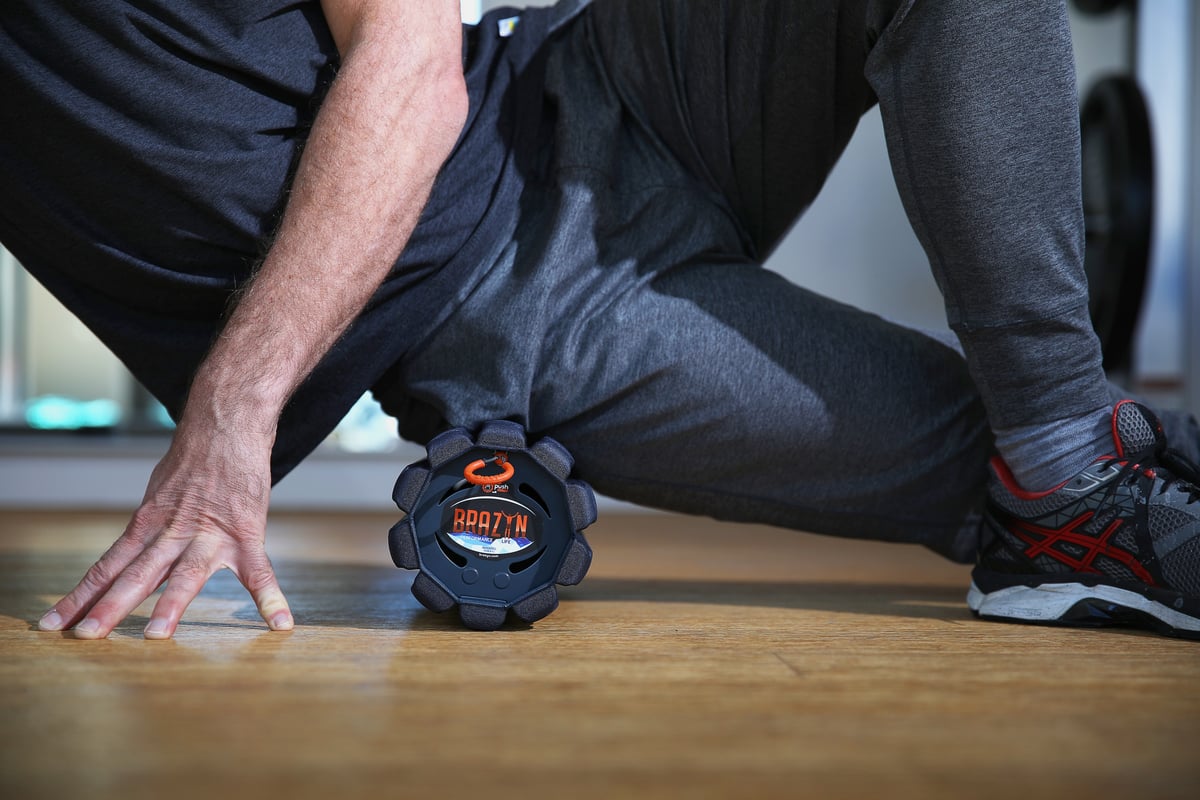
Foam rollers deserve their own spotlight in the pilates workout equipment lineup. They're incredible for both pre-workout preparation and post-workout recovery. During Pilates, placing a foam roller under your feet, hands, or back creates an unstable surface that demands greater core engagement.
The challenge many active people face is finding equipment that travels well. That's where innovative solutions come in. Recovery and muscle maintenance are crucial parts of any Pilates practice, especially when you're pushing yourself to improve.
The Morph Foam Roller solves the portability problem that traditional foam rollers create. This collapsible design folds flat for easy packing but provides the same firm support as a standard roller when you need it. Whether you're traveling for work or just heading to your local Pilates class, having a foam roller that doesn't take up half your bag is a total game changer for maintaining your practice anywhere.
Let's talk money, honey. You can absolutely start practicing Pilates with minimal investment, and there's no shame in building your equipment collection gradually. Here's how to approach it based on different budget levels.
Budget-Friendly Starter Kit ($100-$200):
Intermediate Investment ($500-$1,000):
Dream Studio Setup ($2,000-$5,000):
Remember, the best Pilates equipment for you is the equipment you'll actually use. A simple mat and a few props that you use five times a week will give you better results than an expensive reformer collecting dust in your garage.
One of the biggest hurdles people face when building their pilates workout equipment collection is space. Not everyone has a dedicated workout room, and that's completely okay! Creative storage solutions can help you maintain a serious practice in even the smallest apartments.
Wall-mounted storage racks keep resistance bands, rings, and small balls organized and accessible. Under-bed storage works perfectly for mats and foam rollers. Some people even use decorative baskets in their living rooms to store their Pilates props in plain sight.
Look for equipment that serves multiple purposes. A Pilates ball can be used for core work, as a desk chair for active sitting, or even as a tool for physical therapy exercises. Resistance bands work for Pilates, strength training, and stretching routines.
This approach is especially important for people who want portable fitness solutions that adapt to their active lifestyles. The modern dream chaser doesn't have time for single-use equipment that takes up precious space.
Not all pilates workout equipment is created equal, and buying cheap gear that breaks after a month is a waste of money and motivation. When evaluating equipment quality, check the materials first. Look for dense foam in mats and rollers, heavy-duty rubber in resistance bands, and solid construction in larger pieces.
Red flags to watch for:
Read reviews from actual Pilates instructors and experienced practitioners. These folks use equipment daily and can spot quality issues quickly. The most reputable Pilates equipment brands have earned their reputations through years of reliable performance.
Welcome to 2026, where your pilates workout equipment might be smarter than your phone! Many modern reformers and props now integrate with apps that track your workouts, count your reps, and even correct your form through AI-powered feedback.
Some systems offer virtual classes with real-time metrics, letting you compete with friends or track your progress over time. While these features are cool, they're not essential for an effective practice. Traditional equipment works just as well as it did when Joseph Pilates invented it nearly a century ago.
That said, if you're someone who loves data and tracking, these smart features can boost motivation and help you stay consistent with your practice. Just don't let the lack of tech features stop you from getting started with simpler equipment.
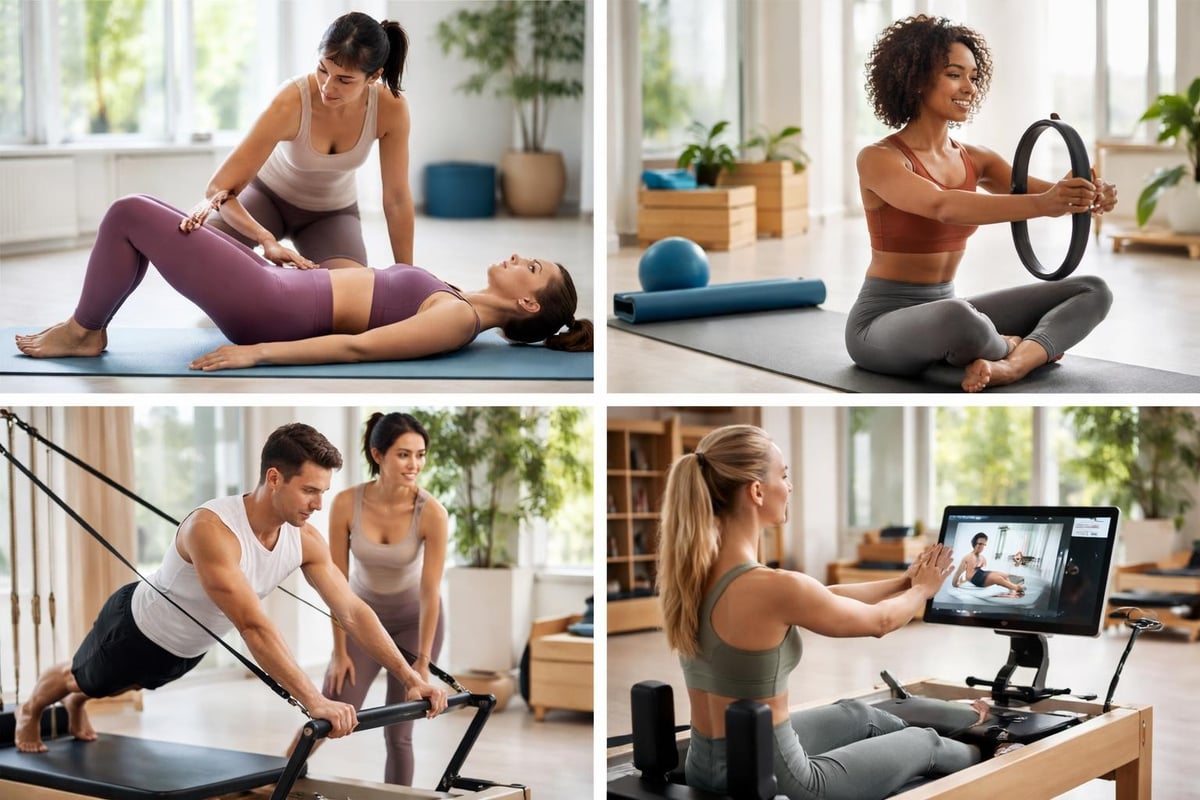
Here's something that doesn't get talked about enough: standard pilates workout equipment doesn't fit every body the same way. Taller practitioners might need extended straps on reformers, while shorter folks might struggle with standard footbar positions.
Wider individuals should look for reformers with broader carriages and higher weight capacities. Many modern equipment manufacturers are finally recognizing that bodies come in all shapes and sizes, and they're designing more inclusive options.
Modifications to consider:
Don't be afraid to modify equipment to work for your body. Adding extra padding, adjusting positions, or using props to fill gaps is smart adaptation, not cheating!
Taking care of your pilates workout equipment ensures it lasts for years and performs optimally. Wipe down mats and vinyl surfaces after each use with a gentle cleaner. Check resistance bands regularly for signs of wear, especially near the handles or loops.
For reformers and larger equipment, inspect springs and pulleys monthly. A little lubricant on moving parts keeps everything smooth. Store equipment away from direct sunlight and extreme temperatures, which can degrade materials over time.
Most quality Pilates equipment should last 5-10 years with proper care. Some pieces, like well-maintained reformers, can last even longer. This longevity makes the initial investment much more reasonable when you break down the cost per use.
Should you invest in equipment for home practice or stick with studio classes? The honest answer is: why not both? Many dedicated practitioners maintain a small home setup for daily practice while attending studio classes once or twice a week for instructor guidance and access to specialized equipment.
Home equipment excels for consistency and convenience. You can practice in your pajamas at 6 AM or squeeze in a quick session during your lunch break. Studio equipment offers variety and the expertise of trained instructors who can catch form issues you might miss on your own.
Adapting reformer exercises for home practice helps you maintain your practice between studio visits. Many exercises can be modified using simple props to recreate the resistance and support of larger apparatus.
Every year brings new pilates workout equipment trends, and 2026 is no exception. Portable reformers continue to evolve, getting lighter and more compact without sacrificing functionality. Smart resistance bands with sensors track your effort and rep count.
Balance boards with instability features are having a moment, adding a whole new dimension to traditional mat work. Meanwhile, minimalist equipment that focuses on quality over quantity is resonating with practitioners who value simplicity.
Not every trend deserves your money, but some innovations genuinely improve the Pilates experience. Before jumping on a trendy piece, ask yourself: Does this solve a problem I actually have? Will I use it regularly? Does it align with my practice goals?
Your pilates workout equipment deserves a home that invites you to practice. Even if you don't have a dedicated room, you can create a welcoming practice corner. Good lighting makes a huge difference (natural light is ideal), and a mirror helps you check your form.
Consider the flooring in your practice space. Hardwood or tile works great with a quality mat, while carpet might make some movements more challenging. Temperature control matters too. Pilates requires focus and precision, which is tough when you're shivering or sweating profusely.
Add personal touches that make you happy to be there. A small plant, inspiring artwork, or a speaker for your favorite workout playlist can transform a bare corner into your sanctuary. For more ideas on optimizing your fitness space, check out additional resources at Brazyn Life.
Pilates adapts beautifully for pregnant people, seniors, and those recovering from injuries, but equipment choices might need modification. Pregnant practitioners often benefit from props that provide extra support, like bolsters and wedges. As pregnancy progresses, certain reformer exercises become impractical or unsafe.
Seniors might prefer equipment with easy-to-grip handles and lower height requirements for getting on and off. Stability and safety become paramount, so equipment should have non-slip surfaces and sturdy construction.
For injury recovery, equipment should support proper alignment without forcing ranges of motion. Working with a qualified instructor who understands your specific needs is crucial when selecting and using pilates workout equipment for rehabilitation purposes.
Building your pilates workout equipment collection doesn't have to be overwhelming or break the bank. Start with the basics, invest in quality pieces that match your practice level, and add equipment gradually as your skills and goals evolve. Whether you're practicing in a dedicated studio, a tiny apartment, or hotel rooms around the world, the right tools can transform your Pilates journey. Ready to take your practice to the next level with innovative, portable fitness gear? Brazyn Life offers solutions designed for active people who refuse to compromise on quality, no matter where life takes them.
