Your Cart is Empty


Picture this: you just crushed a killer workout, your muscles are screaming, and tomorrow's going to be rough. But what if there was a simple tool that could help you bounce back faster, move better, and actually enjoy the recovery process? Enter the world of roll on exercise, where a humble piece of foam becomes your secret weapon against soreness, stiffness, and sluggish performance. Whether you're a gym rat, weekend warrior, or someone who just wants to feel better in their body, foam rolling might be the missing piece in your fitness puzzle. Let's roll into everything you need to know about this game-changing practice.
Roll on exercise, better known as foam rolling or self-myofascial release, is a self-massage technique that uses a cylindrical foam roller to apply pressure to muscles and connective tissue. Think of it as having a massage therapist available 24/7, except this one doesn't charge by the hour and won't judge you for wearing mismatched socks.
The practice involves positioning your body weight over the roller and moving back and forth across different muscle groups. This pressure helps release tension, break up adhesions in your fascia (the connective tissue wrapping your muscles), and improve blood flow to tired tissues.
When you perform roll on exercise, you're essentially creating controlled compression and decompression of soft tissue. According to research published in Scientific Reports, foam rolling effectively supports both immediate and prolonged recovery, making it essential for athletes' readiness between training sessions.
Here's what happens when you roll:
The beauty of roll on exercise is that it works through multiple mechanisms simultaneously. You're not just pushing on sore muscles randomly. You're triggering real physiological changes that support recovery and performance.

Let's get real about why roll on exercise deserves a permanent spot in your routine. The benefits extend far beyond just "feeling good" (though that's definitely part of it).
Ever experienced DOMS (delayed onset muscle soreness) that makes sitting on the toilet an Olympic event? Roll on exercise can help. Harvard Health explains that foam rollers can reduce muscle soreness and increase flexibility when used correctly.
A systematic review found that foam rolling significantly reduces perceived muscle soreness, especially when performed immediately after exercise and in the days following intense training.
Stiff as a board? Roll on exercise can help unlock your mobility without the lengthy static stretching sessions. Studies show that just a few minutes of rolling can temporarily increase range of motion without decreasing muscle performance (unlike some forms of static stretching before workouts).
| Benefit Category | Impact | Time to See Results |
|---|---|---|
| Muscle Soreness | Significant reduction | 24-48 hours |
| Range of Motion | Immediate increase | During/after session |
| Circulation | Enhanced blood flow | Immediate |
| Flexibility | Long-term improvement | 2-4 weeks consistent use |
| Performance | Better muscle activation | 1-2 weeks |
When you incorporate roll on exercise into your pre-workout routine, you're essentially priming your muscles for action. Better blood flow means better oxygen delivery. Improved tissue quality means better muscle contraction. The result? You move better, lift more efficiently, and potentially reduce injury risk.
The Los Angeles Times reports that foam rolling can lead to improved circulation, reduced muscle stiffness, and potential performance enhancements through both physiological and neurological effects.
Here's where people often go wrong. They buy a foam roller, attack their IT band like they're trying to tenderize a steak, and wonder why rolling feels more like punishment than recovery. Let's fix that.
Your body has dozens of muscles worth rolling, but let's focus on the greatest hits:
For specific hamstring rolling techniques and other targeted exercises, you'll find that different muscle groups respond to different pressures and speeds.
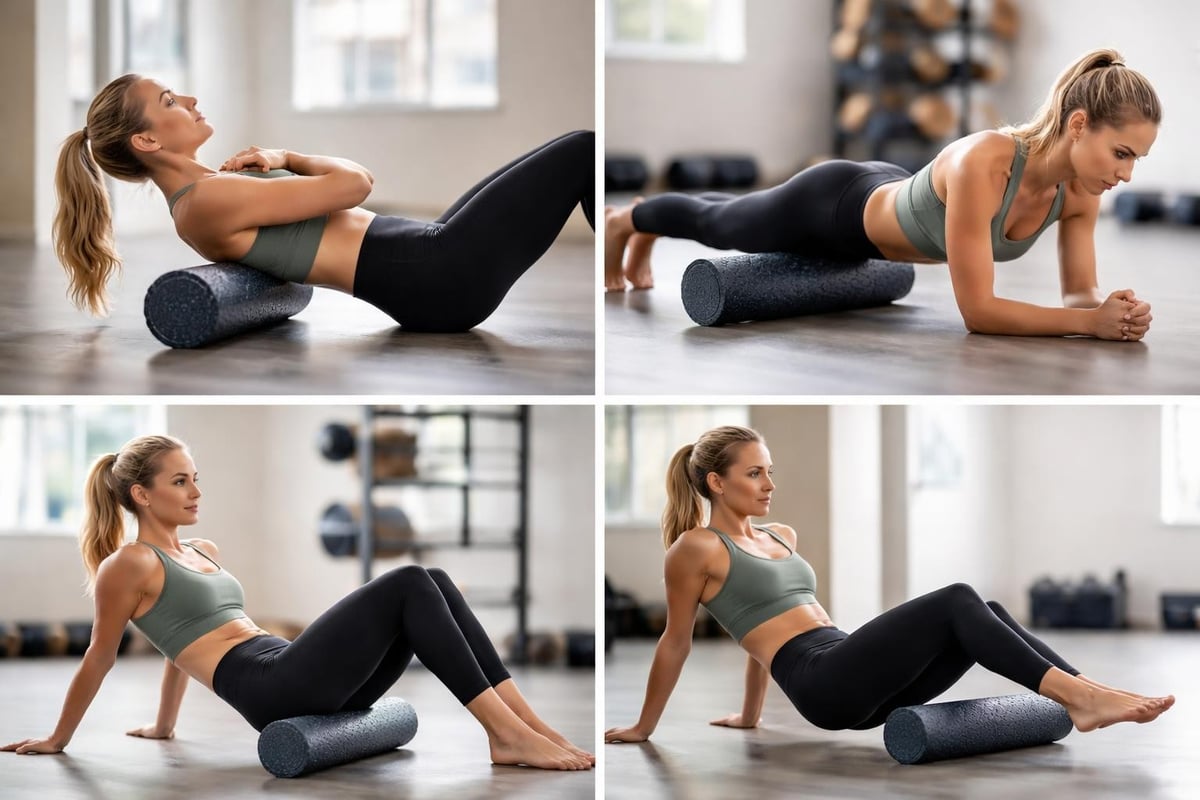
The timing of your roll on exercise can make a significant difference in the benefits you receive. Think of rolling as a tool in your fitness toolbox, and like any tool, it works best when used at the right time for the right job.
Rolling before exercise can activate your muscles and improve range of motion without the performance-decreasing effects of static stretching. Keep your pre-workout rolling dynamic and relatively brief.
Pre-workout protocol:
This is prime time for roll on exercise. Your muscles are warm, pliable, and ready to release tension. Post-workout rolling helps flush metabolic waste and can significantly reduce next-day soreness.
Post-workout protocol:
Don't just roll on training days. Your off days are perfect for deeper, more thorough rolling sessions that promote tissue quality and mobility. These sessions can be more therapeutic and relaxing.
Some fitness enthusiasts swear by their work from home recovery routine that includes strategic rolling breaks throughout the day, especially helpful for combating the physical toll of prolonged sitting.
Even the simplest practices can go wrong, and roll on exercise is no exception. Let's talk about the common pitfalls that turn a beneficial practice into an ineffective (or even harmful) one.
Racing through your rolling like you're late for a meeting defeats the entire purpose. Your nervous system needs time to register the pressure, release tension, and allow tissues to respond. Think "slow and steady wins the race," not "fast and furious destroys your muscles."
Yes, rolling can be uncomfortable, especially on tight areas. But if you're grimacing, holding your breath, and tensing every muscle in your body, you're doing it wrong. Excessive pain triggers a protective response that makes muscles tense up more.
Pain scale guide:
Your joints, spine, and other bony areas should not be rolled directly. This doesn't help and can actually cause problems. Stick to the meaty muscle areas and avoid rolling directly on your lower back, knees, or other joints.
Rolling once a month and expecting miraculous results is like going to the gym once and wondering why you don't have abs yet. Consistency is key. Aim for regular sessions, even if they're brief. If you're looking for new exercise equipment to enhance your routine, a quality foam roller should be at the top of your list.
The real magic happens when roll on exercise becomes as automatic as brushing your teeth. Here's how to make it stick without requiring superhuman willpower.
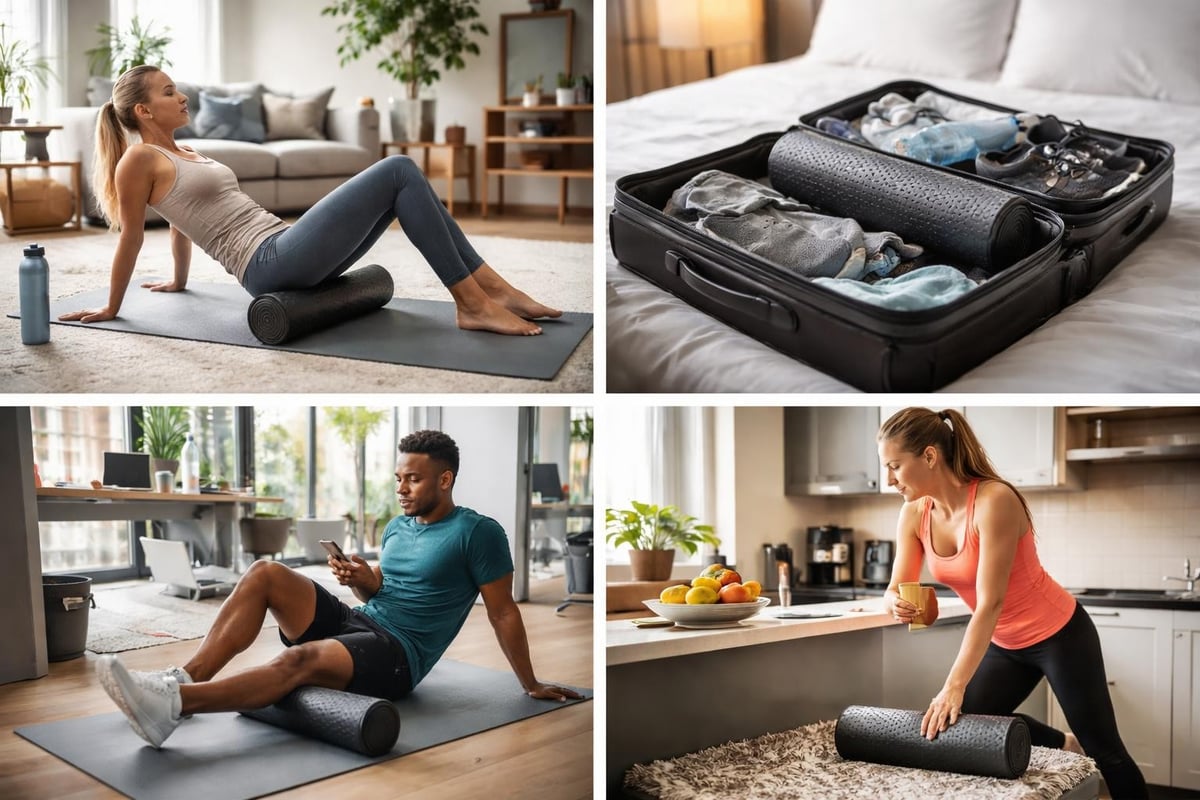
Keep your roller visible and accessible. If it's buried in a closet, you won't use it. Set up a designated spot in your living room, bedroom, or home gym where you can roll while watching TV or listening to podcasts.
Attach rolling to an existing habit. Roll while your coffee brews, during commercial breaks, or right after your shower. This habit stacking technique makes it easier to maintain consistency.
Notice how your body feels before and after rolling sessions. Many people discover that their chronic tension patterns shift, their mobility improves, and their overall body awareness increases. This awareness becomes its own motivation.
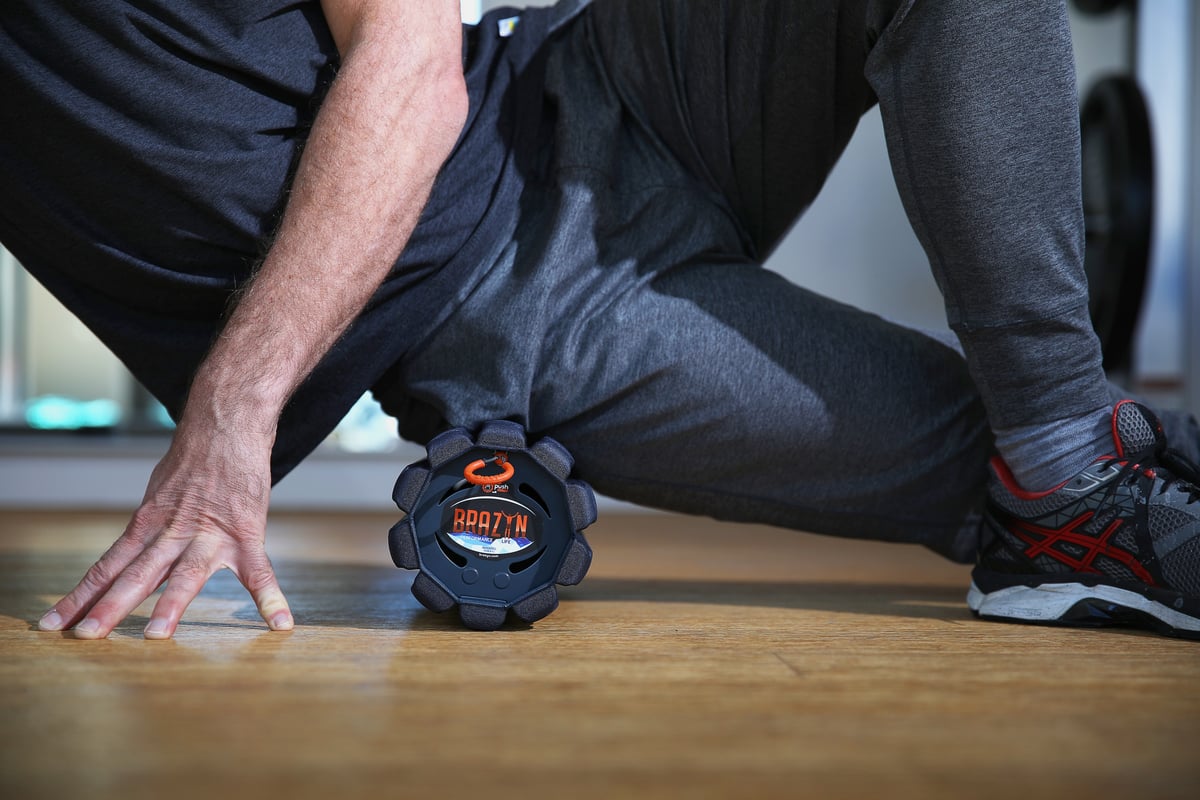
The portability factor matters too. When you're traveling for work or leisure, maintaining your recovery routine can be challenging with bulky equipment. Modern innovations have solved this problem beautifully.
For those serious about making roll on exercise a consistent practice, having equipment that adapts to your lifestyle makes all the difference. The Morph Foam Roller offers a brilliant solution by collapsing flat for easy packing, whether you're heading to the gym across town or traveling internationally.
Once you've mastered the basics, you can level up your rolling game with some advanced techniques that target stubborn areas more effectively.
Find a tender spot, apply pressure with the roller, then slowly move the joint through its range of motion while maintaining pressure. This technique is particularly effective for areas like the calves and hip flexors.
Instead of rolling along the muscle fibers, move perpendicular to them. This creates a different type of tissue release and can be especially helpful for breaking up stubborn adhesions.
Use a bench or box to elevate one end of your body while rolling. This changes the angle and pressure, allowing you to target specific areas more precisely.
Spend extra time on specific trigger points rather than constantly moving. Find the tender spot, apply steady pressure, breathe deeply, and wait for the tissue to release (usually 30-90 seconds).
Different fitness goals benefit from different rolling approaches. Let's customize your strategy based on what you're trying to achieve.
Focus heavily on lower body rolling, particularly calves, quads, IT bands, and hip flexors. These areas take repetitive impact and benefit enormously from regular roll on exercise.
Runner's rolling sequence:
After heavy lifting sessions, your muscles need recovery support. Rolling helps clear metabolic waste and maintains tissue quality between training sessions. Check out insights on effective gym lifting equipment and how recovery tools complement your strength training.
If you spend hours sitting, your hip flexors, upper back, and glutes need serious attention. Regular roll on exercise can counteract the postural dysfunction that comes from prolonged sitting.
Desk warrior routine:
Athletes benefit from strategic rolling that enhances muscle activation before training and accelerates recovery afterward. Research in the Journal of Bodywork and Movement Therapies demonstrates that proper foam rolling can positively impact range of motion and athletic performance markers.
While a basic foam roller gets the job done, understanding different tools can help you optimize your routine. Not all rollers are created equal, and different densities and designs serve different purposes.
| Density Level | Best For | Characteristics |
|---|---|---|
| Soft (White) | Beginners, sensitive areas | Gentle pressure, more comfortable |
| Medium (Various colors) | Most people, everyday use | Balanced comfort and effectiveness |
| Firm (Black) | Advanced users, dense tissue | Deep pressure, intense release |
| Extra Firm (Grid patterns) | Very experienced, specific trigger points | Maximum pressure, targeted work |
Beyond standard rollers, you'll find massage balls, roller sticks, and vibrating rollers. Each has its place. Balls excel at pinpoint pressure. Sticks offer controlled pressure on areas like shins and forearms. Vibrating rollers add another dimension to tissue release.
The key is matching the tool to your needs and lifestyle. If you're constantly on the move, portability becomes crucial. If you're primarily rolling at home, you might prioritize features over packability.
Let's tackle the questions that everyone wonders about but might not ask.
Yes, actually. Over-rolling can irritate tissues and potentially cause inflammation. Most experts recommend 10-20 minutes per session, a few times per week, depending on your training intensity.
Uncomfortable? Yes. Painful? Not really. You want to feel like something's happening, but you shouldn't be white-knuckling through it. Your muscles should be able to relax during the process.
Not entirely. Roll on exercise and stretching serve different purposes and complement each other beautifully. Rolling addresses tissue quality and trigger points, while stretching improves muscle length and joint mobility.
Skip rolling if you have acute injuries, broken skin, varicose veins, or certain medical conditions. When in doubt, consult a healthcare provider. Rolling is preventative and restorative, not a treatment for serious injuries.
For more evidence-based information, Healthline's comprehensive guide covers benefits, risks, and practical tips for getting started safely.
Let's put everything together into actionable routines you can implement immediately. Consistency beats perfection, so start with what's manageable and build from there.
Perfect for busy days or between meetings:
Your go-to post-workout or evening routine:
For recovery days or when you need serious attention:
Your at-home workout guide can easily incorporate these rolling sessions as bookends to your training, maximizing both performance and recovery.
As research continues to validate what practitioners have known for years, roll on exercise is becoming more sophisticated. We're seeing vibrating rollers, app-guided rolling sessions, and innovative designs that make the practice more effective and accessible.
The trend toward evidence-based recovery is growing, with more athletes and fitness enthusiasts recognizing that recovery isn't passive rest. It's active tissue maintenance through practices like roll on exercise, proper nutrition, and adequate sleep.
Smart integration with other recovery modalities is key. Rolling works beautifully alongside massage therapy, physical therapy, stretching routines, and mobility work. It's not about replacing professional care but rather maintaining tissue quality between sessions and empowering yourself with self-care tools.
The democratization of recovery tools means you don't need expensive gym memberships or frequent massage appointments to maintain tissue health. A quality roller, consistent practice, and basic knowledge put effective recovery in your hands literally and figuratively.
Roll on exercise isn't just another fitness trend destined for the back of your closet. It's a scientifically-backed practice that enhances recovery, improves mobility, and helps you feel better in your body. Whether you're an elite athlete or someone who just wants to move through life with less pain and more freedom, incorporating regular rolling into your routine pays dividends. Ready to experience the benefits for yourself? Brazyn Life offers innovative, portable recovery solutions designed for modern active individuals who refuse to compromise on quality or convenience, making it easier than ever to maintain your roll on exercise practice wherever life takes you.
